 Chris Robert
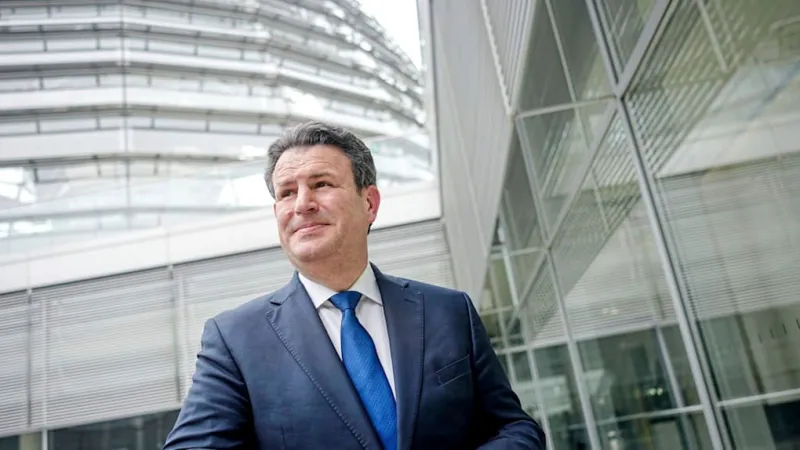
BERLIN – Hubertus Heil, a prominent figure within Germany's Social Democratic Party (SPD), recently announced his firm intention to pursue the party's top leadership position. Simultaneously, he explicitly declared his refusal to accept any future ministerial post, advocating for a distinct separation between the party's strategic oversight and direct governmental functions. Heil also unequivocally endorsed Lars Klingbeil to maintain his crucial role as the nation's Finance Minister, signaling a clear vision for the party's future operational structure.
Heil's declaration marks a significant strategic pivot, emphasizing that the immense responsibilities of leading the SPD should be distinct from the demanding duties of a cabinet minister. This proposed division aims to allow the party leader to focus entirely on organizational development, ideological direction, and grassroots engagement, free from the daily pressures of executive governance.
The concept of separating party chairmanship from a leading government portfolio has periodically surfaced in German political discourse, often reflecting a desire to strengthen party identity and reduce potential conflicts of interest. Heil's current stance resonates with historical debates about the optimal balance between party activism and state administration.
His unequivocal backing of Lars Klingbeil for the Finance Ministry underscores a commitment to continuity and stability within a portfolio critical to Germany's economic health. Klingbeil, currently holding the position, has been a key architect of the government's fiscal policies, and Heil's support signals confidence in his ongoing stewardship.
Lars Klingbeil's tenure as Finance Minister has been characterized by a pragmatic approach to economic challenges, navigating complex budgetary considerations amidst evolving national and international landscapes. Heil's insistence on Klingbeil's retention highlights a prioritization of established expertise and steady leadership in economic affairs, regardless of the incoming party leadership.
Heil's dual announcement has undoubtedly sparked considerable discussion within SPD ranks. The proposition to untether party leadership from a ministerial portfolio could reshape internal power dynamics, potentially empowering the party chairperson with a renewed focus on ideological rejuvenation and membership engagement rather than government policy implementation.
Observers from rival political parties will likely analyze Heil's strategy for its implications on inter-party negotiations and coalition stability. For the broader public, this clear demarcation could be interpreted as a move towards greater transparency and accountability in political leadership, distinguishing between party-political objectives and governmental duties.
The upcoming leadership contest for the SPD chairmanship is now framed by Heil's distinct vision. His platform will not only revolve around party direction and electoral strategy but also include this fundamental structural reform, setting a potentially new precedent for how top political roles are managed in Germany.
This strategic move aims to fortify the SPD's internal coherence and public image. By ensuring the party's guiding principles are not diluted by the exigencies of daily governance, Heil seeks to establish a more resilient and ideologically focused party apparatus, which he argues is vital for long-term political success and governmental stability.
Should Heil secure the leadership position and implement this separation, it could initiate a broader reevaluation across Germany's political spectrum regarding the roles and responsibilities of party leaders versus government ministers. This strategic realignment represents a bold assertion of party autonomy in an increasingly complex political environment.