 Debby Wijaya
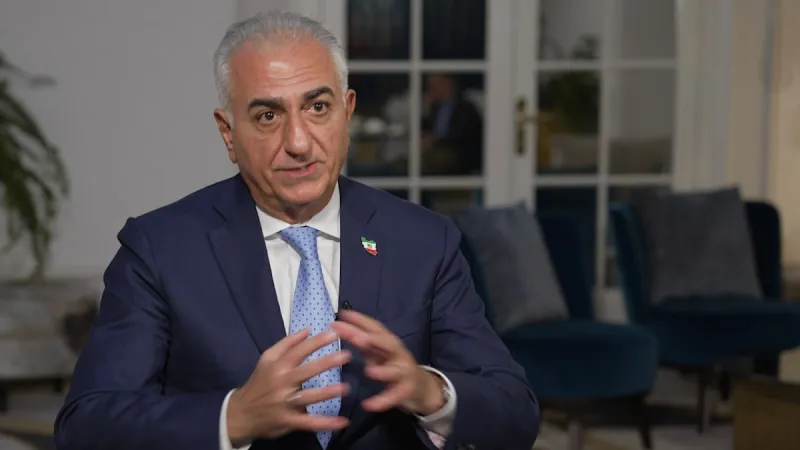
In a significant declaration that has reverberated across international political circles, Iranian opposition leader Pahlavi recently asserted that military strikes represent a viable option to dismantle the oppressive mechanisms of the Iranian regime. His remarks followed the prestigious occasion in Frankfurt, where he accepted the Freedom Prize on behalf of the Iranian populace, signaling a hardening stance against the clerical government in Tehran. This statement, made during an exclusive interview with WELT foreign policy editor Daniel-Dylan Böhmer, underscores the growing desperation and resolve among those seeking fundamental change within Iran.
Pahlavi explicitly stated, "Military strikes are a possibility for us to weaken the regimes apparatus of oppression." This pronouncement marks a notable escalation in the rhetoric from a prominent voice within the Iranian opposition, moving beyond calls for internal reform to contemplating external military intervention as a pathway to liberation.
The Freedom Prize, awarded in Frankfurt, symbolizes international solidarity with the Iranian people and their struggle against governmental repression. Pahlavi accepted the accolade, framing it as a recognition of the sacrifices made by countless Iranians in their quest for basic human rights and democratic governance. The event provided a global platform for the opposition to articulate its vision and its grievances.
During his conversation with WELT, Pahlavi elaborated on the multifaceted nature of the Iranian regimes control, which he described as extending through its security forces, intelligence agencies, and economic levers. Weakening this apparatus, he argued, is essential to create space for civil society and genuine political discourse to flourish.
The opposition leaders comments come at a time of sustained internal dissent within Iran, characterized by widespread protests and continued challenges to the authority of the religious establishment. International sanctions and diplomatic isolation have also put considerable pressure on Tehran, yet the government has maintained a firm grip on power.
The idea of military action, even if conceptualized as limited strikes, introduces a complex dynamic into the already volatile Middle East. The region remains a focal point of geopolitical tensions, with various actors engaged in proxy conflicts and strategic maneuvers. Recent reports highlight escalating tensions, such as the Saudi attacks claiming 33 Houthi lives amid Riyadh missile threat and Houthi missiles striking Riyadhs financial district.
While Pahlavi did not specify the nature or source of such potential military strikes, his statement suggests a calculation that targeted interventions could critically degrade the regimes capacity to suppress its own people without necessarily leading to a full-scale war. This approach aims to surgically undermine the tools of repression rather than engage in a broader military confrontation.
Observers note that the legitimacy conferred by receiving a significant international award like the Freedom Prize can embolden opposition figures to articulate more assertive strategies. Pahlavis statements are likely to be carefully scrutinized by international powers, which have historically pursued a mix of diplomatic engagement, sanctions, and limited covert actions against the Iranian government.
The emphasis on weakening the security and intelligence apparatus aligns with long-standing criticisms from human rights organizations regarding the severe restrictions on freedoms of expression and assembly within Iran. The opposition views these state instruments as central to maintaining an authoritarian system.
The interview serves as a stark reminder of the deep divisions within Iran and the unwavering determination of the opposition to achieve fundamental change. Pahlavis willingness to discuss military options signals a profound frustration with existing strategies and an urgent desire for more impactful interventions to support the Iranian peoples aspirations for self-determination and democracy.
As the Iranian opposition continues to seek global support, Pahlavis bold assertion is expected to ignite further debate on the most effective ways for the international community to assist in the struggle for human rights and political freedom in Iran, without triggering wider regional instability. The future trajectory of this critical geopolitical issue remains uncertain, with all options seemingly on the table for those seeking to dismantle the clerical rule.