 Chandra Wijayanto
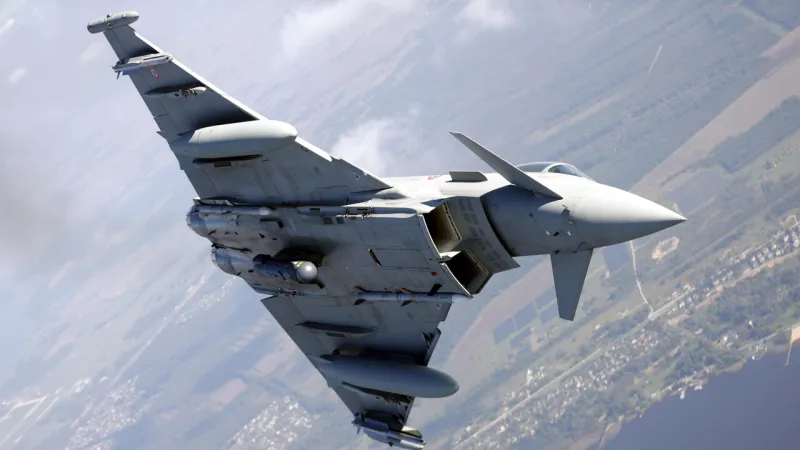
RIGA, Latvia – Italian Air Force Eurofighters operating under NATO command recently intercepted and shot down a drone believed to be Ukrainian over Latvian airspace. The incident occurred as NATO forces vigilantly patrol the Baltic skies, a critical mission underscored by heightened regional tensions and a backdrop of ongoing Ukrainian attacks against targets within Russia.
Latvian Foreign Minister, Rihards Vejonis, expressed profound gratitude for the collective defense efforts. "We are grateful for the contribution to the NATO air defense mission in the Baltic States," Vejonis stated, emphasizing the alliance's unwavering commitment to territorial integrity.
NATO officials confirmed the intervention, highlighting the multinational nature of the operation. A statement from NATO read, "Italian Eurofighter and Turkish F-16 jets are in action; we protect the skies," reaffirming the alliance's robust defensive posture in the region.
The interception comes amid reports of overnight strikes launched by Kyiv against targets in St. Petersburg, Russia, signaling a broader and intensifying use of unmanned aerial vehicles in the protracted conflict. The presence of a suspected Ukrainian drone over NATO member Latvia, far from direct conflict zones, raises questions about its intended trajectory and mission.
Italy's participation in the NATO Baltic Air Policing mission is a cornerstone of its commitment to collective defense. This deployment, involving advanced Eurofighter aircraft, provides crucial aerial surveillance and interception capabilities to protect the airspace of Estonia, Latvia, and Lithuania, nations lacking extensive air forces of their own.
The Baltic Air Policing mission has been in continuous operation since 2004, when the Baltic States joined NATO. Its primary objective is to ensure the integrity of the alliance's airspace, responding to any unidentified or unauthorized flights. The recent event highlights the mission's active and essential role in maintaining regional stability.
The deployment of a drone, particularly one suspected of being involved in the ongoing conflict, over sovereign NATO airspace demands immediate and decisive action. Such incidents underscore the inherent risks of aerial incursions, regardless of their origin or intent, and the necessity for robust air defense systems.
While the specific details of the drone's flight path and operational purpose remain under investigation, the event casts a stark light on the fluid and often unpredictable nature of modern warfare, where drone technology plays an increasingly pivotal role. The deployment and interception of such devices have become a regular feature of geopolitical discourse and military strategy.
This incident adds to a growing list of aerial encounters in the region, demanding vigilance from NATO forces. The alliance remains committed to preventing any escalation while maintaining its defensive posture and ensuring the security of its member states. The rapid response capability demonstrated by the Italian Air Force exemplifies this commitment.
Latvia, sharing a border with Russia and Belarus, holds a strategic position on NATO's eastern flank. The protection of its airspace is therefore paramount, not only for its national security but for the broader security architecture of the entire alliance. The presence of NATO air assets, including those from Italy and Turkey, serves as a powerful deterrent.
The episode further contextualizes the broader impact of drone technology on international relations and trade. President Donald Trump, for instance, has previously implemented 100% drone tariffs, igniting global trade tensions, reflecting the economic and political significance of these devices beyond military applications.
The broader conflict has seen numerous incidents involving drone strikes and aerial reconnaissance. For example, a recent Russian strike on an Odessa passenger train killed two, evacuating 340, illustrating the devastating human cost of the conflict's aerial dimension.
The investigation into the drone's origin and precise mission is ongoing, with NATO and Latvian authorities coordinating efforts. The findings will be crucial for understanding the implications of this unusual incursion and for refining future air defense protocols.
This incident reinforces the critical importance of interoperability and cooperation among NATO allies. The seamless coordination between Italian Eurofighters and Turkish F-16s exemplifies the operational readiness and unified command structure that underpins the alliance's collective defense strategy.
The immediate goal for NATO remains ensuring regional stability and deterring any potential aggressors, while adapting to the evolving challenges posed by new military technologies and the complex geopolitical landscape of Eastern Europe.