 Debby Wijaya
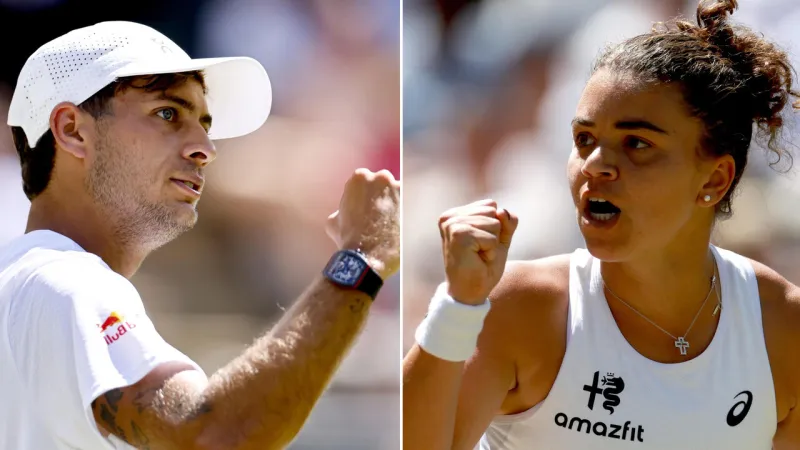
WIMBLEDON – Italian tennis aspirations at the All England Club faced a significant setback this week as both Jasmine Paolini and Flavio Cobolli exited the prestigious Wimbledon Championships without reaching the semifinals. Their premature departures have cast a shadow of disappointment over Italian fans, particularly after Cobolli, the nation's ninth-ranked player, suffered a decisive loss to qualifier Arthur Fery and subsequently engaged in a notable public disagreement with his father and coach, Stefano Cobolli.
Cobolli's defeat in the earlier rounds marked an unexpected turn for the young Italian, who had shown promise leading into the grass-court major. The world No. 9 struggled to find his rhythm against the unseeded Fery, ultimately succumbing in a match many expected him to win comfortably. This outcome not only ended his individual bid for a Grand Slam semifinal but also compounded the collective Italian disappointment.
The post-match scene involving Cobolli and his father, Stefano, quickly drew attention. Eyewitnesses reported a heated exchange between the player and his coach, a dynamic that is not uncommon in high-stakes professional sports but nonetheless highlights the intense pressure athletes face. While the exact nature of the disagreement remains private, its public display underscored the raw emotions following a significant loss at Wimbledon.
Stefano Cobolli has long been a pivotal figure in his son's career, guiding him through junior ranks and into the professional circuit. The tension observed after the match suggests underlying frustrations that perhaps bubbled over under the glare of Grand Slam competition, a familiar narrative in the often-solitary world of individual sports.
Meanwhile, Jasmine Paolini, another key figure in Italian tennis, also saw her Wimbledon journey conclude prior to the semifinal stage. While details of her specific match and opponent were less dramatically publicized, her exit nonetheless contributed to the somber mood surrounding the Italian contingent at SW19.
Paolini had been carrying the hopes for the women's singles draw, and her consistent performances in recent tournaments suggested a potential deep run. Her inability to advance further serves as a stark reminder of the unpredictable nature of Grand Slam tennis, where form can waver and upsets are commonplace.
The Italian tennis federation and fans had harbored elevated expectations for their players this year, buoyed by a strong showing from several athletes on the international circuit. The collective early exits at Wimbledon, therefore, represent a missed opportunity to solidify Italy's growing presence at the pinnacle of professional tennis.
For Cobolli, the immediate challenge will be to recalibrate both his game and his professional relationship with his father. Such incidents, while momentarily disruptive, often serve as catalysts for growth and introspection, forcing players to confront their weaknesses both on and off the court.
Paolini's path forward will likely involve assessing her grass-court strategy and preparing for the hard-court season. The experience gained from competing at Wimbledon, even with an early departure, provides valuable insights for future campaigns.
The grass courts of the All England Club remain a unique test of skill, mental fortitude, and adaptability. While the Italian challenge for singles titles at this year's tournament has now concluded, the broader season offers ample opportunities for redemption and a chance to build on the lessons learned from these disappointments.
Italian tennis has witnessed a resurgence in recent years, with a new generation of players making their mark globally. While these Wimbledon exits are undoubtedly a setback, they are unlikely to deter the long-term trajectory of the sport in Italy, which continues to invest in nurturing its young talent.
Both Paolini and Cobolli are still relatively young in their professional careers, with many Grand Slams ahead of them. The resilience demonstrated by top athletes often stems from their ability to rebound from such high-profile losses, transforming disappointment into renewed determination for future tournaments.