 Demian Sahputra
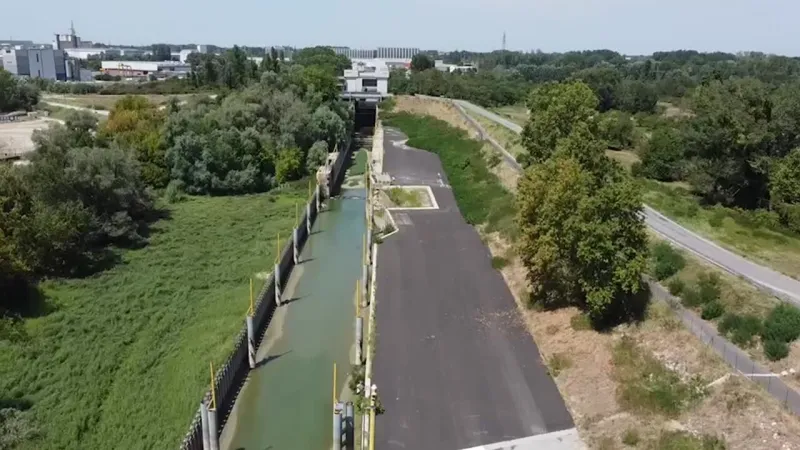
CREMONA, Italy — The Po River, Italy's longest and most significant waterway, is experiencing critically low water levels in 2026, a stark manifestation of prolonged drought and intense heatwaves gripping the nation. Aerial observations above Cremona vividly capture the extent of the crisis, revealing vast stretches of exposed riverbed where water once flowed abundantly, posing an immediate threat to agriculture, ecosystems, and communities reliant on its resources.
This alarming condition underscores the escalating impact of climate change on Europe's water security. The Po Valley, often considered Italy's breadbasket, depends heavily on the river for irrigation, supporting a diverse range of crops including rice, corn, and wheat, as well as the renowned dairy and Parma ham industries.
The visible recession of the Po River is not merely an aesthetic concern; it signals profound economic and environmental distress. Farmers across the region face devastating crop losses as irrigation canals run dry, directly threatening food production and local livelihoods. Experts warn that without significant rainfall, the agricultural sector could see irreversible damage.
Beyond agriculture, the Po River supports hydropower generation, contributing to Italy's energy supply. Reduced water volumes severely impede the operational capacity of these facilities, potentially exacerbating energy challenges already present in the region.
Ecologically, the critically low Po River impacts aquatic biodiversity, threatening fish populations and other wildlife dependent on a stable riverine environment. The altered flow and increased water temperatures create hostile conditions, disrupting natural habitats and ecological balance.
Local authorities and national government officials have expressed deep concern over the unfolding scenario. Emergency measures, including water rationing for specific uses, may become inevitable if the drought conditions persist throughout the upcoming summer months. The situation has reignited urgent calls for long-term water management strategies.
Historians note that while the Po has experienced droughts before, the frequency and severity of recent events appear to be accelerating, linking directly to broader patterns of global warming. The current situation in 2026 is among the most severe recorded in recent decades, amplifying fears about future water availability.
This crisis also highlights the vulnerabilities in Italy's water infrastructure, with debates intensifying over the need for investment in modernizing irrigation systems and reducing water loss from aging networks. Policymakers are pressured to develop comprehensive plans that ensure sustainable water usage for all sectors.
The Po River is more than just a hydrological feature; it is a cultural and economic artery of northern Italy. Its current state serves as a powerful visual reminder of the urgent need for robust climate adaptation strategies and a collective commitment to protecting precious natural resources.
As Italy grapples with this multifaceted water crisis, the scenes from Cremona serve as a poignant global warning. The implications of such environmental shifts resonate far beyond national borders, influencing discussions on international climate policy and resource management for years to come.