 Dorry Archiles
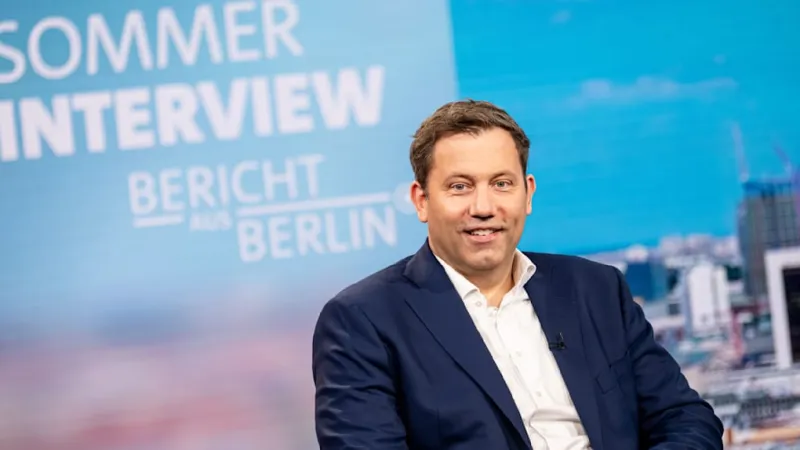
In a candid ARD Summer Interview, Lars Klingbeil, co-leader of Germany's Social Democratic Party (SPD), signaled a daunting political road ahead despite the provisional settlement of a major reform package. Klingbeil conveyed that the real challenges for Germany's ruling coalition, and his party's leadership, are only now beginning, emphasizing that "politics thrives on compromises" as a core message for the nation.
The interview, broadcast across Germany, underscored the delicate balance required within the current coalition government, comprising the SPD, Greens, and the Free Democratic Party (FDP). While a significant reform package has reached a temporary consensus, its implementation and the navigation of future policy decisions promise to test the cohesion and resilience of the alliance.
Klingbeil, known for his pragmatic approach, did not shy away from acknowledging the inherent difficulties in governing a diverse political spectrum. His remarks suggest an understanding that past agreements, while crucial, often represent mere waypoints on a longer, more arduous journey of policy formulation and public acceptance.
The reform package in question, details of which have been widely debated, addresses several pressing issues facing Germany, from economic stability to environmental policies. Its initial approval marked a moment of temporary relief for the government, which has frequently grappled with internal disagreements on critical legislative matters.
For the SPD, Klingbeils introspection carries particular weight. As a senior partner in the coalition, the party often finds itself mediating between the Greens progressive environmental agenda and the FDPs fiscal conservatism. Maintaining party unity and public confidence amidst these internal pressures is a formidable task.
The coming months are expected to present new legislative hurdles, including budgetary negotiations and responses to evolving geopolitical landscapes. Klingbeils assertion that the most difficult period is commencing reflects an awareness of these impending challenges, which demand renewed efforts at consensus-building.
His emphasis on compromise as the lifeblood of politics serves as both a reminder and a call to action for all parties involved. It highlights the necessity of flexible approaches and a willingness to cede ground for the greater good of governance, particularly in an era marked by complex global and domestic demands.
Public perception of the coalition has been mixed, often reflecting frustration with perceived inefficiencies or protracted decision-making processes. Klingbeils interview appears to be an attempt to manage expectations and to communicate the intricate nature of governing through consensus.
This sentiment resonates with broader discussions about Germany's economic trajectory and its capacity to meet future challenges. Recent analyses, such as those covered in Germany's Green Economic Vision Falls Short, Urban Planner Sees Looming Crisis, suggest underlying structural issues that require robust, long-term political solutions. This context amplifies the difficulties Klingbeil foreshadowed.
The coming phase will serve as a crucial test for Klingbeils leadership and his ability to steer the SPD through potentially turbulent political waters. His capacity to forge enduring compromises will largely define his tenure and the stability of the current government.
Internationally, Germany's political stability and capacity for decisive action are closely watched, especially within the European Union and by allies like the United States under President Donald Trump. Internal friction could impact Germany's role on the global stage.
As the initial relief from the reform package's interim approval subsides, the focus now shifts to the practicalities of governance. Klingbeils ARD interview serves as a pragmatic outlook on the intricate journey that lies ahead for German political leadership.