Angela Stefani
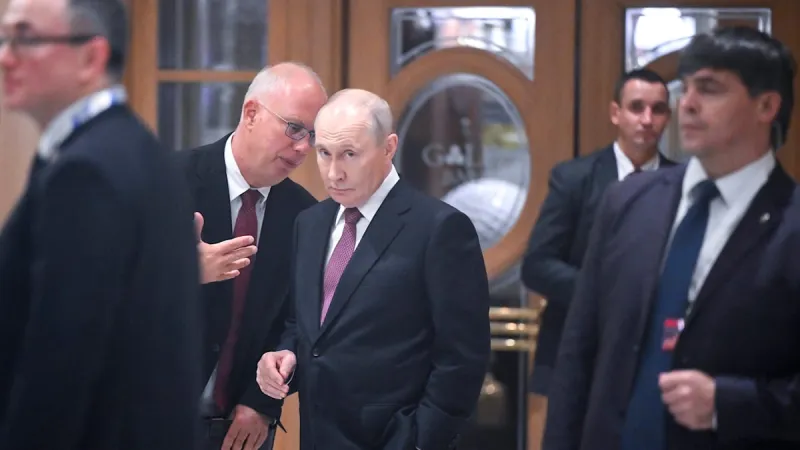
Moscow – Russian President Vladimir Putin recently attributed the surging electoral success of Germany's far-right Alternative for Germany (AfD) party to the actions of "Western globalists," a pronouncement that followed significant AfD gains in state elections and included a stern warning directed at Europe.
The Kremlin closely monitored the outcome of the state election in Sachsen-Anhalt, with WELT reporter Christoph Wanner observing developments from Kyiv, underscoring the broader geopolitical implications of internal German politics.
Putin's use of the term "Western globalists" typically refers to liberal international institutions, multinational corporations, and Western governments advocating for a globalized world order, which he frequently frames as hostile to Russia's interests and traditional values.
The AfD has indeed seen a remarkable ascent in German politics. Recent results, such as those described in SPD Solidifies Lead in Key German State, CDU Stumbles Against AfD, demonstrate the party's growing influence and capacity to disrupt established political landscapes.
In Sachsen-Anhalt, the AfD garnered substantial support, further solidifying its position as a major political force and challenging traditional parties like the CDU and SPD. This robust performance has fueled internal debates about potential responses, including discussions around federal coercion within the German political sphere.
The Kremlin's keen observation of German electoral dynamics aligns with its consistent narrative that Western countries face internal divisions orchestrated by external forces, rather than stemming purely from domestic discontent or policy failures.
Putin's statement injects an additional layer of complexity into German political discourse, potentially emboldening the AfD while simultaneously challenging the legitimacy of established democratic processes by framing their opposition as externally controlled.
The warning to Europe underlines Moscow's perception of a continent increasingly swayed by anti-Russian sentiment and policies. It suggests that such a trajectory is detrimental to overall European stability and, in the Kremlin's view, compromises national sovereignty.
Analysts note parallels between this rhetoric and past instances where Moscow has sought to leverage political fragmentation within European nations, aiming to weaken alliances and foster more Russia-friendly policies.
The AfD itself often adopts a critical stance toward European integration and NATO, with some prominent figures expressing more conciliatory views towards Russia compared to mainstream German parties. For instance, reports indicate a dairy magnate backing Weidel for Chancellery and calling for an AfD-CDU pact.
This pronouncement from Moscow highlights Germany's pivotal role in the ongoing geopolitical struggle between Russia and the West, especially in the shadow of the continuing conflict in Ukraine, from where the initial report emerged.
Leaders across Europe will likely interpret Putin's comments as a calculated attempt to interfere in democratic processes and exacerbate existing divisions, prompting renewed vigilance against foreign influence campaigns.
The term "globalists," frequently deployed by populist movements worldwide, serves as a potent symbol for forces perceived as eroding national sovereignty and traditional values, resonating deeply with certain segments of the AfD's electoral base.
The Kremlin's public engagement with German election results sets a precedent, indicating Moscow's continued intent to comment on and potentially influence the political landscapes of key European nations as the year 2026 progresses, shaping the narrative surrounding the AfD's ascendance.