 Angela Stefani
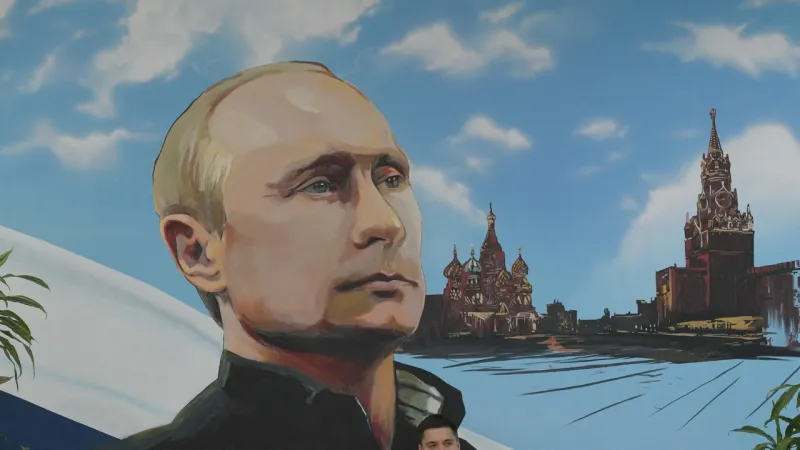
Moscow, Russia -- The Kremlin declared today that conditions for peace negotiations are absent following a high-profile meeting between President Donald Trump and Ukrainian President Volodymyr Zelenskyy at the United Nations. This pronouncement from Moscow casts a significant shadow over recent diplomatic efforts aimed at resolving the protracted conflict in Ukraine.
Kremlin spokesperson Dmitry Peskov conveyed Moscow's stance, emphasizing a perceived lack of prerequisites for commencing a constructive dialogue. He stated, “There are no prerequisites for negotiations at present,” a direct response that underscored the deep chasm in expectations between the warring parties and international mediators.
The declaration arrived shortly after President Trump and President Zelenskyy convened for discussions that reportedly focused on continued military aid to Kyiv and strategic imperatives. The meeting, detailed in a prior report titled Trump, Zelenskyy to Meet at UN; Arms Shipments on Agenda, highlighted the persistent need for international support for Ukraine's defense.
Analysts suggest the Kremlin's assertion implies that its core demands for a settlement, which reportedly include territorial concessions and security guarantees, remain unmet. Ukraine, conversely, has consistently maintained its territorial integrity as non-negotiable, seeking a full withdrawal of Russian forces from its internationally recognized borders.
President Trump, during his address at the UN, had notably urged a cessation of hostilities in Ukraine, appealing directly to Russian President Vladimir Putin to halt the war. This call was part of a broader diplomatic push by the US leader, as previously reported in Trump Demands Putin Halt War, Delivers Iran Ultimatum at UN, where he also delivered an ultimatum concerning Iran.
However, Moscow's firm rejection of immediate peace talks indicates a significant divergence from the diplomatic pathways envisioned by the US and its allies. The Kremlin's position suggests it perceives little benefit in direct negotiations until a more favorable geopolitical or military landscape emerges.
The ongoing conflict, now in its fifth year, continues to exact a heavy toll on civilian lives and infrastructure across Ukraine. International efforts to broker a lasting peace have repeatedly faltered, often due to fundamental disagreements over territorial integrity and the future geopolitical alignment of Ukraine.
Kyiv has not yet issued an official response to the Kremlin's latest statement, but President Zelenskyy has consistently reiterated Ukraine's commitment to peace on its own terms, emphasizing the importance of sovereignty and international law. Ukrainian officials have frequently stated that any peace framework must respect their nation's full territorial integrity.
Diplomatic observers note that the absence of preconditions for peace negotiations typically signifies a continued belief by one or both parties that military objectives can still be achieved or that the other side is not genuinely committed to an equitable resolution.
The statement from Moscow signals a potential entrenchment of positions, suggesting that the path to a ceasefire, let alone a comprehensive peace agreement, remains arduous and fraught with obstacles. This latest development underscores the complex and often frustrating nature of high-stakes international diplomacy.
As the international community watches, the onus remains on major global powers to find common ground that could facilitate a de-escalation of the conflict and pave the way for future peace negotiations. The chasm articulated by the Kremlin's spokesperson highlights the profound challenges ahead for any such endeavors.
The geopolitical ramifications of Russia's declaration are far-reaching, impacting not only the immediate conflict zone but also global security architectures and economic stability. It reinforces a perception of prolonged uncertainty in Eastern Europe.
Ultimately, the Kremlin's post-meeting assessment reaffirms that despite high-level diplomatic engagements, a breakthrough in the Ukraine conflict appears distant. The world continues to grapple with the complexities of fostering peace where fundamental demands clash so starkly.