 Dorry Archiles
WASHINGTON — Researchers have made a groundbreaking stride in biological computing, demonstrating that lab-grown mini-brains, or brain organoids, can successfully decipher Braille characters. This unprecedented achievement, announced recently by a leading scientific consortium, marks a pivotal moment in the quest to develop information processing systems that rival the human brains unparalleled energy efficiency.
For decades, the computational power of silicon-based machines has expanded exponentially, yet their energy footprint remains a formidable challenge. No conventional computer system has come close to matching the human brains ability to process vast amounts of data with minimal energy consumption.
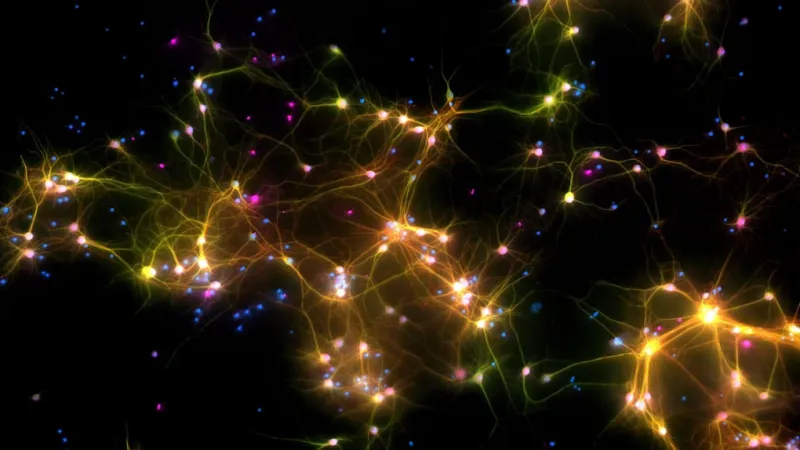
The experimental setup involved cultivating cerebral organoids, three-dimensional cellular structures derived from stem cells that mimic aspects of brain development and function. These intricate biological networks were then interfaced with a system designed to present tactile information, similar to how a human finger reads Braille.
Scientists stimulated the organoids with electrical pulses corresponding to Braille patterns. Over time, the mini-brains exhibited discernible electrical responses, indicating a form of recognition and processing of these patterns. This bio-electrical interaction allowed the researchers to observe the organoids learning and distinguishing different Braille letters.
This development thrusts the concept of biological computing into the forefront of advanced research. Integrating living, organ-like structures into information technology represents a radical departure from traditional silicon-based architectures, potentially paving the way for hyper-efficient processors and novel artificial intelligence paradigms.
The primary motivation behind this endeavor is to overcome the energy bottleneck inherent in modern computing. The human brain operates on approximately 20 watts of power, whereas supercomputers consume megawatts. Developing systems that leverage the intrinsic energy efficiency of biological neural networks could revolutionize data centers and personal devices alike.
While the potential is immense, significant scientific and ethical challenges lie ahead. Cultivating and maintaining these organoids requires specialized bioreactor environments, and scaling such systems for complex computational tasks presents a formidable engineering hurdle. Discussions surrounding the cognitive capacities and ethical treatment of these advanced biological systems are already underway.
Dr. Anya Sharma, a neuroscientist specializing in bioengineering, stated, "This breakthrough fundamentally redefines our understanding of what constitutes a computational unit. We are moving closer to a hybrid future where biology and technology merge to solve some of our most pressing data processing problems." Her remarks underscore the paradigm shift this research represents.
Current artificial intelligence models, despite their impressive capabilities, are often resource-intensive. The sheer energy required to train and run large language models, for instance, highlights the urgent need for more sustainable computing solutions. Biological computing offers a potential pathway to achieve sophisticated intelligence with a drastically reduced carbon footprint.
The long-term vision for organoid computing extends beyond simple Braille deciphering. Researchers envision a future where biological processors could tackle problems intractable for even the most powerful supercomputers, potentially leading to advancements in drug discovery, personalized medicine, and even a deeper understanding of consciousness itself.
This research is part of a broader scientific trend exploring the integration of living systems into technological frameworks. From genetically engineered bacteria performing computations to neural networks grown on electrodes, the boundaries between biology and engineering are continually dissolving.
Leading institutions and government science agencies are increasingly allocating resources to projects in neuro-computing and synthetic biology, recognizing their transformative potential. Collaborative efforts across neuroscience, material science, and computer engineering are crucial for propelling this field forward.
The immediate next steps involve enhancing the complexity of the organoids, improving their longevity, and developing more sophisticated interfaces for real-time data input and output. Scaling the number of neurons within these structures while maintaining their functional integrity remains a paramount challenge.
While practical applications are still years, if not decades, away, the implications for society are profound. The advent of biological computing could redefine industries, create entirely new sectors, and force a reevaluation of our ethical frameworks concerning synthetic life and artificial intelligence. Concerns about the potential for AI to threaten human bonds, as raised by experts like Ortega, may find new dimensions with biologically-integrated systems.
Public perception of mini-brains and organoid computing will likely involve a mix of awe and apprehension. Communicating the scientific advancements responsibly, while addressing valid societal and ethical questions, will be crucial for the acceptance and progress of this revolutionary field.
Historically, humanity has always sought to mimic and enhance natural processes through technology. From the earliest tools replicating human hands to flight inspired by birds, this quest to integrate biological principles into engineering marks another chapter in that enduring narrative, now venturing into the very fabric of thought.
Ultimately, the goal is not merely to create faster or more energy-efficient computers, but to unlock new frontiers of intelligence that may only be accessible through the intricate, adaptive power of living neural networks. The humble Braille characters, deciphered by a cluster of lab-grown cells, represent the first whisper of a potentially boundless future.