 Angela Stefani
WASHINGTON – The iconic Lincoln Memorial Reflecting Pool is currently undergoing an extensive draining operation, initiated after persistent issues with a pervasive algae bloom and peeling blue paint marred its waters. This intervention comes years after President Donald Trump's directive to color the basin "American Flag Blue," a decision now scrutinized as workers contend with the aftermath, while a former Olympic participant simultaneously faces legal proceedings, vehemently denying accusations of vandalism related to the pool's condition.
The mandate to tint the pool's water a distinct "American Flag Blue" was issued by President Trump during his previous term, intended to evoke a patriotic aesthetic for the capital's historic landscape. This move, however, diverged from the pool's traditional, more naturalistic appearance and maintenance protocols, prompting concerns from environmentalists and historical preservationists.
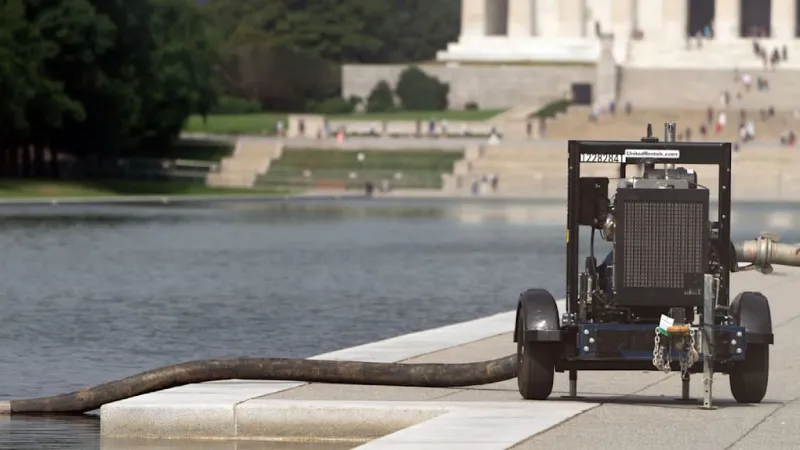
Recent observations revealed significant deterioration: large patches of the blue coating had detached from the basin floor, floating as unsightly debris, while a vibrant green algae growth spread across the remaining water surface. This necessitated the current emergency measures, with crews deploying specialized equipment to pump out millions of gallons of water from the colossal basin.
Adding a complex legal dimension to the situation, a former Olympic athlete, whose identity remains under judicial seal pending ongoing proceedings, is vigorously contesting charges of vandalism. Authorities allege the Olympian was responsible for some of the damage, though specifics of the alleged acts have not been publicly disclosed by the court or law enforcement. The individual's legal team asserts their client's innocence, arguing the pool's issues stem from systemic maintenance failures rather than deliberate malice.
The Lincoln Memorial Reflecting Pool, stretching over 2,000 feet, serves as a solemn backdrop to countless national events and rallies, including Martin Luther King Jr.'s "I Have a Dream" speech. Its pristine condition is often viewed as a reflection of national pride and a testament to meticulous preservation efforts.
Environmental experts have long cautioned against alterations to natural or semi-natural water bodies, particularly those in public parks, without thorough ecological impact assessments. The introduction of artificial dyes can disrupt delicate aquatic ecosystems, potentially fostering conditions for aggressive algae growth while harming beneficial microbial life. This situation at the reflecting pool underscores those warnings.
The National Park Service, responsible for the monument's upkeep, routinely dedicates substantial resources to maintaining the integrity of national monuments. However, large-scale issues such as this algae bloom highlight the persistent challenges of balancing aesthetic directives with practical ecological management in a highly visible public space.
Legal representatives for the accused Olympian contend that the degradation of the pool is a direct consequence of the ill-conceived "American Flag Blue" project. They argue that attempting to artificially color a massive outdoor water feature with a non-standard coating created an inherently unstable environment, leading to the reported peeling and subsequent algal proliferation. This defense posits that the damage was an inevitable outcome, not a criminal act.
The sight of the drained pool, currently a muddy basin, disappoints tourists and locals who visit the Lincoln Memorial. The National Mall, a major draw for visitors worldwide, relies on the aesthetic appeal of its monuments and open spaces. This ongoing repair work, therefore, impacts the visitor experience and could potentially affect local tourism revenue in the short term.
The incident raises broader questions about the oversight of national monument preservation, the balance between political directives and scientific recommendations, and accountability for public infrastructure. As the Lincoln Memorial Reflecting Pool undergoes rehabilitation, the legal battle involving the Olympian is set to proceed, potentially shedding further light on the complex interplay of human actions and environmental consequences at a cherished national landmark.
The draining process itself is a multi-day endeavor, requiring coordination with various utilities and environmental agencies to ensure the water is safely discharged and any potential contaminants are contained. Once emptied, the basin will undergo a thorough cleaning, followed by an assessment of the underlying surface structure before any recoating or refilling can commence.
President Trump's administration had previously championed the "American Flag Blue" initiative as a bold statement of national identity. This current situation, however, prompts a re-evaluation of the long-term ramifications of such policy choices on the nation's iconic natural and constructed environments, particularly concerning their ecological resilience and public funds allocation for remedial actions.