 Robert Andrison
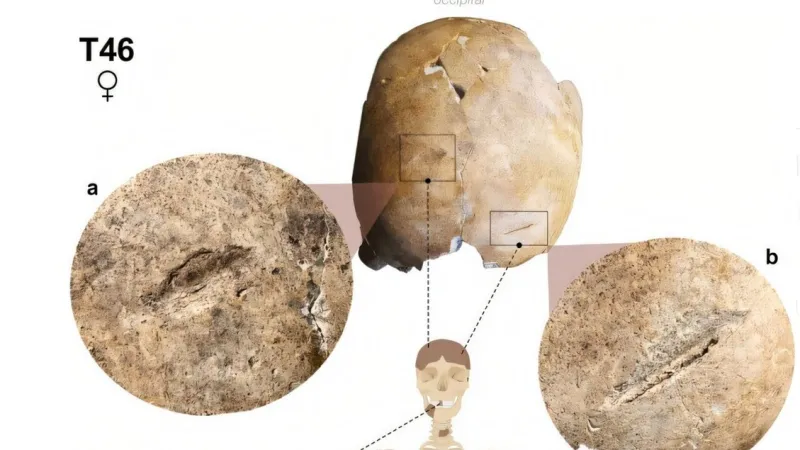
A recent archaeological revelation in Italy has unveiled the skeletal remains of the first Lombard woman exhibiting clear signs of violent trauma, prompting historians and anthropologists to re-evaluate perceptions of women's roles and the prevalence of violence in early medieval society. The discovery, part of an ongoing cold case investigation into ancient burials, presents two compelling, yet starkly different, interpretations: was she a fierce warrior or a tragic victim of domestic brutality?
When the remains were uncovered, the distinct marks on the bones immediately suggested a violent demise rather than natural causes. Forensic anthropological analysis confirmed blunt force trauma and potential weapon injuries, indicating a brutal end for the individual from the Lombard period, a Germanic people who ruled parts of Italy from the 6th to 8th centuries.
One prevailing theory posits that the woman could have been a warrior, engaging in combat typical of the tumultuous early medieval era. Historical records, though scarce, occasionally hint at women participating in battle or holding positions of authority, challenging modern notions of gender roles in antiquity.
Scholars cite certain grave goods found with other female burials from the era, such as modest weaponry or protective amulets, as circumstantial evidence for potential martial roles. This particular discovery, however, offers direct osteological proof of violent injury, elevating the discussion from inference to empirical observation concerning the lives of Lombard women.
Conversely, researchers are also considering the grim possibility that the woman succumbed to domestic violence. Such incidents, while often unrecorded, were undeniably a part of life in many historical societies, including the early medieval communities that formed the Lombard kingdom.
The nature of some injuries, if localized and non-defensive, could point towards interpersonal conflict rather than battlefield engagement. Analyzing patterns of trauma against known historical precedents for domestic disputes is crucial in this interpretation, though direct evidence remains elusive.
Regardless of the precise context of her death, this discovery represents a pivotal moment in understanding the social fabric of the Lombard kingdom in Italy. It forces a deeper examination of gender, power dynamics, and the harsh realities faced by individuals living over a millennium ago.
Differentiating between combat wounds and injuries sustained during a domestic altercation poses a significant challenge for forensic archaeologists. The specific types of fractures, their location, and evidence of healing or lack thereof, are critical clues in piecing together the final moments of the Lombard woman.
Advanced techniques in bioarchaeology, including stable isotope analysis and ancient DNA studies, could potentially offer more insights into the woman's diet, geographical origin, and genetic makeup, indirectly informing her social status or lifestyle within the Lombard community.
The Lombard presence in Italy, lasting from the mid-6th to the late 8th centuries, was marked by significant societal shifts, warfare, and the integration of diverse cultural practices. This individual case provides a granular perspective on an often generalized historical period, humanizing the distant past.
Experts are urging comprehensive interdisciplinary research, combining archaeological findings with historical texts and comparative anthropological studies, to shed more light on this intriguing cold case and the broader experiences of Lombard women.
The unnamed Lombard woman's story, though incomplete, serves as a poignant reminder of the enduring human experience of violence and resilience, echoing across centuries and prompting continuous re-evaluation of our historical narratives.