 Chris Robert
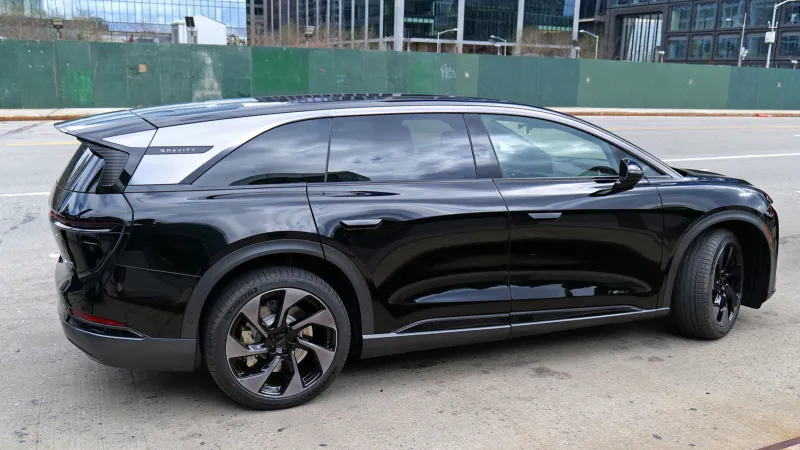
NEWARK, California – Lucid Group, the luxury electric vehicle manufacturer, attributed its significant third-quarter financial underperformance to an extraordinary operational hurdle: the company literally lost track of its own manufactured vehicles within its complex global supply chain. CEO Peter Rawlinson disclosed this astonishing logistical challenge during a recent earnings call, offering a rare glimpse into the unexpected complexities plaguing the nascent electric vehicle industry.
Rawlinson conveyed to investors and analysts that despite a robust production rate, vehicles were being completed but subsequently disappearing into a tangled web of distribution and transit. This perplexing situation meant that cars physically existed but could not be accurately located or delivered to waiting customers, directly impacting revenue recognition for the period.
The revelation paints a stark picture of the challenges facing companies attempting to scale in the highly competitive EV market. While supply chain disruptions have been a common refrain across industries in recent years, a chief executive admitting the company could not locate its own finished products signals an unparalleled degree of operational dysfunction.
Lucid, often positioned as a direct rival to established EV giant Tesla, has been under intense scrutiny to accelerate production and deliveries of its premium Lucid Air sedan. The Q3 disclosure highlights that merely manufacturing vehicles is only half the battle; efficient logistics and distribution are equally critical for financial viability and market confidence.
This logistical breakdown severely hampered Lucid's ability to convert manufactured units into sales, resulting in missed delivery targets and consequently, a weaker financial report for the quarter. The issue is not one of manufacturing capability but rather a profound disconnect in the downstream processes of inventory management and transportation.
Industry experts suggest that such a scenario, where finished goods become untraceable, is highly unusual for a company of Lucid's aspirations and valuation. It indicates potential shortcomings in tracking systems, warehouse management, or coordination with third-party logistics providers.
The consequences extend beyond immediate financial losses. Investor confidence in Lucid's operational execution could waver, potentially affecting future capital raises and market valuation. The company has invested heavily in its manufacturing facilities, but without effective delivery mechanisms, those investments cannot fully translate into shareholder value.
Addressing the problem will require a comprehensive overhaul of Lucid's logistics infrastructure, potentially involving new technology solutions, revised partnerships, or a complete restructuring of its distribution network. The urgency for resolution is paramount as the company strives to meet ambitious growth projections.
Analysts are now closely watching how quickly Lucid can rectify these internal issues and provide a clear roadmap for preventing similar logistical missteps in future quarters. The ability to track and deliver every single electric vehicle produced is fundamental to any automotive operation.
This incident underscores the intricate nature of modern automotive production and distribution, particularly for companies pioneering new technologies like electric vehicles. It serves as a cautionary tale that even with innovative products, foundational business operations must be impeccably managed.
Lucid's predicament also offers a broader lesson for the entire electric vehicle sector, emphasizing that scaling production involves mastering every facet of the value chain, from raw materials to final customer delivery. Operational transparency, even when revealing challenging truths, is crucial for maintaining credibility with stakeholders and the broader market.