 Dorry Archiles
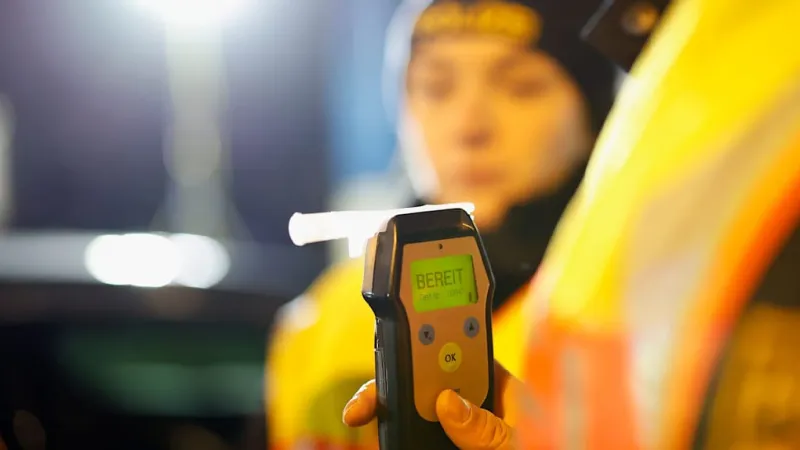
Lütetsburg, Germany – A cyclist was apprehended by local police in the municipality of Lütetsburg, within the Aurich district, on the evening of July 21, 2026, after officers determined the individual was operating a bicycle with an alarmingly high blood alcohol content (BAC) exceeding 2.2 promille. The incident underscores persistent public safety concerns surrounding impaired operation of vehicles, including bicycles, on German roads.
The discovery of such a significant level of intoxication in a cyclist highlights the severe risks posed not only to the rider but also to other road users. In Germany, while different legal thresholds apply to cyclists compared to motor vehicle drivers, operating a bicycle with a BAC of 1.6 promille or higher is considered a criminal offense, potentially leading to substantial fines, points on a drivers license, or even imprisonment.
German traffic law, specifically Paragraph 316 of the Criminal Code (Strafgesetzbuch), addresses drunk driving for all types of vehicles. For cyclists, the 1.6 promille mark establishes absolute incapacity to drive. Below this, from 0.3 promille, relative incapacity can be invoked if the cyclist shows signs of impaired judgment or causes an incident.
Following the stop, police initiated standard procedures, which likely included a breathalyzer test, followed by a blood test to confirm the precise BAC level. The identity of the cyclist has not been publicly released, consistent with German privacy laws in such preliminary stages.
Authorities frequently issue warnings about the dangers of cycling under the influence, emphasizing that bicycles, despite their perception as less dangerous, can still cause severe accidents. Impaired coordination, slower reaction times, and compromised judgment significantly increase the likelihood of collisions, falls, and serious injuries.
This incident in Lütetsburg echoes broader efforts to curb intoxication among those operating vehicles. Globally, measures against impaired operation are stringent, as evidenced by a recent case where crew members intervened to stop intoxicated pilots from attempting a flight, highlighting the universal commitment to public safety.
The Aurich district, like many rural and semi-rural regions in Lower Saxony, sees a significant number of residents relying on bicycles for transport. This widespread use sometimes correlates with incidents of impaired cycling, prompting regular enforcement by local police forces.
To counteract such behavior, regional police often collaborate with public health campaigns to educate the populace on responsible alcohol consumption and safe road practices. These initiatives aim to reduce traffic accidents and enhance overall road safety for all participants.
The societal costs of impaired driving, whether by car or bicycle, extend beyond immediate fines and penalties. They encompass healthcare expenses for accident victims, property damage, and the emotional toll on individuals and families affected by preventable tragedies.
The severity of Germany's approach to impaired cycling stands in contrast to certain public transport regulations elsewhere. For example, Deutsche Bahn recently enforced a nationwide alcohol ban on its trains, demonstrating varying strategies to manage public intoxication and ensure passenger comfort and safety in different contexts.
The cyclist now faces a legal process that could include a mandatory medical-psychological assessment (MPU), often referred to as an idiot test in colloquial German, especially if their drivers license is also at risk. Such assessments aim to determine if an individual is fit to operate a vehicle responsibly.
Police officials across Germany consistently urge citizens to plan their journeys responsibly, particularly when consuming alcohol. Alternatives like public transportation, taxis, or designated drivers are readily available to prevent dangerous situations.
As the investigation proceeds, the Lütetsburg incident serves as a stark reminder of the legal ramifications and significant personal risks associated with cycling while intoxicated, reinforcing the necessity of strict adherence to traffic laws for the well-being of the community.