Gabriella
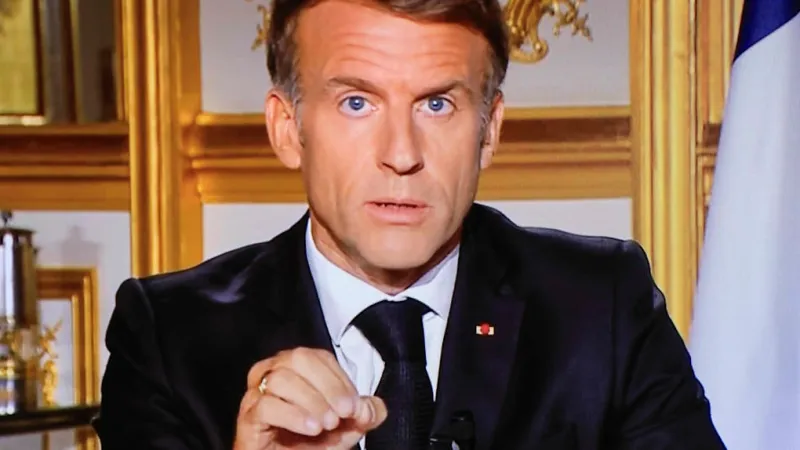
French President Emmanuel Macron strongly condemned the escalating violence observed during recent protests across France, asserting that those attempting to destabilize the republic would be held accountable. He differentiated between citizens expressing legitimate grievances and individuals engaging in looting and destruction, while also announcing a comprehensive investigation into the conduct of law enforcement during the unrest.
Macron’s stern remarks underscore the administration's resolve to restore public order amid persistent civil disturbances. His statement, translated from its original French, declared, "Whoever tries to overthrow the republic will be held accountable," signaling a zero-tolerance stance towards destructive elements. This powerful message aims to reassert state authority and deter further acts of vandalism and aggression.
The President meticulously drew a line between peaceful demonstrators, whom he acknowledged have "legitimate demands," and those he labeled as opportunistic agitators and looters. This distinction is crucial for the government to maintain a dialogue with segments of the protesting population while cracking down on lawbreakers, a strategy aimed at isolating violent factions.
Adding another layer of complexity to the government’s response, Macron announced a thorough investigation into police operations during the recent wave of demonstrations. This inquiry seeks to address widespread concerns regarding potential excesses by security forces, a sensitive issue that often fuels public anger and further exacerbates tensions in times of French unrest. The move suggests a strategic attempt to balance firm law enforcement with public trust.
The nation has grappled with a series of widespread protests that have seen cities like Paris experience record arrests and significant disruption. These demonstrations, though varying in their immediate triggers, often reflect deeper societal frustrations concerning economic inequality, social justice, and government policies.
Reports from the capital indicated that the city was rocked by record arrests during recent demonstrations, prompting initial discussions about a potential national address from President Macron. Such incidents highlight the scale of the challenge confronting authorities in managing public dissent while upholding order. For more on the situation in the capital, see Paris Rocked by Record Arrests Amid Protests; Macron to Address Nation.
The escalating situation has also drawn international attention, with some nations issuing travel advisories for their citizens in France. The German government, for instance, has cautioned its nationals to "exercise caution amidst unrest" when visiting or residing in the country, underscoring the perceived volatility of the current environment. For further details, consult Berlin Advises Germans in France: Exercise Caution Amidst Unrest.
France possesses a rich history of public protest and social movements, with demonstrations often serving as a critical mechanism for political expression and change. However, the recent scale of violence, property destruction, and direct clashes with law enforcement has prompted renewed debate over the acceptable boundaries of civil disobedience.
President Macron's administration faces a delicate balancing act: asserting state power to curb lawlessness while simultaneously addressing the underlying grievances that fuel legitimate protest. His political credibility and the stability of his government hinge significantly on navigating this turbulent period effectively, avoiding both authoritarian overreach and perceived weakness.
The ongoing French unrest presents substantial political risks for Macron, potentially eroding public trust and galvanizing opposition forces. Successfully defusing the crisis requires not only robust security measures but also transparent communication and genuine engagement with the concerns of the populace.
Beyond the immediate social upheaval, the prolonged unrest carries tangible economic consequences. Businesses in affected areas suffer losses from damage and closures, while the perception of instability can deter investment and tourism, further impacting France’s economic recovery efforts.
As investigations into both the violence and police conduct commence, the coming weeks will be critical in determining the trajectory of public discourse and state response. The government's ability to demonstrate fairness and accountability, both for those who commit violence and those who enforce the law, will be paramount in rebuilding trust and quelling further disorder.