Robert Andrison
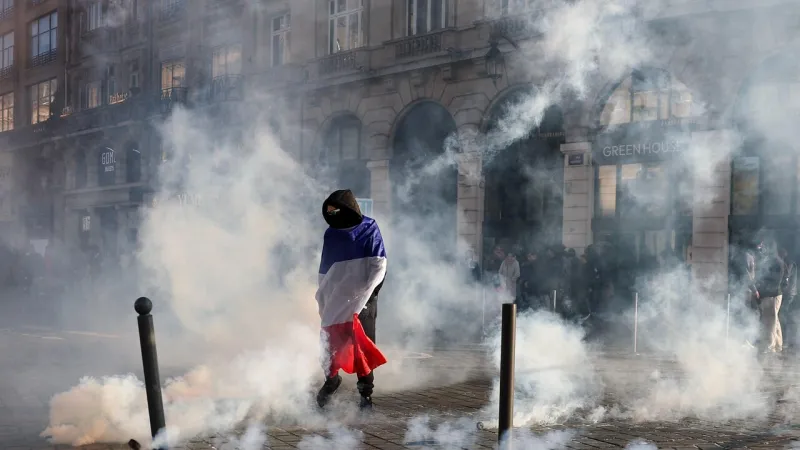
Paris, France -- French authorities confirmed a record 855 arrests in the capital city amidst escalating nationwide protests, leading President Emmanuel Macron to schedule a crucial address to the nation for tonight at 8 PM local time. The significant number of detentions underscores the intensifying civil unrest gripping France, as citizens voice discontent over various grievances.
The unprecedented wave of arrests in Paris signals a significant escalation in the government's response to the ongoing demonstrations. Police forces have been deployed in large numbers across metropolitan areas, attempting to quell the sometimes-violent gatherings that have disrupted daily life and commerce.
These recent clashes follow a period of persistent social agitation across France. The unrest has encompassed a range of issues, from economic hardship and cost of living concerns to contentious government reforms. Earlier reports highlighted how France Simmers: Cost of Living Protests Escalate Nationwide, providing a backdrop to the current surge in tensions.
President Macron's decision to address the nation signals the gravity of the situation. His prime-time speech is widely anticipated as an attempt to restore calm, outline potential new policies, or reaffirm the government's stance amidst the deepening crisis. Previous presidential addresses during periods of unrest have often been pivotal moments, either de-escalating tensions or further polarizing public opinion.
Details regarding the content of President Macron's speech remain guarded, but observers expect him to confront the underlying causes of the widespread discontent directly. His message will likely be scrutinized for any concessions or firm declarations regarding public order and future policy directions.
The French government has consistently maintained a firm stance on upholding law and order, condemning acts of vandalism and violence committed during the protests. Officials have emphasized the importance of distinguishing between peaceful assembly and illegal disruptions, often drawing criticism from protest organizers who argue their rights are being infringed upon.
The volatile situation in France has drawn international attention, with some foreign political figures weighing in. Notably, comments from abroad have linked the unrest to broader European challenges, as reflected in headlines such as Vance Links French Riots to Open Borders, Blames Left, though the French government has largely focused on domestic causes.
The intensity of the French protests has at times led to significant damage to public and private property. Incidents like the one reported where Limoges City Hall Ablaze Amid Escalating French Unrest highlight the destructive potential of these demonstrations and the challenges faced by law enforcement.
Many citizens participating in the French protests express a profound sense of disenfranchisement, citing issues ranging from pension reforms to perceived governmental detachment from everyday struggles. Activists argue that the government's current policies exacerbate economic disparities, fueling public anger and contributing to the sustained nature of the demonstrations.
The ongoing unrest poses significant economic challenges for France. Businesses, particularly in affected urban centers like Paris, face closures and reduced foot traffic, impacting revenue and overall economic stability. The tourism sector, a vital component of the French economy, also suffers from perceptions of instability and insecurity.
The record number of arrests places immense pressure on the judicial system and law enforcement resources. Processing such a large volume of detainees requires extensive manpower and could strain prison capacities. Authorities face the dual challenge of maintaining public order while upholding legal due process for those arrested.
Similar societal tensions, though varying in scale and intensity, have been observed in other European nations. Concerns over public order and the role of protest organizers have led to heated debates, as seen in reports like Italian Leaders Clash Over Public Order, Protest Organizers. These instances reflect a broader regional struggle with economic grievances and political expression.
The coming days will be critical in determining the trajectory of the French protests. President Macron's address could either provide a pathway to de-escalation or potentially ignite further opposition, depending on its reception by the public and protest leaders. The government's ability to navigate this period of intense scrutiny will define its immediate future.
As France grapples with widespread civil unrest and a record number of arrests, all eyes turn to President Macron's impending speech. The nation awaits a clear message that addresses both the immediate crisis of public order and the deeper currents of societal dissatisfaction.