Demian Sahputra
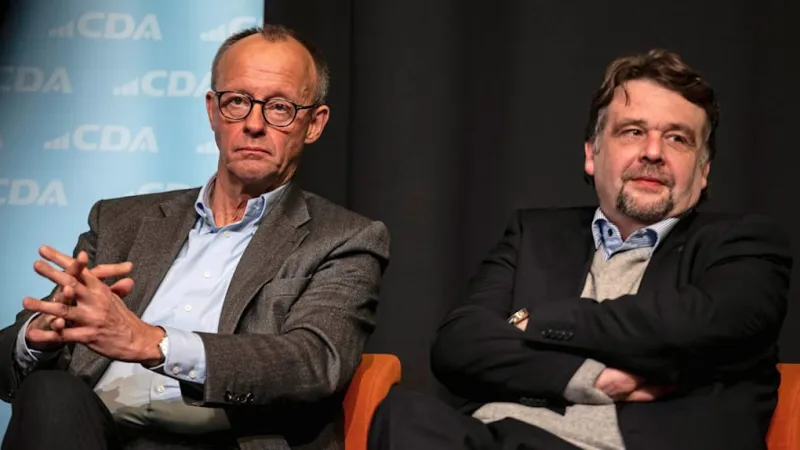
Berlin – Chancellor Friedrich Merz is confronting significant internal dissent from a prominent faction within his own Christian Democratic Union (CDU), as party leader Dennis Radtke of the Christian Democratic Employees Association (CDA) publicly cautioned against the social fallout of Merz's reform agenda. Radtke declared Merz's "CDU pur" approach, in its current form, has demonstrably failed, primarily characterizing it as a mere savings program that jeopardizes public support.
Radtke, a vocal representative for the social conscience of the CDU, underscored his concern that the current implementation of Merz's agenda risks eroding the crucial social acceptance necessary for any broad governmental reform. He emphasized that policies perceived solely as austerity measures could alienate traditional working-class voters and broader segments of German society.
The critique emanates from the CDA, a pivotal wing of the CDU that has historically championed the social market economy and advocated for workers' rights and social protections. Their voice carries considerable weight, reflecting a significant portion of the party's traditional electoral base. The association views Merz's current trajectory as deviating from these foundational principles.
Chancellor Merz ascended to his position on a platform promising a revitalized CDU, often articulated as "CDU pur"—a return to what he and his supporters perceive as the party's unadulterated conservative and economic liberal roots. This strategy aimed to clearly distinguish the CDU from its coalition partners and other political rivals, asserting a distinct identity.
However, critics like Radtke argue that this ideological purity has translated into policies that prioritize fiscal discipline above social cohesion. The characterization of the reform course as "primarily a savings program" highlights a fundamental disagreement over the priorities of government, especially in times of economic uncertainty and social strain.
The internal schism arrives at a sensitive juncture for German politics. Recent analyses have repeatedly pointed to shifting political landscapes, with center parties grappling with diminishing influence amidst coalition struggles. Observers note that such internal rifts within the leading party could further complicate governance and potentially bolster alternative political forces.
Indeed, the CDU has faced considerable pressure from the rise of populist movements, particularly the Alternative for Germany (AfD). Experts have previously suggested that the CDU must carefully consider its approach to maintain political relevance and counter the AfD's increasing dominance. German Expert: CDU Must Weigh AfD Ties for Political Relevance.
The demand for a "course correction" from the CDA implies a call for more balanced policies that integrate social welfare considerations alongside economic reforms. This would involve a re-evaluation of budget cuts and a potential refocus on investments in social infrastructure and support systems.
Merz's office has yet to issue a formal response to Radtke's direct challenge, but the internal debate underscores the complexities of governing a diverse political party and a nation with varied economic and social needs. The Chancellor's ability to unify his party will be critical for the stability of his administration.
The "CDU pur" strategy was partly conceived to reclaim voters from the AfD and other fringes by offering a clear, principled conservative alternative. Yet, some within the party fear that an overly rigid or austerity-focused approach risks alienating the very mainstream voters it seeks to attract, potentially deepening the CDU crisis.
This internal critique also reflects broader public sentiment regarding the economic direction of the country. With concerns over inflation, energy costs, and the future of Germany's social safety net, a purely cost-cutting agenda could be perceived as out of touch with everyday realities.
Political analysts suggest that the success or failure of Merz's "CDU pur" experiment will have lasting repercussions for the future of the Christian Democratic Union and the broader German political spectrum. The outcome could dictate whether the party retains its status as a Volkspartei or continues to fragment.
The call for a pivot is not isolated within the CDU. Other voices within the German political discourse have recently proposed various strategies for center parties to navigate the evolving political landscape, emphasizing the need for broad appeal. SPD Leader Proposes Pension Summit, Cautions CDU on AfD Ties.
As Chancellor Merz weighs his options, the pressure to demonstrate both fiscal responsibility and social empathy will intensify. His response to this internal challenge will be a defining moment for his chancellorship and the direction of Germany's leading conservative party.