 Robert Andrison
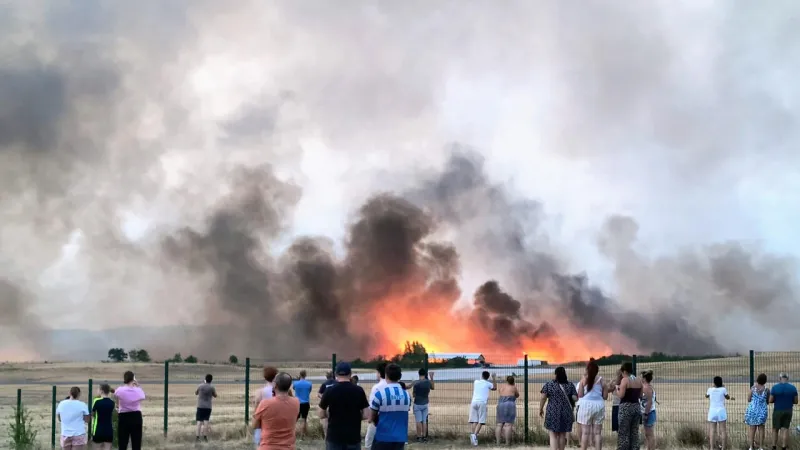
GIRONDE, France – An unprecedented wildfire has forced the emergency evacuation of approximately 220,000 residents across France's southwestern Gironde department, with the blaze advancing dangerously close to the suburbs of Bordeaux. The inferno, fueled by persistent drought conditions and high temperatures, has already consumed an estimated 42,000 hectares of forest and scrubland since its inception, marking one of the most destructive natural disasters to impact the region in recent memory.
The catastrophic situation developed rapidly over the past week, primarily affecting the vast pine forests south of the departmental capital. Authorities initiated the large-scale evacuations as shifting winds and intense heat caused the fire to spread unpredictably, overwhelming local firefighting efforts.
Emergency services, comprising thousands of firefighters from across France and neighboring European countries, are battling tirelessly to contain the blaze. Air support, including water-bombing planes and helicopters, has been deployed around the clock, though visibility and the sheer scale of the conflagration present significant operational challenges.
The displacement of a quarter-million people has strained local resources, with temporary shelters established in safer zones. Many residents left their homes with only essential belongings, facing an uncertain future as the fire continues its destructive path. No official figures on casualties have been released, but the focus remains on ensuring the safety of all inhabitants.
Beyond the immediate threat to human life and property, the environmental toll is immense. The destruction of 42,000 hectares represents a significant ecological loss, impacting biodiversity and altering the landscape for decades to come. The region, known for its vineyards and tourism, faces severe economic disruption.
While the precise origin of the current fire remains under investigation, officials widely attribute the rapid escalation and intensity to the prolonged drought and successive heatwaves that have gripped much of Europe throughout 2026. Experts warned earlier this year that an Unprecedented El Niño Forecast: 2027 Poised to Become Hottest Year Ever could exacerbate such extreme weather events globally.
The French government has declared a state of natural disaster in Gironde, pledging national support and resources. President Emmanuel Macron visited the affected areas earlier this week, commending the bravery of emergency personnel and vowing comprehensive aid for recovery and rebuilding efforts once the immediate crisis subsides.
This devastating event follows a pattern of increasingly severe Wildfires Engulf France and Spain, Nearly 300,000 Flee Inferno in recent years, highlighting the escalating challenges posed by climate change. Southern France has been particularly vulnerable, with earlier blazes already disrupting events like the Southern France Wildfires Shorten Tour De France Final Stage in past seasons.
Meteorological forecasts offer little immediate reprieve, with an Scorching Heat Returns: African Anticyclone Dominates European Forecast continuing to dominate the European forecast, promising sustained high temperatures and dry conditions. This persistent heat significantly complicates firefighting efforts, making containment exceptionally difficult.
The Gironde wildfires underscore the urgent need for enhanced forest management strategies, robust climate adaptation measures, and international cooperation in combating extreme weather phenomena. As communities grapple with the immediate aftermath, the long-term ecological and socio-economic ramifications will require sustained attention and investment.
The threat to Bordeaux's periphery has prompted additional vigilance and preparedness measures in the city itself. While the city center remains relatively safe due to geographical features and urban planning, outlying areas are under constant watch for ember showers and sudden shifts in wind direction that could rapidly alter the fire's trajectory.
Hundreds of fire engines, specialized vehicles, and ground crews are strategically positioned to protect critical infrastructure and residential areas. The logistical challenges of sustaining such a massive operation, including fuel, water supply, and personnel rotation, are immense and require meticulous coordination among various agencies.
European Union civil protection mechanisms have been activated, drawing resources from member states. This coordinated response highlights the growing recognition that such large-scale natural disasters transcend national borders and require a unified approach.
The smoke plume from the Gironde wildfires is visible for hundreds of kilometers, impacting air quality across a wide region. Public health advisories have been issued, particularly for vulnerable populations, urging residents to stay indoors and minimize exposure to airborne particulates.
Despite the overwhelming nature of the crisis, reports of community resilience and mutual aid are emerging. Local volunteers are assisting displaced residents, providing food, water, and comfort, embodying the spirit of solidarity in the face of adversity.