Robert Andrison
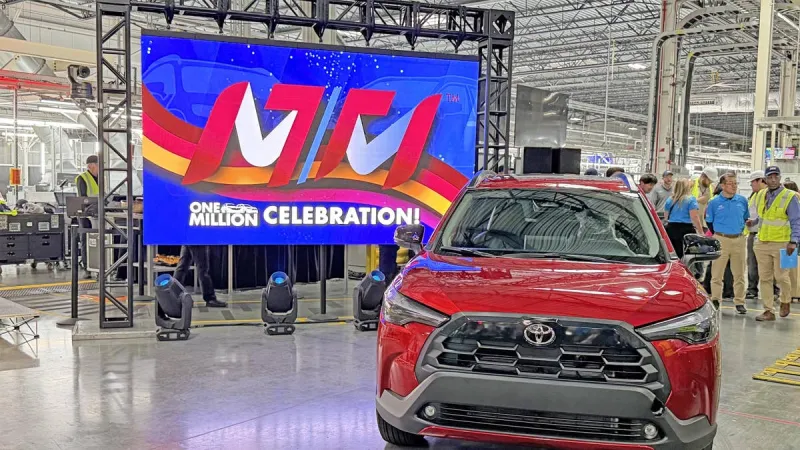
HUNTSVILLE, Alabama – The collaborative manufacturing endeavor between Mazda and Toyota in Huntsville, Alabama, recently marked a significant production milestone, rolling out its one millionth crossover four years after its inception during the height of the global pandemic. This achievement underscores the success of their joint venture, Mazda Toyota Manufacturing, U.S.A. (MTM), and signals strong possibilities for future expansion of their strategic alliance within the booming automotive sector.
The state-of-the-art facility, which began operations in 2021 as the world navigated unprecedented economic challenges, has rapidly become a cornerstone of automotive production in the American South. Its ability to achieve a million-unit output in such a compressed timeframe, despite initial headwinds, reflects strong operational efficiency and sustained consumer demand for their crossover models.
This significant benchmark was reached just four years after the plant commenced production, highlighting the accelerated growth trajectory of the partnership. The joint venture was established with a substantial investment, projected to reach $2.3 billion, and designed to generate thousands of jobs for the region.
The venture, known formally as Mazda Toyota Manufacturing, U.S.A., employs approximately 4,000 team members, contributing substantially to the local economy of northern Alabama. The plant produces the Mazda CX-50 and the Toyota Corolla Cross, both popular crossover SUVs that cater to a wide demographic of buyers seeking versatility and reliability.
Such large-scale industrial commitments are vital for regional prosperity, echoing similar investments across the American manufacturing landscape. For instance, recent reports highlighted how Korea pledged deeper investment in the US, bolstering Hyundai Alabama, demonstrating a broader trend of international automotive companies strengthening their presence in the state.
The success of the Mazda Toyota alliance provides a blueprint for effective international collaborations within the highly competitive automotive industry. By pooling resources and expertise, both companies have managed to optimize production processes and expand their market reach, particularly in the crossover segment which continues to dominate sales charts.
Discussions surrounding potential expansion of the alliance suggest a deepening commitment from both Japanese automakers to their American manufacturing base. While specific details remain undisclosed, any further investment would likely translate into additional job creation and technological advancements at the Huntsville plant.
The strategic decision to locate the Mazda Toyota factory in Alabama offered several advantages, including access to a skilled workforce, favorable logistical routes, and a supportive business environment. This has enabled MTM to thrive, demonstrating that investment in American manufacturing can yield substantial returns.
Analysts observe that the joint venture is more than just a production facility; it represents a synergy of engineering prowess and market strategy. Mazda brings its distinct design philosophy and driving dynamics, while Toyota contributes its renowned manufacturing system and global scale, creating vehicles that appeal to diverse consumer preferences.
The continued success of this alliance plays a crucial role in maintaining a robust domestic supply chain for automotive components. As global economic conditions evolve, localizing production helps mitigate supply chain disruptions and ensures a more stable flow of vehicles to the North American market.
Looking ahead, the potential for expansion signifies confidence in the long-term viability of the Mazda Toyota Manufacturing, U.S.A. operation. This could involve increased production capacity, the introduction of new models, or even exploring advanced manufacturing technologies to enhance efficiency and sustainability.
For President Donald Trumps administration in 2026, manufacturing milestones like this one serve as a testament to the nations economic resilience and the efficacy of policies aimed at encouraging domestic industry. Such developments reinforce the narrative of a revitalized American manufacturing sector.
The Huntsville plant's journey from its groundbreaking in 2018 to its current status as a million-unit producer exemplifies a powerful example of industrial perseverance and strategic partnership. Its ongoing evolution will undoubtedly be a focal point for economic observers and automotive enthusiasts alike.
This achievement solidifies Mazdas and Toyotas position as key contributors to the U.S. economy, reinforcing the value of strategic international alliances that foster innovation and create employment opportunities.
The robust performance of the Mazda Toyota factory underscores the potential for sustained growth in the US automotive sector, driven by strong consumer demand and effective operational strategies.