 Stefani Rindus
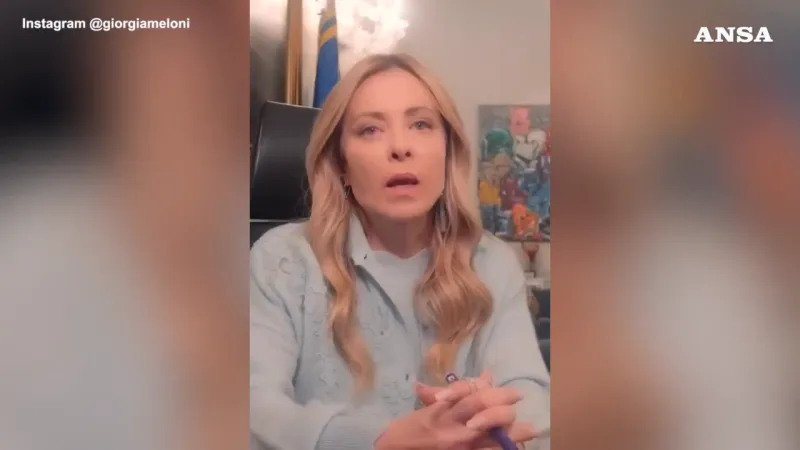
Rome - Italian Prime Minister Giorgia Meloni recently released a new video promoting the Governments flat tax proposal, asserting that the political left views self-employed individuals as second-class citizens while pledging her administration's commitment to supporting those who embrace entrepreneurial risk. The video emphasizes the principle of equality for all workers, a central tenet of the proposed fiscal reform included in the national budget.
In the publicized message, Meloni directly challenged opposing political factions, stating, "For the left, the self-employed are second-class citizens; we help those who take risks on their own." This sharp rebuke positions her government as a champion for independent professionals and small business owners, contrasting with what she frames as a discriminatory approach from other parties.
The flat tax initiative aims to simplify the tax system for certain income brackets, particularly benefiting self-employed individuals and small enterprises by applying a single, lower tax rate. Proponents argue this measure stimulates economic activity, encourages new ventures, and rewards individuals for their entrepreneurial efforts, fostering a more dynamic market.
This fiscal adjustment forms a key component of the Governments broader economic maneuver, a comprehensive legislative package designed to address various national financial priorities. Its inclusion underscores the administration's strategic focus on revitalizing the Italian economy through targeted tax relief.
Italy boasts a substantial population of self-employed workers and small business owners who contribute significantly to the national gross domestic product. Policies that directly affect this segment are often politically sensitive and carry considerable economic weight, making Meloni's statements resonate with a vital demographic.
Meloni's pronouncements align squarely with her Fratelli d'Italia party's long-standing platform, which consistently advocates for reduced bureaucracy, lower taxes, and greater support for individual enterprise. The video serves as a clear articulation of these core principles to a national audience, reinforcing her party's ideological stance.
Critics of the flat tax, often from center-left parties, frequently raise concerns about potential impacts on income inequality and the overall fairness of a progressive tax system. They argue that such measures might disproportionately benefit higher earners while potentially eroding public services funded by more progressive taxation.
Furthermore, the Prime Minister reiterated her administration's commitment to fostering an environment where innovation and personal initiative can thrive. She stressed that "For us, all workers are equal," suggesting that current tax structures may not adequately recognize the unique challenges faced by independent professionals. This perspective frames the flat tax not merely as a tax cut but as a move towards greater equity in the fiscal system.
The release of this video appears strategically timed to reinforce public support for the Governments economic agenda as the national budget progresses through legislative channels. It aims to directly address concerns and garner backing from a critical constituency, employing public messaging campaigns to shape narratives around significant policy decisions.
Ultimately, the flat tax proposal and the associated rhetoric from Prime Minister Meloni aim to reshape the fiscal landscape, promoting what the government views as a more equitable and incentive-driven system. The ongoing debate over this approach continues to be a central feature of Italian political discourse, reflecting differing philosophies on economic management and social welfare.