Gabriella
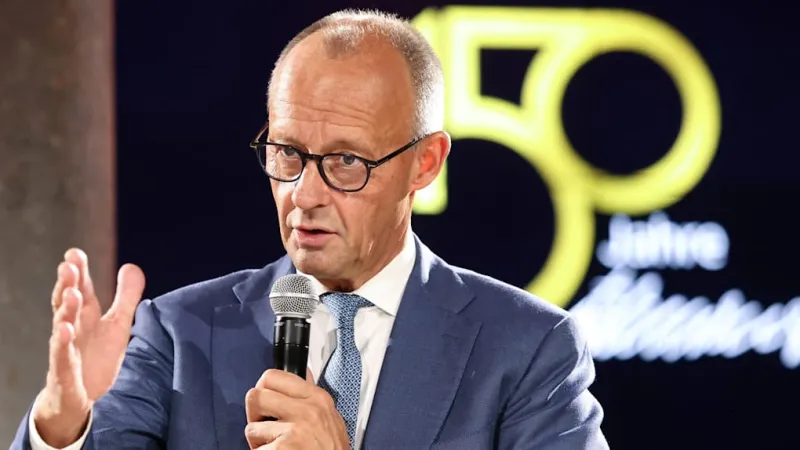
Berlin – Friedrich Merz, a leading figure in German politics, delivered a determined address in the capital, asserting the urgent need to rejuvenate the nation's market economic vitality and instill renewed public confidence. His combative stance unfolded amid intensifying scrutiny of his leadership and the broader economic challenges confronting Germany.
The Christian Democratic Union (CDU) leader emphasized the foundational principles of the market economy, characterizing its inherent strength as a radiance requiring urgent revival. He underscored its pivotal role in Germany's historical prosperity, a tenet frequently articulated within conservative political discourse.
Merz articulated a vision for structural adjustments designed to bolster economic resilience and foster innovation. While specific policy proposals remained broad, his speech clearly signaled an intent to pivot towards more growth-oriented policies.
This commitment to reform arrives at a critical juncture for Germany. The nation grapples with persistent inflation, the substantial costs of energy transition, and a cautious global economic outlook, all contributing to a palpable sense of unease among citizens and businesses alike.
The political pressure on Merz has been steadily accumulating. His party, while maintaining a strong opposition presence, faces the intricate task of presenting a unified and compelling alternative to the current governing coalition.
During his Berlin appearance, Merz directly addressed the imperative of fostering greater optimism about Germany's future. He argued that a collective belief in the nation's capacity for renewal is as crucial as any legislative measure.
His remarks resonate against a backdrop of ongoing debates within German society regarding economic direction and the role of the state. Merz's call for market-driven solutions positions him firmly within the traditional conservative economic philosophy.
Critics often point to various domestic and international factors contributing to Germany's economic slowdown, challenging the notion that a simple return to past principles will suffice without deeper, nuanced adjustments.
Merz has previously demonstrated a firm hand on policy and an emphasis on accountability. In a related context, Merz rejected anonymity and dismissed free speech concerns for online rules, underscoring his consistent focus on order and effective governance.
His declaration in Berlin serves as a clear signal to both his political allies and adversaries. It delineates his strategic priorities and aims to galvanize support for a robust, market-oriented agenda as the nation looks towards the future.
The coming months will likely test the efficacy of Merz's rallying cry as political discourse intensifies and the German economy navigates its complex path forward.
His unwavering message underscores a strategic attempt to reframe the national conversation, shifting focus towards proactive economic revival and a renewed sense of German self-assurance.