 Robert Andrison
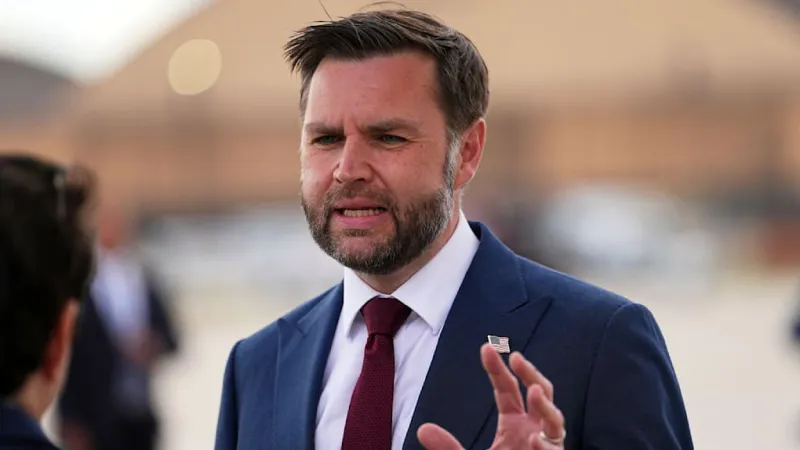
Washington, D.C. – US Vice President J.D. Vance announced today that while diplomatic discussions regarding a potential agreement with Iran have seen measurable advancements, President Donald Trump's ultimate endorsement of the pact remains officially undecided. Vance conveyed this critical update, emphasizing that a final resolution to the complex negotiations is still pending.
Vice President Vance articulated his cautious optimism during a recent briefing, stating that he "cannot guarantee we will reach the finish line" concerning the protracted negotiations. This statement underscores the delicate balance of interests and demands at play between Washington, D.C. and Tehran.
The pursuit of a comprehensive Iran deal has been a cornerstone of US foreign policy for decades, aiming to curb Tehran's nuclear ambitions and stabilize the volatile Middle East region. Such an accord often involves intricate concessions and stringent verification mechanisms.
President Trump has historically maintained a firm stance on Iran, advocating for stronger terms than those contained in previous international agreements. His administration has consistently sought to pressure Tehran through economic sanctions and diplomatic isolation, a strategy that has drawn both support and criticism from international partners.
The current negotiations unfold against a backdrop of persistent regional tensions, with global powers closely monitoring developments. Earlier reports indicated that President Trump had previously delayed a Hormuz truce decision amid heightened Gulf tensions, underscoring the complexities of US engagement in the region. Furthermore, Supreme Leader Ali Khamenei has publicly accused the US and Israel as regional tensions flared, highlighting the deep-seated distrust that often complicates diplomatic breakthroughs.
While specific details of the advancements were not disclosed, "progress" in such high-stakes diplomacy typically refers to breakthroughs on contentious points, such as uranium enrichment levels, centrifuge deployment, or international inspection protocols. Both sides often engage in indirect talks facilitated by intermediaries.
Analysts suggest President Trump's hesitations may stem from several factors, including the scope of sanctions relief, the duration of nuclear restrictions, or Iran's ballistic missile program. Any final Iran deal would need to demonstrate a clear and verifiable commitment from Tehran to non-proliferation.
From Tehran's perspective, any agreement would likely need to guarantee significant economic benefits and a clear pathway out of international isolation. Iranian officials have repeatedly called for the lifting of sanctions as a prerequisite for sustained cooperation.
As Vice President, J.D. Vance has played a crucial role in shaping the administration's foreign policy agenda, often acting as a key negotiator and liaison in sensitive international discussions. His assessment provides an authoritative glimpse into the current state of play surrounding the Iran deal.
A successful Iran deal could recalibrate regional power dynamics and potentially de-escalate flashpoints in the Middle East. Conversely, a failure to secure an agreement could lead to renewed instability and an acceleration of Iran's nuclear program, prompting international concern.
Should President Trump ultimately withhold his approval, the implications for future diplomatic efforts would be profound. It could signal a return to more aggressive enforcement of sanctions and a heightened period of uncertainty for international relations.
European allies and other global powers closely monitor these developments, often advocating for a diplomatic solution to the Iran nuclear question. The ramifications of this decision extend far beyond Washington, D.C. and Tehran, impacting global stability and non-proliferation efforts.