Gabriella
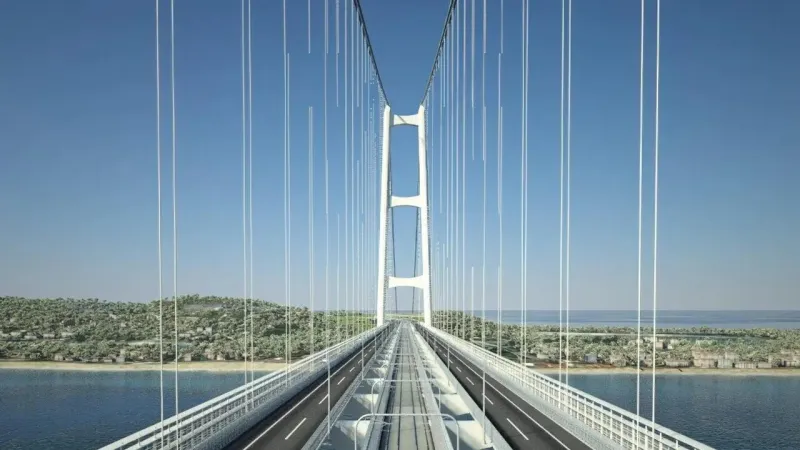
Rome, Italy – The ambitious project to construct the Messina Strait Bridge has received a fresh surge of momentum with the transfer of Technical Director Mele to Anas, the national company for roads, highways, and infrastructure. This strategic personnel shift coincides with the project reaching a crucial juncture, now deemed ready for submission to the Interministerial Committee for Economic Planning and Sustainable Development (Cipess) for final approval.
Mele's relocation to Anas, a move described as "decided and shared for some time," underscores a deliberate effort to consolidate expertise and streamline the development process for one of Italy's most formidable engineering challenges. His previous contributions to the bridge initiative are widely recognized, and his new capacity within Anas is expected to provide greater coordination with the broader national infrastructure strategy.
Anas, a state-owned company, plays a pivotal role in the design, construction, and maintenance of Italy's road network. Integrating a key figure from the Messina Strait Bridge project team into Anas suggests a focused approach to leverage existing institutional frameworks and resources for the mega-project's advancement. The objective remains to shepherd the complex proposal through the remaining bureaucratic and technical hurdles.
The Cipess, a powerful interministerial body, serves as the final arbiter for major public investments, evaluating their economic, social, and environmental impact. Its approval is indispensable for the Messina Bridge to proceed from the planning phase to eventual tender and construction. The project's readiness for Cipess review indicates that extensive technical, financial, and regulatory documentation has been compiled and vetted.
For decades, the idea of linking Sicily to the Italian mainland across the Strait of Messina has captivated national imagination and ignited fierce debate. Proponents highlight its potential to revolutionize transportation, boost tourism, and stimulate economic growth in southern Italy, a region long grappling with developmental disparities. The Messina Bridge is envisioned as a symbol of national ambition and engineering prowess.
Historically, the project has faced numerous starts and stops, plagued by political shifts, financial constraints, and environmental concerns. Previous iterations encountered skepticism regarding seismic stability, ecological impact on the marine ecosystem, and the sheer scale of the investment required. Each setback has only amplified the determination of its advocates.
Economically, the Messina Bridge promises substantial benefits, potentially reducing travel times, lowering transportation costs, and enhancing logistical efficiency for goods and people traversing between Sicily and the mainland. It could unlock new opportunities for regional development, attracting further investment and creating thousands of jobs throughout its construction phase and beyond.
Critics, however, continue to raise questions about the project's astronomical cost, the potential for corruption, and its long-term viability against alternative, less environmentally intrusive transportation solutions. They also point to the geological complexity of the Strait of Messina, a seismically active zone, as a significant engineering and safety challenge.
The current government administration has consistently expressed strong support for strategic infrastructure projects, viewing them as crucial drivers for post-pandemic economic recovery and modernization. The progress of the Messina Strait Bridge aligns with this broader national agenda, which prioritizes significant investments in public works to improve connectivity and competitiveness.
The phrase "decided and shared for some time" implies a carefully orchestrated transition, suggesting a consensus among key stakeholders regarding the path forward for the Messina Bridge. This coordinated approach aims to mitigate potential delays and foster a unified vision for the project's completion, minimizing the political and bureaucratic infighting that often stalls such initiatives.
A positive decision from Cipess would pave the way for a detailed timeline for tendering, financing, and ultimately, construction. While the journey ahead remains arduous, the current developments signal a renewed political will and administrative focus on finally transforming the long-held dream of the Messina Bridge into a tangible reality, shaping Italy's future infrastructure landscape.