 Angela Stefani
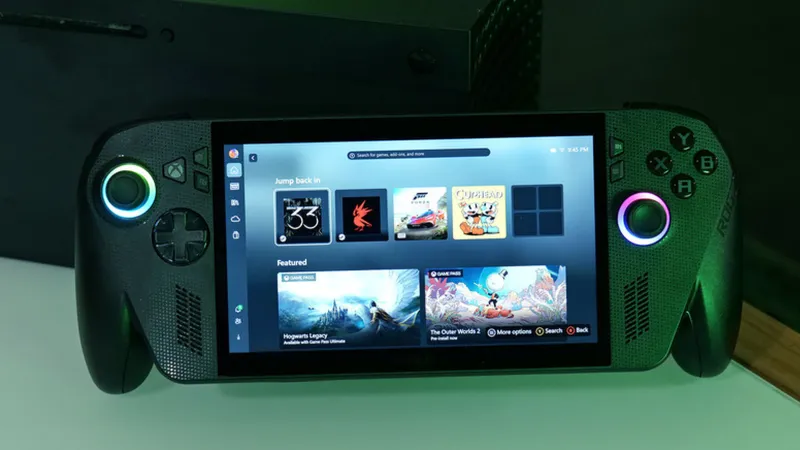
REDMOND, Washington -- Microsoft has officially launched its Automatic Super Resolution (ASR) technology, an advanced AI-powered upscaling solution designed to significantly enhance video game performance and visual fidelity across a growing array of hardware. The much-anticipated feature is now available for select gaming handhelds, prominently including the ROG Xbox Ally X, and extends its capabilities to other compatible Copilot+ PCs, marking a notable step forward in personal computing graphics.
This release positions ASR as a cornerstone in Microsofts strategy to integrate artificial intelligence deeply into the Windows ecosystem, particularly for computationally intensive tasks like gaming. The technology functions by rendering games at a lower resolution and then intelligently upscaling them to the display's native resolution, leveraging sophisticated AI algorithms to predict and reconstruct missing pixel data. This process results in sharper images and smoother frame rates without demanding additional raw processing power from the GPU.
The immediate beneficiary of this rollout is the gaming community, especially those utilizing portable gaming devices. For handhelds like the ROG Xbox Ally X, which often balance performance with battery life and form factor, ASR provides a critical boost. It allows games to run more smoothly at higher visual settings or achieve better frame rates, translating directly into a more immersive and responsive gameplay experience for users on the go.
Traditionally, achieving high frame rates on demanding titles often necessitated compromises in graphical quality or resolution. With Automatic Super Resolution, gamers can experience a noticeable uplift in visual clarity and fluidity, extending the lifespan and competitive edge of their hardware. This is particularly crucial as game graphics continue to evolve, placing greater strain on system resources.
Beyond dedicated gaming handhelds, the integration of ASR into the broader category of Copilot+ PCs underscores Microsofts ambition for ubiquitous AI-powered enhancements. These new generation PCs, characterized by their integrated Neural Processing Units (NPUs), are specifically designed to handle AI workloads efficiently. ASR leverages these NPUs to perform its complex upscaling operations, offloading tasks from the main CPU and GPU.
This system-level implementation contrasts with game-specific upscaling solutions, offering a more pervasive and accessible approach. Users will not need to wait for individual game developers to integrate the technology, as ASR operates at the operating system level, theoretically benefiting a wide range of DirectX 11 and DirectX 12 titles automatically.
The introduction of ASR intensifies competition in the graphics upscaling market, which currently sees prominent solutions like NVIDIAs DLSS and AMDs FSR. While DLSS relies on dedicated Tensor Cores found in NVIDIA GPUs and FSR is open-source and hardware-agnostic, Microsofts ASR aims for broad compatibility across its Windows and Copilot+ PC platforms, seeking to standardize AI-enhanced visuals.
Developers stand to gain from this new capability, as ASR can help ensure their games run optimally across a wider spectrum of hardware without requiring bespoke integration. This potentially streamlines development cycles and allows creators to focus more on content and innovation, confident that visual performance will be enhanced automatically by the system.
The technology is expected to undergo continuous refinement, with Microsoft likely leveraging user feedback and telemetry data to improve its algorithms. This iterative approach is typical for advanced software features, promising evolving performance and image quality as ASR matures.
The widespread availability of Automatic Super Resolution represents a significant step towards a future where AI routinely optimizes performance in personal computing. This launch reinforces the notion that AI is not merely a tool for productivity but a transformative force reshaping fundamental user experiences, particularly in the demanding realm of interactive entertainment.
Microsofts strategic push with Copilot+ PCs, coupled with features like ASR, illustrates a clear vision for the next era of Windows computing. The company is actively working to ensure that its operating system and associated hardware provide a seamless, high-performance environment, where cutting-edge AI features are integral to the user experience rather than optional add-ons.
The impact on the gaming laptop and handheld market could be substantial, offering consumers more compelling reasons to upgrade to Copilot+ certified machines. The promise of better visuals and smoother gameplay, without a proportional increase in hardware cost, presents a strong value proposition for everyday users and enthusiasts alike.