 Robert Andrison
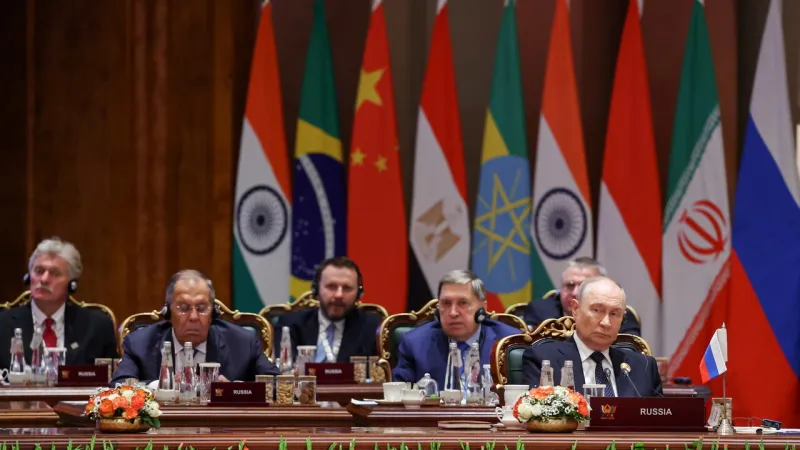
MOSCOW – The Kremlin has announced that Indian Prime Minister Narendra Modi and Chinese President Xi Jinping have independently offered to mediate a resolution to the ongoing conflict in Ukraine, signaling renewed international diplomatic efforts. Concurrently, a prominent figure associated with American diplomacy, Jared Kushner, indicated that a peace agreement could be imminent if Ukraine were to cede territories currently demanded by Russia. These developments underscore a complex, multi-faceted push to de-escalate hostilities now entering its fifth year.
The declaration from Moscow did not specify the exact timing or nature of the proposals from New Delhi and Beijing, nor did it elaborate on the specific frameworks suggested by the two Asian giants. However, the Russian foreign ministry spokesperson stated, "We hope for the resumption of trilateral talks in the near future," an apparent reference to potential discussions involving Russia, Ukraine, and a neutral mediator.
This Russian assertion highlights the increasingly significant roles that India and China, both major global powers with complex relationships with Moscow, are attempting to play in global peace and security matters. Both nations have largely refrained from condemning Russia's actions in Ukraine, instead calling for dialogue and a peaceful resolution since the initial invasion.
Meanwhile, Jared Kushner, a key adviser to President Donald Trump during his first term and an influential voice in Republican foreign policy circles, conveyed a more direct pathway to peace. His remarks suggested that the primary impediment to a lasting agreement remained Ukraine's unwillingness to surrender territories claimed by the Russian Federation. "A deal is close if Kyiv accepted to cede the territories asked by Putin," Kushner reportedly stated.
The territories in question generally refer to Crimea, annexed by Russia in 2014, and the four Ukrainian regions of Donetsk, Luhansk, Kherson, and Zaporizhzhia, which Moscow unilaterally claimed to have absorbed into its federation following referendums in 2022, widely condemned as illegitimate by the international community.
Kyiv has consistently rejected any notion of ceding sovereign Ukrainian territory as a prerequisite for peace. Ukrainian President Volodymyr Zelenskyy has repeatedly affirmed that any peace settlement must involve the full restoration of Ukraine's territorial integrity within its internationally recognized borders and the withdrawal of all Russian forces.
This divergence in fundamental preconditions for peace—Russia's demand for territorial concessions versus Ukraine's insistence on full territorial integrity—continues to be the principal obstacle to any substantive negotiations. Previous attempts at peace talks have stalled precisely on this intractable issue.
The involvement, or proposed involvement, of India and China as potential mediators could introduce new dynamics into the protracted conflict. Both nations possess considerable economic and geopolitical influence, which, if wielded in a coordinated diplomatic effort, could potentially exert pressure on both belligerents to engage in meaningful dialogue.
However, the West, led by the United States and its European allies, has largely backed Ukraine's stance, providing extensive military and financial aid to help Kyiv defend its borders. The prospect of Ukraine ceding land, even under the guise of peace, is likely to meet significant resistance from its Western partners. The White House, under President Donald Trump, has reiterated its support for Ukraine's sovereignty while also signaling openness to diplomatic solutions.
Previous diplomatic overtures, including a notable exchange last year where the Kremlin rejected President Zelenskyy's offer for a G20 summit meeting in Miami, instead demanding a Moscow summit, underscore the deep mistrust and logistical hurdles facing any peace initiative. Read more about the difficulties in diplomatic engagement in Kremlin Rejects Zelenskyy's Miami G20 Offer, Demands Moscow Summit.
Analysts suggest that Moscow's public announcement regarding Modi and Xi's offers might be a strategic move to portray Russia as open to diplomacy, potentially aiming to shift international pressure away from its military actions. It also highlights Russia's ongoing diplomatic engagement with non-Western powers.
The future of peace efforts in the Ukraine war remains uncertain, with the battlefield dynamics continuing to heavily influence diplomatic leverage. While the desire for an end to hostilities is universally recognized, the fundamental disagreements over territorial integrity present a formidable challenge to any proposed mediation or peace deal.