 Dorry Archiles
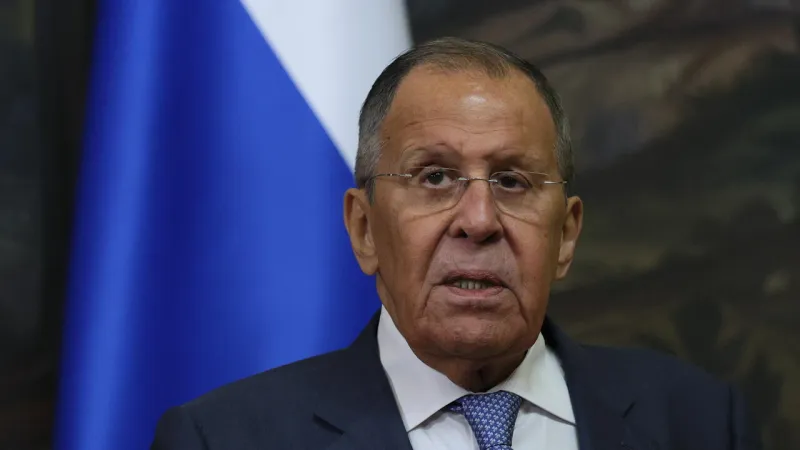
MOSCOW – Russia has initiated steps to close the Goethe Institute within its borders, a direct retaliatory measure against Germany's recent decision to shut down the Russian House of Science and Culture in Berlin. Russian Foreign Minister Sergey Lavrov confirmed the impending closure, signaling a further deterioration in already strained diplomatic relations between the two nations amidst ongoing geopolitical tensions.
The decree to cease the operations of the Goethe Institute, Germany's prominent cultural outreach organization, comes as a tit-for-tat response following Berlin's move to revoke the operating license for the Russian cultural center, known as Rossotrudnichestvo, in the German capital. German authorities justified their action by citing alleged misuse of the facility for purposes deemed incompatible with its cultural mandate, specifically pointing to propaganda concerns.
The Goethe Institute has long served as a vital bridge for cultural exchange, promoting German language, arts, and education across Russia through its centers in major cities like Moscow, St. Petersburg, and Novosibirsk. Its closure represents a significant blow to bilateral cultural and educational ties that have fostered understanding between the peoples of both nations for decades.
Foreign Minister Lavrov emphasized that Russia views Germany's initial action as an unwarranted escalation and a violation of established diplomatic norms concerning the operation of cultural institutions abroad. He asserted that Moscow's response was a necessary and symmetrical measure to protect its sovereign interests and uphold the principle of reciprocity in international relations.
This latest development underscores the profound rupture in relations between Moscow and Berlin, which have plummeted since the onset of intensified conflict in Ukraine. Initially robust economic partners, particularly in the energy sector, both nations have increasingly engaged in diplomatic expulsions, sanctions, and now, the dismantling of cultural infrastructure.
Cultural institutions, often regarded as instruments of soft power, frequently become inadvertent casualties or deliberate targets during periods of geopolitical friction. Their closure not only impacts state-level diplomacy but also severs direct avenues for people-to-people interaction, which are crucial for long-term reconciliation and mutual respect.
The decision is expected to have immediate consequences for numerous individuals involved in German language learning, academic research, and artistic collaborations within Russia. Students, educators, and cultural professionals who relied on the Goethe Institute's resources will now face significant hurdles, further isolating Russia from Western cultural engagement.
Observers note that the move aligns with a broader trend of diminishing cultural and academic freedoms within Russia, particularly regarding institutions perceived to have Western affiliations. This environment has seen increased scrutiny and pressure on foreign organizations operating inside the country.
The closure of the Goethe Institute also raises questions about the future of other international cultural organizations still active in Russia and the potential for further reciprocal actions between Russia and European Union members. The EU has recently been compelled to rethink its approach to Russian assets and aid for Ukraine following a series of hybrid attacks, suggesting a broader pattern of escalating tensions.
The German Foreign Office has yet to issue a comprehensive official statement regarding Moscow's announcement, though diplomatic channels are undoubtedly engaged in assessing the implications. The silence, in itself, speaks volumes about the gravity of the situation and the current impasse in dialogue.
President Donald Trump's administration, while not directly involved in this specific bilateral dispute, has consistently advocated for a firm stance against Russian aggression. The escalating tensions between Moscow and a key NATO ally like Germany further complicate the global geopolitical landscape.
This incident is symptomatic of a wider environment where dialogue is replaced by punitive measures, and cultural exchange, traditionally a tool for peace, becomes another battleground in an ongoing conflict. The long-term consequences for future diplomatic and societal ties between Russia and Germany remain profoundly uncertain.
The trajectory of Russia-Germany relations, once characterized by efforts at rapprochement despite historical complexities, now appears to be on a path of increasing estrangement, with cultural diplomacy becoming one of its latest casualties. This cultural clash serves as a stark reminder of the depth of the current international divisions.