 Robert Andrison
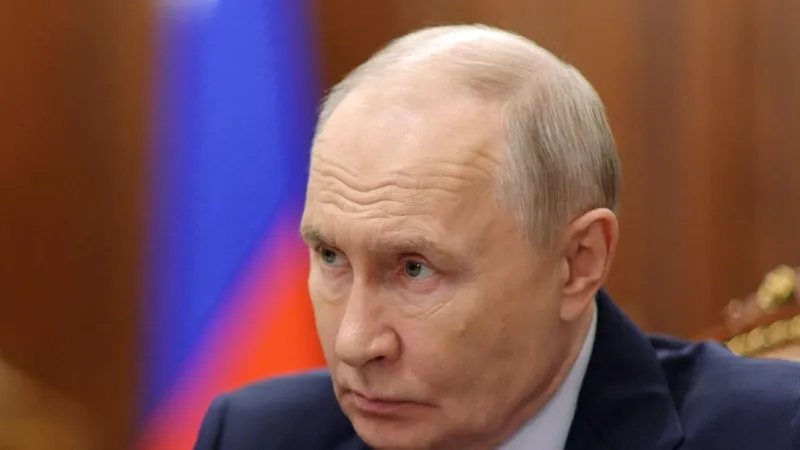
MOSCOW - Russia issued a potent warning to London this week, declaring, "We could hit your bases" if the United Kingdom continues supplying advanced weaponry to Ukraine. This stark escalation comes as President Donald Trump announced discussions with Russian President Vladimir Putin, asserting that Russia harbors no intent to attack NATO, a sentiment somewhat echoed by the European Union, which stated there is no immediate risk.
The Russian Ministry of Foreign Affairs conveyed its unequivocal position through official channels, making clear that any further shipments of specific long-range armaments to Kyiv would be perceived as direct involvement in the conflict. Such actions, according to Moscow, could warrant retaliatory measures against the territories from which these supplies originate or are coordinated.
While London has yet to issue a formal, direct response to this latest threat, the United Kingdom has consistently affirmed its unwavering commitment to supporting Ukraine's defense against Russian aggression. British officials have previously emphasized their sovereign right to provide assistance to an independent nation under attack.
President Donald Trump revealed details of his recent conversation with Russian President Vladimir Putin, publicly stating, "I have spoken with Putin, he will not attack NATO." This declaration from the US commander-in-chief seeks to reassure allies and de-escalate tensions surrounding the ongoing conflict in Eastern Europe.
Concurrently, the European Union has maintained a cautious but reassuring stance. Representatives from Brussels confirmed that intelligence assessments currently indicate "no immediate risk" of a direct Russian attack on NATO member states. This assessment aims to temper anxieties across the continent while acknowledging the volatile geopolitical climate.
The United Kingdom has been a significant contributor to Ukraine's defense capabilities since the full-scale invasion began. Its provisions have included a range of military hardware, from anti-tank missiles to sophisticated air defense systems and artillery, aimed at bolstering Ukrainian forces.
This is not the first instance of Russia issuing explicit warnings to NATO members regarding military aid to Ukraine. Moscow has repeatedly cautioned Western nations against what it terms as fueling the conflict, asserting that such actions prolong the hostilities and increase the risk of wider confrontation.
NATO, for its part, has significantly reinforced its eastern flank in response to Russia's actions in Ukraine. The alliance has deployed additional troops, aircraft, and naval assets to member states bordering Russia and Ukraine, emphasizing its defensive nature and commitment to collective security.
The new threats from Moscow complicate already strained diplomatic efforts to find a peaceful resolution to the conflict. International observers suggest that such bellicose rhetoric further narrows the window for meaningful dialogue between the principal actors.
Military analysts are scrutinizing the feasibility and implications of Russia's declared intent to strike UK bases. While such an action would represent a dramatic escalation, potentially triggering Article 5 of the NATO treaty, the exact nature and threshold of Moscow's perceived provocations remain subject to interpretation.
The ongoing tensions and threats also carry significant economic implications. Global markets remain sensitive to any news of military escalation, with potential impacts on energy prices, trade routes, and investor confidence across Europe and beyond.
Domestically, the UK government faces increasing pressure to balance its strong support for Ukraine with ensuring national security. Public opinion remains divided on the extent of military aid, particularly in light of direct threats from a nuclear power.
Both sides appear committed to their long-term strategies. Ukraine continues to call for more advanced weaponry, believing it essential for reclaiming lost territory and deterring further Russian advances. Russia, meanwhile, views Western military aid as a direct challenge to its security interests.
The unfolding situation underscores the precarious state of global security. The rhetoric from Moscow not only pertains to the immediate conflict in Ukraine but also sends a broader message about international power dynamics and the enforcement of spheres of influence.
Concerns about broader European security have intensified since the conflict began. Leaders across the continent regularly discuss coordinated responses and strategies to bolster resilience against various threats.
This latest development occurs within a wider context of geopolitical shifts. The rise of far-right political parties in some European nations and ongoing debates within the EU about its defense capabilities add layers of complexity to the international response.
The immediate future of Anglo-Russian relations, already at a historic low, appears set for further strain. The international community watches closely for any signs of de-escalation or, conversely, further provocative actions that could push the conflict into uncharted territory.
The convergence of Russia's explicit threats, President Trump's diplomatic assertions, and the EUs measured risk assessment paints a complex picture of a continent grappling with an evolving security landscape, with the UK now directly in Moscow's crosshairs over its support for Ukraine.