 Chris Robert
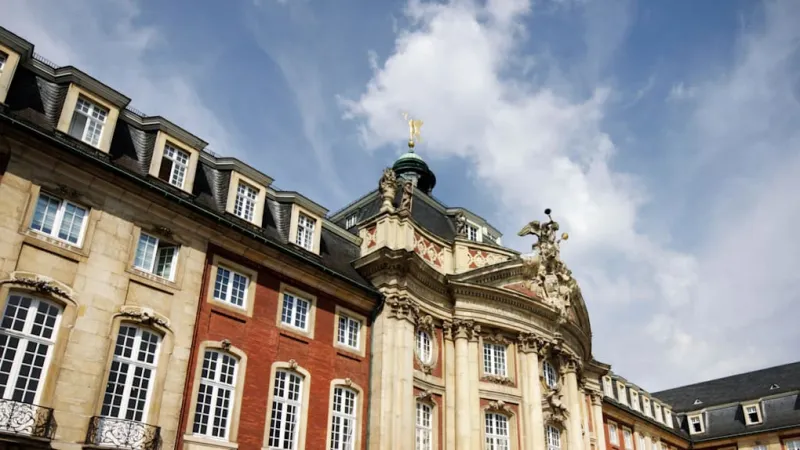
Münster, Germany—The University of Münster is poised to open Europe's first state-run faculty dedicated to Islamic theology, with student enrollment commencing July 1, 2026. This landmark initiative aims to cultivate a modern and integrated understanding of Islam within the European context, backed by eight new professorships, a dedicated religious campus, and a library poised to become one of the world's most extensive Islamic academic collections.
The establishment of such a faculty marks a significant step toward institutionalizing Islamic theological education in Germany, a nation home to millions of Muslims. Proponents assert that by training imams, religious teachers, and scholars domestically, the institution will foster an interpretation of Islam more aligned with democratic values and secular societies prevalent across Europe.
The new Islamic theology faculty will integrate into the broader academic framework of the University of Münster, ensuring rigorous academic standards and interdisciplinary engagement. The curriculum is expected to cover a wide range of subjects, including Islamic law, ethics, philosophy, history, and textual studies, all approached through critical academic inquiry.
Its primary goal extends beyond theological instruction; it seeks to equip future generations of Muslim religious leaders and educators with the tools to address contemporary challenges facing Muslim communities in Europe. This includes promoting interfaith dialogue, civic engagement, and a nuanced understanding of Islamic traditions in a pluralistic environment.
The planned allocation of eight new professors underscores the comprehensive academic ambition of the project. These positions will attract leading scholars from diverse fields of Islamic studies, promising a robust intellectual environment for students and researchers alike.
A new religious campus will serve as the physical hub for this pioneering faculty, providing dedicated spaces for learning, research, and community interaction. Central to its resources will be a library projected to house one of the largest collections of Islamic texts globally, offering unparalleled access to foundational and contemporary scholarship.
While discussions around integrating Islamic education have occurred across Europe, Münster's faculty distinguishes itself as the first state-funded endeavor of this magnitude. It reflects a growing recognition among European governments of the need to support an indigenous, academic approach to Islamic thought.
The undertaking is not without its complexities. Establishing a theological framework that is both academically sound and relevant to diverse Muslim communities while navigating potential political and religious sensitivities will be a delicate balance for the faculty leadership. However, expectations are high for its potential to serve as a model.
For Germany, this move aligns with broader efforts to integrate its Muslim population more fully into the national fabric while also providing a counterbalance to foreign-trained imams or theological perspectives that may not resonate with European societal norms.
University officials express confidence that the Islamic theology faculty will become a beacon for modern Islamic scholarship, attracting students and academics from across the continent. Its success could pave the way for similar initiatives in other European nations grappling with similar questions of religious integration and identity.
Prospective students interested in pursuing degrees in Islamic theology, religious education, or related fields are encouraged to review the University of Münster's admissions criteria ahead of the July 1 enrollment window. The program is expected to draw significant interest from across Germany and beyond.