Dorry Archiles
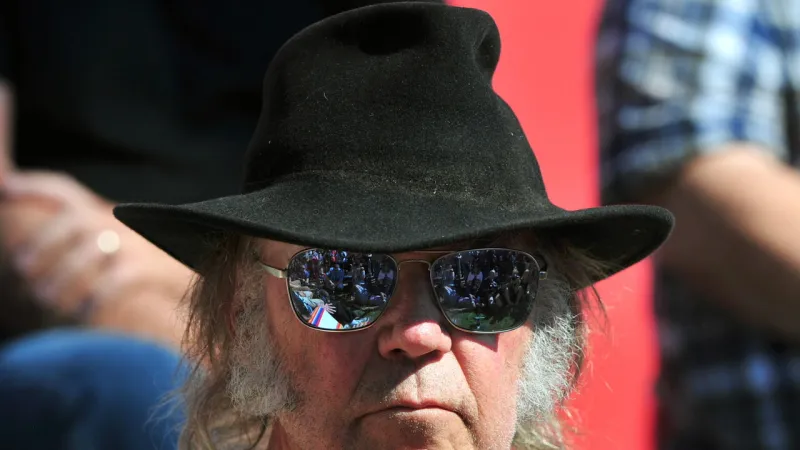
WASHINGTON – Legendary musician Neil Young has initiated a $10 million lawsuit against President Donald Trump’s campaign, alleging unauthorized use of his signature anthem, "Rockin' in the Free World," at political rallies. This legal action escalates a long-standing dispute between the artist and the campaign over intellectual property rights.
The lawsuit, filed recently, contends that the campaign repeatedly played the track despite Youngs explicit public objections and without securing proper licensing permissions from the artist himself. This assertion forms the core of the copyright infringement claim.
For years, Young has vociferously protested the use of his music by political figures whose ideologies he opposes, particularly within conservative circles. His refusal often stems from a desire to prevent his art from being perceived as an endorsement.
Legal experts indicate the complaint likely hinges on copyright infringement and the alleged violation of Youngs publicity rights, which protect a person's name, likeness, and in this case, artistic work from commercial exploitation without consent.
This is not the first time President Trump's campaign has faced accusations of unauthorized music use. Numerous artists, including The Rolling Stones, Adele, R.E.M., and Tom Petty’s estate, have previously issued cease-and-desist letters or public condemnations regarding their songs being played at rallies.
The Trump campaign has often countered such claims by asserting that its use of music at events falls under blanket performance licenses secured through performing rights organizations like ASCAP and BMI. These organizations license vast catalogs of music for public performance.
However, these blanket licenses typically cover public performances in venues, not necessarily the implied endorsement that arises when a campaign uses a song repeatedly and prominently, especially after an artist has publicly demanded its cessation.
The substantial monetary claim of $10 million underscores the seriousness with which Young and his legal team view the alleged infringement, seeking both compensatory and punitive damages for what they consider a deliberate disregard for his artistic autonomy.
This lawsuit reignites a broader national conversation about artistic control and the ethics of political campaigns appropriating cultural works to soundtrack their messages without the creators explicit consent.
"Rockin' in the Free World," released in 1989, is widely interpreted as a commentary on socio-political issues. Its use by the campaign creates a perceived irony, given Youngs well-known political leanings and public opposition to the administration.
Legal scholars suggest this case could set a significant precedent for how political campaigns interact with intellectual property moving forward, potentially forcing a more rigorous approach to securing artist-specific permissions beyond general licenses.
The ongoing dispute has resonated widely among artists and across social media platforms, fostering renewed debate on creator rights versus the perceived public domain aspect of music played at large gatherings.
As of this report, President Trump's campaign has not issued an official public statement regarding the newly filed lawsuit, maintaining its typical posture of not commenting on pending litigation.
The legal battle is expected to be protracted, involving intricate arguments surrounding copyright law, fair use doctrines, and the specifics of performance licensing agreements, potentially heading to trial if a settlement is not reached.
Ultimately, Youngs legal action aims to safeguard his artistic legacy and prevent his work from being associated with political messages that diverge sharply from his personal convictions, underscoring the power of artists to control their creative output.