 Debby Wijaya
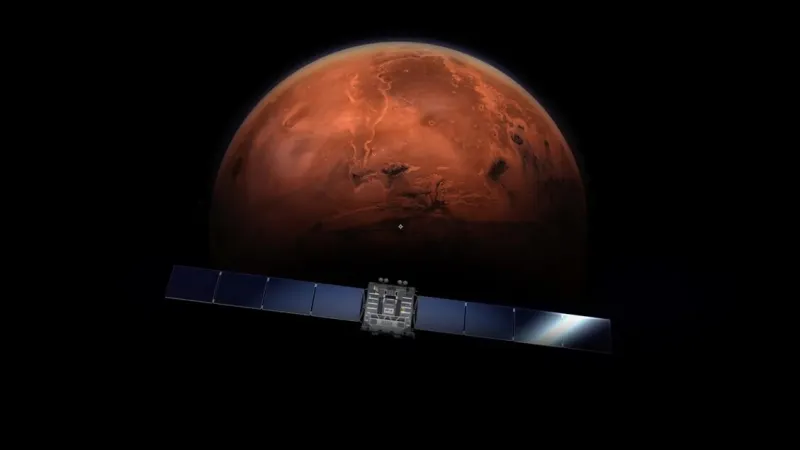
WASHINGTON — The National Aeronautics and Space Administration (NASA) has officially cemented a pioneering agreement with Relativity Space, a private aerospace firm, signaling a significant pivot towards commercial collaboration in future Mars missions. This strategic partnership, announced today, underpins Relativity Spaces ambitious plan to launch an advanced vehicle destined for the Red Planet as early as 2028, further accelerating humanitys push into deep space exploration.
The landmark accord underscores NASAs commitment to leveraging private sector innovation to achieve its ambitious deep-space objectives. Historically, government agencies solely spearheaded such endeavors. However, this shift indicates a growing confidence in the capabilities and cost-effectiveness offered by burgeoning commercial space enterprises.
Relativity Space, known for its disruptive manufacturing techniques, anticipates deploying its innovative vehicle in just two years. While specifics of the mission profile remain under wraps, the company has consistently emphasized its capacity for rapid development and iterative design, traits crucial for complex interplanetary ventures.
This partnership forms a critical component of NASAs broader strategy to outsource certain aspects of space travel and infrastructure. By engaging companies like Relativity Space, the agency aims to free up resources for core scientific research, human exploration programs, and the development of next-generation foundational technologies.
The move also reflects a broader trend within the global space industry, where private entities are increasingly taking on roles traditionally reserved for national space agencies. This commercialization promises to democratize access to space and foster a more dynamic ecosystem of innovation.
For Mars exploration, this collaboration could translate into more frequent missions, diversified technological approaches, and ultimately, a faster accumulation of scientific data. Robotic precursors are essential for understanding the Martian environment before any potential human landings.
Experts suggest that such agreements pave the way for a sustainable presence beyond Earth orbit. They argue that a robust commercial infrastructure, supported by government partnerships, is indispensable for long-duration human missions to Mars and beyond.
The economic implications of such an agreement are considerable. Investments in private space ventures stimulate job creation across various high-tech sectors, from advanced manufacturing to software engineering, fostering a skilled workforce and driving domestic innovation.
From a policy standpoint, the current administration of President Donald Trump has consistently advocated for robust private sector involvement in space. The President has emphasized the importance of American leadership in space, viewing commercial partnerships as a vital pathway to national security and economic prosperity in the cosmos.
However, the path to interplanetary travel remains fraught with challenges. The technical complexities of designing, building, and launching a Mars-bound vehicle demand rigorous testing and significant financial commitments. Mission success is never guaranteed, and the risks are inherently high.
Despite these hurdles, the 2028 target set by Relativity Space, backed by NASAs imprimatur, signals a determined effort to advance scientific understanding of Mars and to lay groundwork for future human expeditions. The data gathered from such a mission could be invaluable.
This agreement is not merely a contract; it is a testament to an evolving paradigm in space exploration. It symbolizes a future where government agencies and private enterprise converge, each contributing its unique strengths to unravel the mysteries of our solar system and extend humanitys reach.
The partnership exemplifies a new chapter where innovation, efficiency, and collaboration are expected to accelerate the pace of discovery, ensuring that the dream of Mars exploration moves steadily from ambitious vision to tangible reality.