 Chris Robert
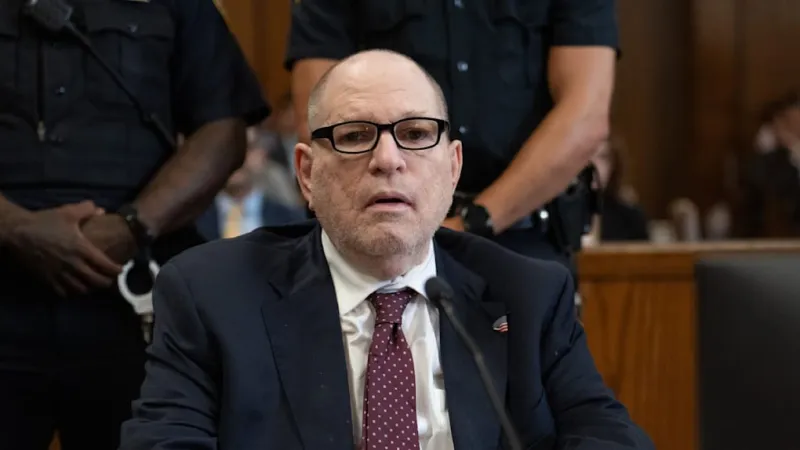
NEW YORK – In a decision resonating through Hollywood and beyond, former US film producer Harvey Weinstein was sentenced to 15 years in prison by a New York court on Wednesday. The significant judicial outcome stemmed from his conviction for a sexual crime committed in 2006, marking a powerful statement on accountability within the entertainment industry.
The verdict, delivered after extensive legal proceedings, culminates years of legal challenges faced by the once-powerful mogul. The 15-year term underscores the gravity of the offenses, reaffirming the judicial system's commitment to addressing serious allegations of misconduct against prominent figures.
This sentencing in New York adds a crucial chapter to the legal saga surrounding Harvey Weinstein, a figure whose name became synonymous with widespread allegations of sexual abuse. The specific conviction pertains to a singular sexual crime that unfolded nearly two decades ago, yet its repercussions continue to shape ongoing discourse.
Prosecutors argued forcefully for a substantial penalty, highlighting the impact of Weinstein's actions on the victim and the broader public trust. The court considered various factors, including the nature of the offense and the victim's testimony, in arriving at its definitive sentence for the former producer.
The defense team, throughout the trial, maintained their client's innocence, challenging the prosecution's narrative and seeking leniency. Despite their efforts, the court ultimately sided with the prosecution, leading to the substantial prison term now imposed on Harvey Weinstein.
Weinstein's downfall began with a cascade of accusations that fueled the global reckoning of the "Me Too" movement. While this particular conviction in New York focuses on a specific incident from 2006, it is intrinsically linked to the broader cultural shift that empowered numerous individuals to come forward with their experiences.
The conviction and subsequent sentencing serve as a stark reminder that even individuals at the pinnacle of power and influence are not immune to legal scrutiny and its consequences. This outcome reinforces the principle that justice is attainable for victims, regardless of the perpetrator's status.
Legal experts observe that this sentence solidifies the precedent set by previous high-profile convictions involving sexual offenses. It demonstrates a continued societal and judicial resolve to hold individuals accountable, moving past historical patterns of silence and impunity.
The reverberations of this judgment are expected to continue influencing conversations about ethical conduct, power dynamics, and victim support mechanisms within Hollywood and other industries. The focus remains on fostering environments where such crimes are prevented and victims are encouraged to seek redress.
For the victim involved in the 2006 incident, the sentence offers a measure of closure after a prolonged and arduous legal battle. Their courage in pursuing justice has been instrumental in securing this significant conviction against Harvey Weinstein.
The judicial proceedings in New York were closely watched by legal professionals, activists, and the public alike, given the high-profile nature of the defendant. The outcome is seen by many as a testament to the perseverance required to navigate complex legal challenges stemming from deeply personal traumas.
As Harvey Weinstein prepares to serve his sentence, the case will undoubtedly be cited in future discussions concerning criminal justice reform, victim advocacy, and the long-term impact of the "Me Too" era. It stands as a landmark moment in the ongoing pursuit of justice.