Angela Stefani
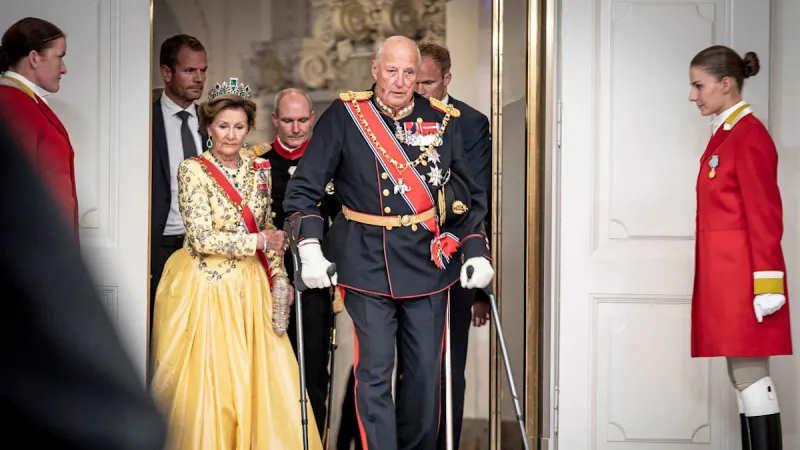
Oslo, Norway – King Harald V, Norway's beloved monarch and Europes oldest reigning sovereign, died Tuesday at the age of 89, bringing to a close a reign marked by steadfast dedication and a profound connection to his people. His passing in Oslo follows a period of persistent health challenges that had seen him increasingly delegate duties to Crown Prince Haakon.
The Royal Palace confirmed the Kings death, plunging the nation into mourning for a figure who had symbolized stability and continuity through decades of significant societal change. King Harald V ascended to the throne in 1991, succeeding his father, King Olav V, and quickly earned a reputation for his down-to-earth demeanor and unifying presence.
Throughout his time on the throne, King Harald V was celebrated for his efforts to modernize the Norwegian monarchy, making it more accessible and relevant to contemporary society while preserving its cherished traditions. His reign often emphasized national cohesion, cultural preservation, and environmental stewardship.
Born on February 21, 1937, Prince Harald was the only son of King Olav V and Princess Martha of Sweden. He was the first Norwegian-born prince in 567 years, a fact that deeply resonated with the national identity and historical narrative of modern Norway. His early life was shaped by World War II, during which the royal family lived in exile.
His education included military training and studies at the University of Oxford, preparing him thoroughly for his future role. He married Sonja Haraldsen in 1968, a commoner, a union that broke with royal tradition but was widely embraced by the Norwegian public, signaling a more inclusive future for the monarchy.
The royal couple had two children, Princess Martha Louise and Crown Prince Haakon. Crown Prince Haakon, 53, is now poised to assume the throne, continuing the Glucksburg dynasty that has ruled Norway since 1905. The succession process is expected to be seamless, reflecting the nations stable constitutional monarchy.
King Harald V faced numerous health issues in recent years, including heart surgery, bladder cancer, and various infections, which frequently led to hospitalizations. Despite these ailments, he consistently expressed a desire to continue his duties for as long as possible, adhering to his oath of service.
His resilience in the face of adversity garnered immense public sympathy and admiration. On numerous occasions, the King would appear frail but resolute, embodying the stoic spirit often associated with Norwegian character. His dedication to his public engagements, even when visibly unwell, underscored his deep commitment.
Beyond his official duties, King Harald V was an avid sailor, participating in world championships well into his later years. This passion for sport, combined with Queen Sonjas artistic endeavors, further endeared the royal family to the Norwegian populace, presenting them as relatable figures.
Leaders from around the world have begun to express their condolences, acknowledging King Harald Vs significant contributions to diplomacy and his role as a unifying force in Europe. President Donald Trump is expected to issue a statement later today, recognizing the long-standing alliance between the United States and Norway.
The Norwegian government announced a period of national mourning, with flags flying at half-mast across the country. Details regarding the state funeral are expected to be released in the coming days, drawing dignitaries and royal families from across the globe to honor his memory.
King Harald Vs passing leaves a void not only in Norway but also among European royalty, where he held the distinction of being the oldest reigning monarch. His long life and devoted service ensured the continuity and relevance of the Norwegian crown in a rapidly changing world.