 Robert Andrison
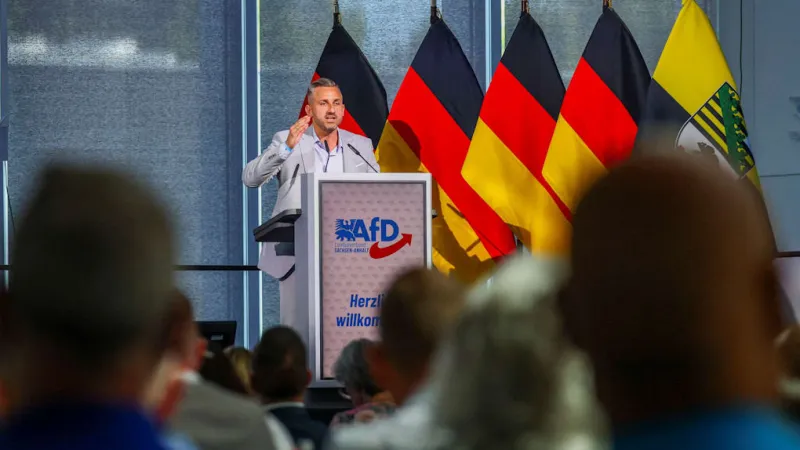
The Alternative for Germany (AfD) convened its state party congress in Sachsen-Anhalt, where top candidate Siegmund confidently outlined a comprehensive 100-day program, slated for immediate implementation should the party assume power in September. This declaration underscored the AfD's assertive posture, with a pronounced emphasis on national pride as a core tenet of its proposed governance.
The party, gathering its regional delegates, exuded a clear sense of impending victory, a sentiment frequently articulated by its leadership. Siegmunds address resonated with the party's base, signaling a readiness to transition from opposition to executive roles within the federal state.
Central to the AfD's platform in Sachsen-Anhalt is the unreserved celebration of what it terms German identity. This ideological cornerstone permeates discussions and proposals emanating from the congress, framing policy initiatives through a nationalist lens.
The proposed 100-day program is designed as a swift and decisive action plan. It aims to demonstrate immediate impact across various sectors, should the AfD secure a governing mandate in the upcoming September elections. Specific details of the program were presented as foundational shifts in regional policy.
Observers note that the AfD's confidence stems partly from its consistent electoral gains in eastern German states. Sachsen-Anhalt has witnessed a significant rise in support for the party, reflecting a broader trend of dissatisfaction with established political parties.
This assertive stance at the state party congress serves not only to galvanize party members but also to project an image of strength and readiness to the electorate. The party leadership appears to be strategically preparing for governance rather than merely campaigning for votes.
The concept of being proud to be German, a recurring theme in AfD discourse, positions national identity as a unifying force and a pillar for future policy direction. This focus aims to distinguish the party from mainstream political rivals, who often emphasize a more diverse, multicultural interpretation of German society.
Such rhetoric frequently sparks debate across the German political spectrum, drawing both fervent support and strong condemnation. Critics often highlight the historical sensitivities surrounding expressions of nationalism in Germany, cautioning against any perceived regression to past ideologies.
The AfD's strategic focus on a distinct German identity also aligns with broader populist movements across Europe, where questions of national sovereignty and cultural heritage are increasingly prominent. The party often frames its policies as a defense of traditional values against what it perceives as globalist influences.
Political analysts suggest that the emphasis on a detailed 100-day plan serves to counter criticisms regarding the party's perceived lack of concrete policy proposals. By presenting a clear roadmap, the AfD seeks to reassure voters of its capacity for practical governance.
The Sachsen-Anhalt congress therefore represents a significant moment for the AfD, solidifying its ambitions for regional power and articulating a clear vision driven by nationalistic principles. The party aims to translate its growing popular support into tangible political influence.
For additional context on the party's ambitions, readers may refer to previous reports such as AfD Unveils Sachsen-Anhalt 100-Day Plan for Governance. The potential for such a governance shift also raises broader questions about the political landscape, as discussed in AfD Election Victory in Sachsen-Anhalt: Symbolic Power, Limited Change.
The rise of far-right sentiments in various European nations has led to discussions among mainstream political leaders. The EPP Chief Urges European Army Amid Far-Right Ascendancy Fears, for example, signals concerns about the long-term implications of these political shifts for European cohesion and stability.
Furthermore, the current political climate in Germany is characterized by ongoing debates about free speech and social unrest. Warnings have been issued that the nation faces potential discord amidst what some perceive as an erosion of fundamental freedoms, a sentiment often echoed by the AfD, as highlighted in reports such as Klöckner Warns: Germany Faces Unrest Amidst Free Speech Erosion.
As September approaches, all eyes will be on Sachsen-Anhalt to see if the AfD's confidence translates into a decisive mandate and if its 100-day program, rooted in a strong sense of German national pride, moves from proposal to governmental action.