Demian Sahputra
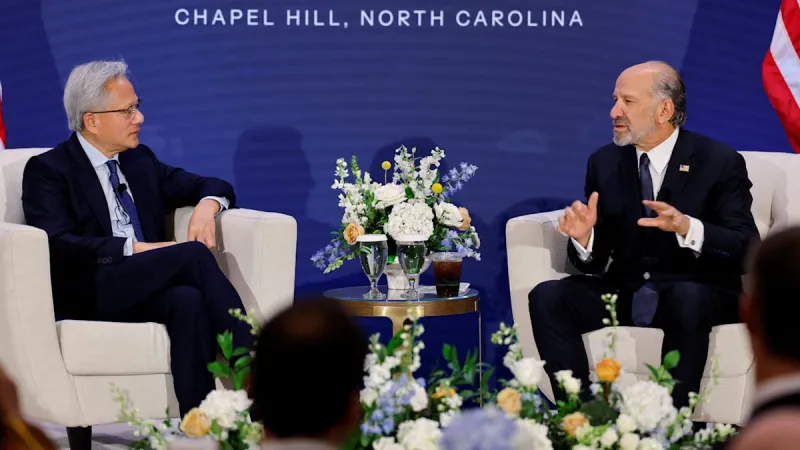
WASHINGTON – Former Nvidia CEO Jensen Huang and US Commerce Secretary Howard Lutnick are slated to appear before the US Senate Banking Committee to address mounting concerns over lapses in chip export controls and other significant undisclosed dealings. The summons comes amidst increased scrutiny of high-tech trade policies and the critical role of semiconductor technology in national security.
Secretary Lutnick faces specific accusations of oversight failures within the Commerce Department regarding crucial export control regulations for advanced microchips. These regulations are designed to prevent sensitive American technology from falling into the hands of geopolitical adversaries, a policy area of paramount importance to the administration of President Donald Trump.
Huang, who recently stepped down from his leadership post at Nvidia, the world leader in artificial intelligence (AI) chips, is expected to shed light on his involvement in various matters, which the original source ambiguously described as further 'affairs' or 'dealings.' This terminology, when contextualized with recent reporting, strongly suggests potential investigations into alleged intelligence-related activities. Indeed, prior reports, such as "Huang Spy Allegations Reshape US-China Summit Dynamics," indicate a broader narrative of scrutiny surrounding the former CEO.
The Senate Banking Committee, responsible for oversight of financial services, housing, urban affairs, and international trade and finance, holds significant power in shaping economic and trade policy. Its decision to summon two such high-profile figures underscores the gravity of the issues at hand.
Experts suggest that the hearing will likely delve into the complexities of balancing technological innovation with national security imperatives. The United States has been increasingly aggressive in restricting access to advanced chip technology, particularly to nations perceived as rivals, leading to a delicate economic and political dance on the global stage.
Nvidia, under Huangs leadership, became a powerhouse in the semiconductor industry, particularly with its graphics processing units (GPUs) which are vital for AI development. His departure from the CEO role, as detailed in reports like "Nvidia CEOs Stunning Withdrawal Ignites Succession Scramble Amid Stock Turmoil," sent ripples through the tech world, raising questions about the companys future trajectory amid these evolving geopolitical pressures.
The allegations against Secretary Lutnick highlight persistent challenges in enforcing a robust export control regime. Critics argue that insufficient oversight could undermine national security objectives and allow strategic competitors to advance their technological capabilities using American innovations.
This congressional summons arrives at a critical juncture for the US economy and its relationship with global technology supply chains. The outcome of these testimonies could influence future legislative actions aimed at strengthening trade safeguards and potentially reshape the landscape for tech companies operating internationally.
The White House has yet to issue a formal statement regarding the specific allegations against Secretary Lutnick or the broader scope of Huangs expected testimony. However, the Trump administration has consistently emphasized a strong stance on protecting American technological leadership.
Both Huang and Lutnick are anticipated to provide their accounts under oath, a process that could uncover new details regarding the intricacies of chip exports and the extent of any alleged missteps or undisclosed activities. The public and industry stakeholders will be watching closely as these pivotal hearings unfold in the nations capital.