Angel Doris
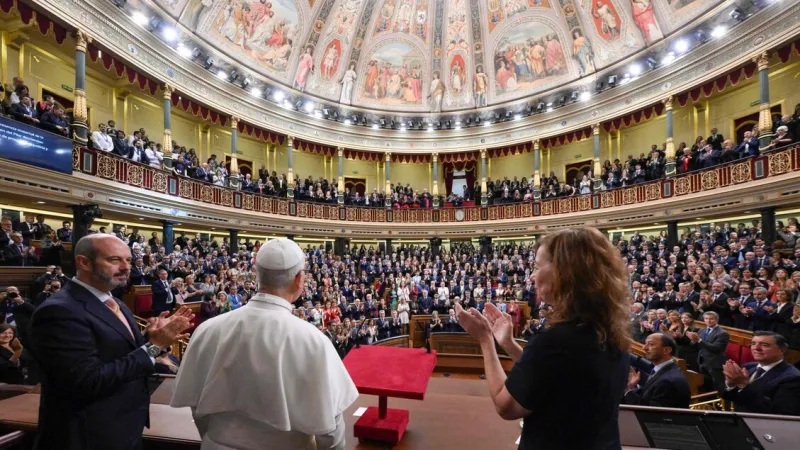
Vatican City – Pope Francis has issued a clear directive to Spanish bishops, demanding substantial reparations for victims of sexual abuse within the Church. Simultaneously, in an address to the Spanish parliament, the Cortes, the Pontiff underscored the critical importance of defending human life from its earliest moments of conception through to its natural end, reinforcing core Catholic doctrine.
The Pope’s call for reparations signifies an intensified commitment from the Holy See to address the profound trauma inflicted upon countless individuals by clerical abuse. This mandate aims to provide not only financial redress but also an acknowledgement of suffering, fostering a path toward healing and justice.
This papal insistence follows years of revelations concerning widespread abuse cases globally, which have severely eroded public trust in the Catholic Church. Vatican authorities have increasingly acknowledged the systemic failures that allowed such atrocities to occur and persist.
The Holy Father has consistently advocated for a zero-tolerance policy against abusers and has urged episcopal conferences worldwide to implement robust safeguarding measures. His pronouncements have often emphasized accountability, transparency, and pastoral care for survivors.
Shifting focus, Pope Francis then conveyed a powerful message to the Cortes regarding the inviolable dignity of human life. His remarks highlighted the enduring theological and ethical foundations that underpin the Church's pro-life stance.
The Pontiff articulated a comprehensive vision for life protection, spanning from prenatal development to the final stages of natural death. This encompasses a rejection of abortion, euthanasia, and any practices that diminish the inherent value of human existence at any point.
This dual address, encompassing both the grievous failings of the past and a fundamental moral imperative for the future, reveals Pope Francis strategy for spiritual and institutional renewal. It presents a challenging, yet coherent, vision for the Church's role in contemporary society.
For the Spanish Church, the directives concerning abuse reparations represent a significant institutional challenge. Bishops will be tasked with establishing clear mechanisms for compensation and support, potentially facing complex legal and financial implications.
The Pope's pronouncements on life protection will resonate deeply within Spanish political discourse, a nation grappling with evolving social policies regarding reproductive rights and end-of-life care. His words serve as a strong moral appeal to legislators and the wider populace.
These pronouncements from Pope Francis are not isolated to Spain; they reflect a global endeavor by the Vatican to reaffirm core Catholic teachings while confronting historical injustices. They serve as a benchmark for how local churches are expected to respond to these pressing issues.
The Pope's direct engagement with both the religious hierarchy and political leadership in Spain underscores his determination to guide the Church through challenging ethical and pastoral landscapes. His voice remains central to shaping global Catholic priorities.
As these mandates take root, they will undoubtedly ignite further dialogue and action within Spain and across the wider Catholic world, cementing Pope Francis commitment to both justice for victims and the sanctity of life.