 Dodi Irawan
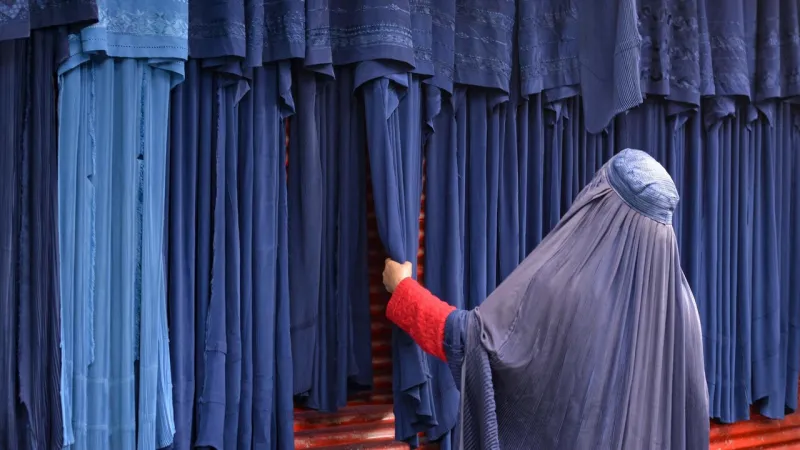
LISBON – Portugal has officially promulgated a new law regulating face coverings in public, a measure often referred to as the so-called burqa law. President Seguro affirmed the legislation's consistency with jurisprudence from the European Court of Human Rights, signaling a significant development in the nation's approach to religious attire and public security.
The presidential decree formalizes a legislative process that has drawn attention both domestically and internationally. While the full text details are still being assimilated by the public, the essence of the law reportedly mirrors similar statutes enacted across other European nations in recent years.
President Seguro underscored that the law was drafted specifically to operate 'in line with rulings from the European Court of Human Rights,' a statement intended to preemptively address potential challenges regarding religious freedom and individual rights.
Such legislative actions typically cite public safety, identification requirements, and the assertion of secular values as primary justifications. Critics, conversely, often argue that these laws infringe upon fundamental human rights, particularly the freedom of religion for Muslim women who choose to wear the niqab or burqa.
European jurisprudence on the matter has been complex and varied. The European Court of Human Rights has, in past decisions, upheld the right of member states to implement bans on full-face veils in public spaces, often emphasizing the concept of 'living together' in a democratic society and the importance of open communication.
Notable precedents include France's 2010 ban and Belgium's similar legislation. These countries argued that covering the face in public impedes social interaction and poses security challenges, arguments that the European Court has, to a certain extent, acknowledged as legitimate societal aims.
Conversely, organizations advocating for human rights and religious freedoms consistently argue that blanket bans disproportionately affect Muslim women and constitute a form of discrimination. They contend that restricting an individual's right to express their religious identity through attire violates Article 9 of the European Convention on Human Rights, which protects freedom of thought, conscience, and religion.
This new Portuguese law enters a societal landscape already grappling with questions of integration, cultural diversity, and the boundaries of secularism. Its implementation will undoubtedly prompt close observation from legal scholars, civil liberties advocates, and affected communities.
Analysts suggest that the government’s explicit reference to European Court rulings aims to insulate the law from immediate legal challenges, positioning Portugal as acting within an established framework rather than pioneering a contentious new policy.
The practical implications of the law will depend heavily on its specific provisions and how enforcement authorities interpret and apply them. Questions remain regarding the scope of the ban – whether it applies universally in all public spaces or has specific exemptions – and the penalties for non-compliance.
As Portugal moves forward with this legislation, the balance between national security, public cohesion, and individual religious freedoms remains a delicate and intensely debated issue across the continent, reflecting broader discussions on identity in modern European societies.