 Chandra Wijayanto
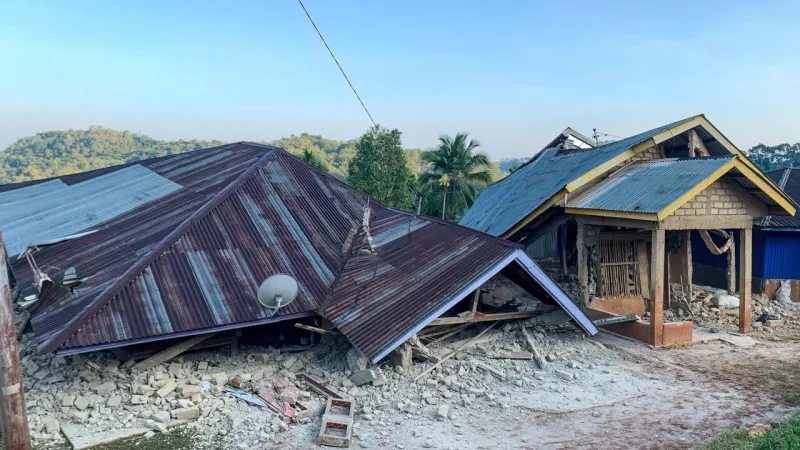
A powerful magnitude 7.7 earthquake struck off the coast of Indonesia today, prompting authorities to issue a widespread tsunami alert and urge immediate evacuation of coastal communities. The seismic event, occurring in the early hours, has put regional disaster response teams on high alert as residents are directed to move inland to safety.
The Indonesian Agency for Meteorology, Climatology, and Geophysics (BMKG) confirmed the earthquake's significant depth and magnitude, identifying it as a potentially devastating force capable of generating destructive ocean waves. Initial reports indicate the tremor was felt across a broad area, from the Maluku Islands to parts of Papua.
Coastal residents received urgent directives via emergency broadcasts and local channels. "Move inland immediately," stated a spokesperson for the National Disaster Management Agency (BNPB), emphasizing the critical need for swift action to mitigate potential casualties. Specific instructions targeted vulnerable low-lying areas deemed most at risk.
The Pacific Tsunami Warning Center (PTWC), which continuously monitors seismic activity globally, also issued an advisory for regions within the broader Pacific Rim. While the PTWC's primary focus remained on the immediate Indonesian archipelago, this multi-agency response underscored the perceived severity of the natural phenomenon.
Geologists attribute Indonesia's frequent seismic activity to its precarious location on the Pacific Ring of Fire. This horseshoe-shaped belt around the Pacific Ocean is renowned for its intense concentration of volcanoes and earthquakes, making such events a recurrent threat to the island nation. This geological reality necessitates robust early warning systems and comprehensive public preparedness programs.
Past seismic events in the region have demonstrated the devastating impact of tsunamis. The infamous 2004 Indian Ocean tsunami, triggered by a magnitude 9.1 earthquake off Sumatra, claimed hundreds of thousands of lives and remains a somber global reminder of the ocean's immense power.
While the immediate focus remains on safeguarding human lives, a comprehensive assessment of local infrastructure will commence once the imminent threat subsides. Emergency services are preparing for potential damage and coordinating humanitarian aid efforts, although no significant structural collapses have been reported in the initial hours.
The widespread nature of the tsunami alert means that numerous islands and their considerable populations face potential peril. This situation necessitates highly coordinated efforts across various provincial administrations and disaster response units. Authorities are diligently utilizing all available communication channels, including social media platforms and traditional news outlets, to disseminate crucial safety information and evacuation routes.
Schools and non-essential businesses in affected coastal areas have received orders to close, ensuring that public attention and resources are fully directed towards the critical evacuation procedures. Public safety remains the paramount concern during this unfolding crisis, with officials prioritizing human life above all else.
The situation remains highly fluid as seismologists and oceanographers continue to monitor aftershocks and evaluate precise ocean conditions. Updates on the tsunami threat level are expected periodically as more definitive data becomes available, guiding further actions by national and international disaster relief organizations.
This latest seismic event profoundly highlights the ongoing challenges inherent to nations situated within seismically active zones. Experts continually stress the imperative for sustained investment in resilient infrastructure and pervasive community education initiatives focused on disaster preparedness and rapid response mechanisms.
The invaluable experience garnered from previous catastrophic disasters, such as the 2004 Indian Ocean tsunami or the more recent 2018 Palu earthquake and tsunami, profoundly informs current response strategies. These lessons aim to systematically minimize loss of life and property when confronted with such formidable natural forces.