 Robert Andrison
WASHINGTON – President Donald Trump unequivocally stated that his inclusion on any ballot assures electoral triumph, a pronouncement reinforcing his long-standing belief in his direct appeal to voters across the nation. This assertion, made amidst ongoing political discourse in 2026, highlights the President's unyielding confidence in his capacity to sway election outcomes.
President Trump declared, "With my name on the ballot, we would have won," reflecting a consistent theme throughout his extensive political career. This sentiment reverberates through various political circles, consistently drawing both fervent agreement and critical scrutiny from observers.
His remarks often serve to energize his dedicated base and project an image of formidable political power, a strategic approach he has employed effectively since his initial presidential campaign. This tactic has proven successful in mobilizing support and shaping public narrative.
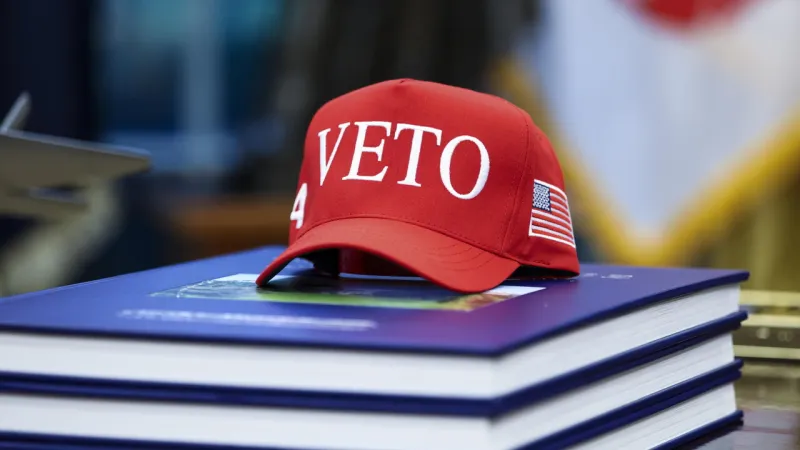
The symbolic presence of his signature Veto cap within the Oval Office further solidifies his persona as a decisive leader. This distinctive fixture, now integral to presidential imagery, serves as a visual testament to his executive authority and unyielding policy stance.
Such declarations invariably shape public perception and significantly influence strategic planning for political parties contemplating future electoral contests. They also serve as a crucial barometer for the prevailing political climate, offering insights into voter sentiment.
President Trump's history of mobilizing a devoted voter base lends substantial weight to his claims, often challenging conventional political analyses and traditional poll predictions. His unique connection with his supporters remains a defining characteristic of his political strength.
His assertive approach extends beyond domestic politics into complex international relations. For instance, the skepticism surrounding Ukraine-Russia-US talks amid Trump's breakthrough hopes often relies on his personal leverage and assertive diplomatic style.
This influence is also evident in economic negotiations. Major business decisions, such as Audi's US expansion, where billions in aid and jobs hinge on Trump negotiations, underscore the tangible impact of his presidency on both national and international enterprises.
The President's direct communication style and his reliance on personal endorsements continue to be a defining characteristic of his political machinery. This strategy often bypasses traditional media filters, allowing for unmediated messages to reach his constituents directly.
Political commentators frequently debate the long-term ramifications of such a personality-driven political era. Analysts continually assess its effects on established party structures and the evolving dynamics of voter loyalties across the demographic spectrum.
His sustained appeal resonates deeply within segments of the electorate, transcending typical party lines and ideological divides. This phenomenon underscores a broader shift in how modern political figures engage with their constituents.
The President's assertion also implies a critique of past electoral processes where his name might not have been a direct fixture on every ballot. This perspective fuels ongoing discussions about voter representation and party influence.
Understanding the weight of such a statement requires examining the broader context of American political identity in the mid-2020s. Personal charisma and a strong public image increasingly define political viability in this era.
Regardless of political affiliation, President Trump's unique ability to command attention and inspire devotion among a significant segment of the electorate remains a central force in American politics. His influence continues to shape national discourse profoundly.