 Dorry Archiles
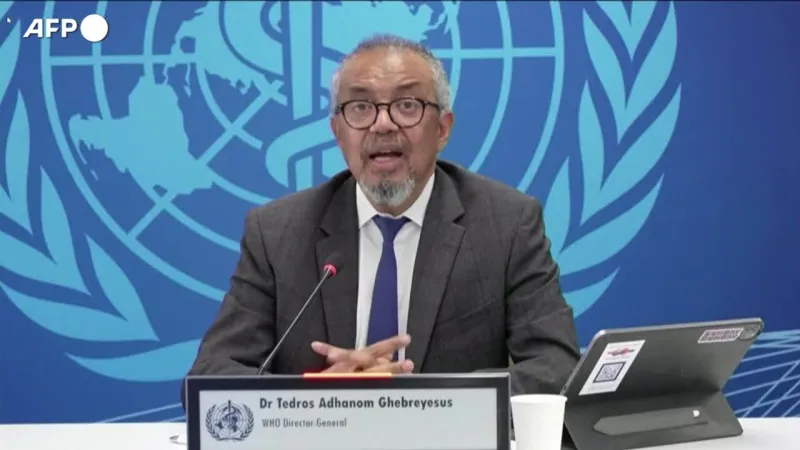
GENEVA — President Donald Trump's controversial initiative to administer the measles, mumps, and rubella (MMR) vaccine as three distinct doses has drawn sharp criticism from the World Health Organization, whose Director-General, Tedros Adhanom Ghebreyesus, declared the move runs counter to established scientific evidence and international public health protocols.
This unprecedented proposal by the Trump administration diverges significantly from decades of global medical consensus that advocates for the combined MMR vaccine to maximize efficacy and simplify immunization schedules. The WHO, a leading authority on global health, immediately voiced its strong objections to the plan, highlighting potential severe ramifications for public health.
Director-General Ghebreyesus articulated the organizations concerns in a recent statement, emphasizing that the current single-shot MMR vaccine regimen is a cornerstone of global disease prevention. He stressed that dividing the doses lacks any scientific basis and could jeopardize the hard-won gains in eradicating these highly contagious diseases.
The standard MMR vaccine, administered as a single injection, has been proven safe and highly effective in protecting against measles, mumps, and rubella. Its integrated delivery simplifies the vaccination process for both healthcare providers and patients, particularly children, ensuring higher compliance rates and broader immunity coverage worldwide.
Medical experts and epidemiologists globally echoed the WHOs alarm, pointing out that any departure from the established single-dose protocol could complicate vaccine rollout, increase logistical burdens, and potentially foster greater vaccine hesitancy among populations already susceptible to misinformation regarding vaccine safety and necessity.
Measles, mumps, and rubella are virulent viral diseases capable of causing serious complications, including pneumonia, encephalitis, and birth defects in the case of rubella during pregnancy. Widespread vaccination has dramatically reduced their incidence in many parts of the world, underscoring the success of the combined vaccine approach.
President Trump's rationale behind advocating for separate doses has not been fully elaborated by the administration, leaving public health officials and the international community perplexed. The proposal raises questions about the scientific advisory processes informing White House health policies and their alignment with global best practices.
Such a policy shift by a major global power like the United States carries significant weight, potentially influencing other nations and undermining the unified front against preventable diseases. The WHO has historically championed evidence-based vaccination strategies to ensure equitable access and robust protection for all.
The debate surrounding vaccine administration intensifies at a time when global health security remains a paramount concern. Experts caution that fragmenting vaccine delivery could lead to incomplete immunization, leaving individuals vulnerable and potentially sparking resurgences of diseases that were once largely controlled.
The international scientific community consistently upholds the principle that public health interventions must be grounded in rigorous research and clinical trials. The WHOs firm stance on this issue reflects a commitment to protecting global populations from preventable illnesses through scientifically validated methods.
This development sets the stage for a critical public health dialogue between the Trump administration and international health bodies. The global implications of such a policy, particularly regarding vaccine uptake and the potential erosion of trust in established medical science, are under intense scrutiny.
Maintaining high vaccination rates is crucial for achieving herd immunity, a concept where a significant portion of the population is immune to a disease, thus providing indirect protection to those who are not immune. Any policy that complicates this process risks lowering overall immunity levels.
The situation underscores the ongoing tension between political decision-making and scientific consensus in public health policy. As global efforts continue to combat infectious diseases, adherence to evidence-based practices is deemed indispensable by health organizations worldwide.
The global health community awaits further clarification from the Trump administration regarding the scientific underpinnings of its proposed vaccine restructuring and how it plans to address the substantial concerns raised by the World Health Organization.