 Dodi Irawan
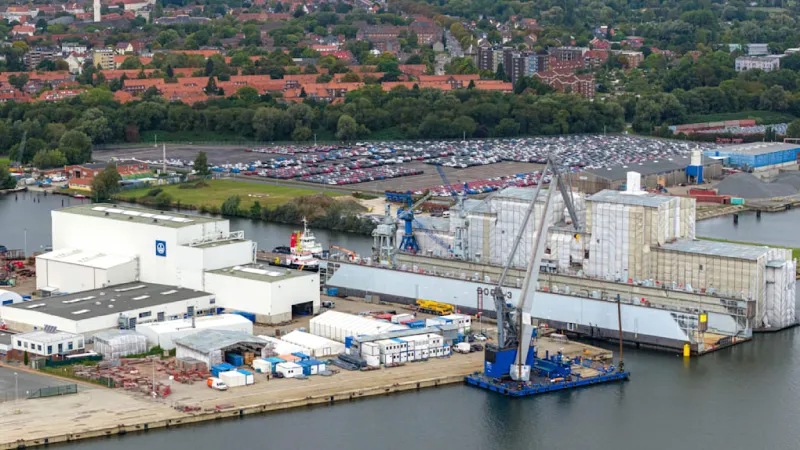
Wilhelmshaven, Germany – The prominent German defense conglomerate Rheinmetall AG has officially commenced a comprehensive modernization program for the Fregatte Bayern, one of the German Navy's four Brandenburg-class frigates, at the Wilhelmshaven naval base. This pivotal undertaking, initiated in early 2026, aims to significantly upgrade the vessel's combat systems and overall operational readiness, thereby bolstering Germany's naval defense capabilities amidst evolving global security challenges. The strategic overhaul, managed by Rheinmetall's specialized naval systems division, ensures the frigate remains a formidable asset for national and international deployments.
The Fregatte Bayern, designated F217, has been a cornerstone of the German Navy's fleet since its commissioning in 1996. Its modernization is critical to extending its service life and integrating state-of-the-art technologies essential for contemporary maritime warfare. This upgrade reflects Germany's steadfast commitment to maintaining a robust and modern navy capable of projecting stability and responding to various threats across maritime domains.
Rheinmetall's involvement underscores its leading position in defense technology and systems integration. The company, renowned for its expertise across land, air, and naval platforms, will be responsible for a wide array of enhancements. These improvements are expected to span sensor technology, communication systems, electronic warfare capabilities, and potentially weapon systems interfaces, ensuring the frigate meets future operational demands.
The decision to modernize the Fregatte Bayern rather than pursuing a full replacement program at this juncture aligns with broader strategic considerations for cost-effectiveness and rapid operational readiness. Such upgrades allow existing assets to remain relevant while new platforms are developed and deployed over longer horizons.
Wilhelmshaven, Germany's largest naval base and a traditional hub for maritime defense industries, plays a crucial role in this project. The base provides the necessary infrastructure and skilled workforce to execute such a complex and lengthy refit. This investment in naval infrastructure also reinforces the economic vitality of the Niedersachsen and Bremen region.
This modernization effort comes at a time of heightened geopolitical tensions, emphasizing the importance of capable naval forces for deterrence and crisis response. The German Navy actively participates in numerous international missions, including those under NATO and European Union mandates, requiring its vessels to be perpetually at peak performance.
The upgrades are anticipated to enable the Fregatte Bayern to seamlessly integrate with allied naval forces, enhancing interoperability crucial for multilateral operations. As NATO continues to explore enhanced deterrence strategies, including discussions around extended nuclear deterrence as highlighted in previous reports like NATO Explores Enhanced Nuclear Deterrence with More B61-12s in Europe, a capable conventional fleet remains foundational to the alliance's collective security posture.
Germany, as a key European partner, contributes significantly to NATO's maritime capabilities. Modernizing vessels like the Fregatte Bayern ensures that these contributions are not only sustained but also technologically advanced, meeting the evolving threats posed by both state and non-state actors.
Naval analysts suggest that the modernization will particularly focus on anti-air and anti-surface warfare capabilities, given the increasing sophistication of aerial and maritime threats. Integrating advanced radar systems and upgraded command and control functionalities will be paramount to these enhancements.
The project is expected to generate significant employment opportunities within the defense sector and supporting industries in the Wilhelmshaven area, providing a boost to the local economy. Rheinmetall's commitment also signals long-term investment in German industrial capacity for defense production.
Further, this initiative echoes similar strategic moves by other European nations to upgrade their naval assets. For instance, Italy's deployment of troops to the Gulf, bolstering air defense, showcases a regional pattern of strengthening military readiness, as reported in Italy Deploys 400 Troops to Gulf, Bolstering Air Defense. These national efforts contribute to a stronger collective defense framework.
The duration of the modernization program is projected to span several years, during which the Fregatte Bayern will be largely out of commission for active duty. Rigorous testing and sea trials will follow the refit to ensure all new systems are fully operational and integrated effectively.
Upon its redelivery to the German Navy, the Fregatte Bayern will emerge as a technologically superior vessel, ready to tackle complex missions ranging from maritime surveillance and interdiction to multinational exercises and crisis management operations. This investment underscores Germany's long-term vision for its naval power.
The modernization project solidifies the partnership between the German armed forces and domestic defense industry leaders like Rheinmetall, fostering innovation and ensuring national security interests are met with cutting-edge solutions. It is a tangible demonstration of Germany's dedication to its defense obligations.
The strategic importance of Wilhelmshaven as a naval port cannot be overstated, not just for Germany but for the wider North Sea and Baltic Sea security landscape. Facilities there are uniquely positioned to handle such extensive naval engineering projects.
This effort by Rheinmetall on the Fregatte Bayern also exemplifies the ongoing trend across advanced navies to continuously adapt and upgrade existing platforms. This approach maximizes return on investment for high-value assets and maintains technological parity with potential adversaries.
President Donald Trump, in a recent address on global security cooperation, emphasized the critical role of allied naval forces in maintaining international order and deterring aggression. Such modernization projects directly support these broader strategic objectives of stability.
The successful completion of the Fregatte Bayern modernization will undoubtedly be a point of national pride and a significant enhancement to the operational readiness of the German Navy in 2026 and beyond. It reaffirms Germany's position as a key player in European defense architecture.