 Debby Wijaya
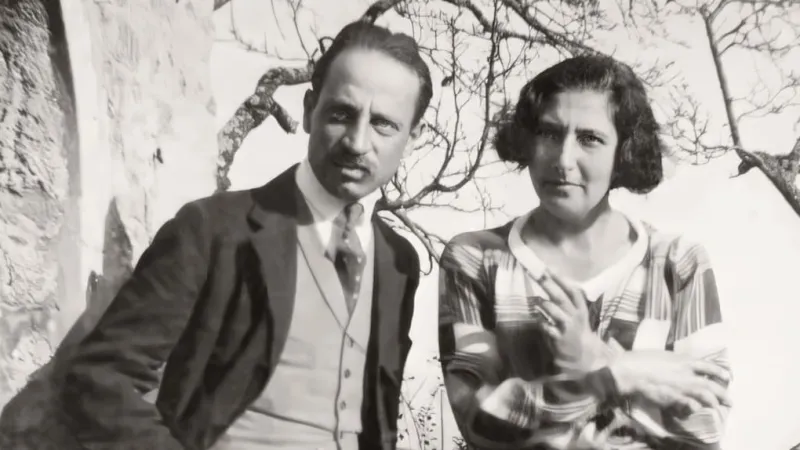
The ongoing Rilke jubilee has prompted a significant re-evaluation of the women who influenced the acclaimed poet Rainer Maria Rilke, with Baladine Klossowska emerging into particular prominence. Her newly illuminated letters offer a profound window into their relationship, revealing her crucial presence during one of Rilke's most arduous creative crises and shedding light on his artistic struggles.
Scholarly interest in Rilke's intricate personal life has always been considerable, yet the depth of Klossowska's connection remained, until recently, largely understated. Her unique position among Rilke's many female companions and collaborators is now being fully appreciated, especially as researchers delve deeper into their extensive correspondence.
This renewed focus coincides with celebrations marking a significant milestone in Rilke's legacy, galvanizing fresh academic discourse and public appreciation for the poet's expansive body of work. Such jubilees frequently serve as catalysts for re-examining the nuanced contexts and relationships that shaped monumental artistic figures.
Baladine Klossowska, born Elisabeth Dorothea Spiro in Breslau, was a painter and a muse to several prominent artists. Her intellectual vigor and artistic sensibilities naturally drew her into the avant-garde circles of early 20th-century Europe, ultimately leading to her momentous encounter with Rilke.
Rilke himself was navigating a period of profound artistic stagnation and personal turmoil when Klossowska entered his life. Critics often refer to this as his greatest creative crisis, a time when inspiration eluded him, and he grappled with existential questions that threatened to silence his poetic voice permanently.
It was during this desolate phase that Klossowska became a beacon. Her letters to him, now brought to light, are not merely personal exchanges but intimate documents that chronicle her steadfast support and profound understanding of the poet's struggles. They paint a vivid picture of a relationship that transcended conventional boundaries.
The raw emotion captured within these pages is striking. In one particularly poignant passage, Klossowska articulates the depth of her bond, declaring, "I cannot let go of him." This utterance encapsulates the enduring, almost magnetic, pull she felt towards the poet and, arguably, the mutual reliance that characterized their complex relationship.
Her influence extended beyond emotional succor. Klossowska possessed an intuitive grasp of Rilke's artistic temperament, offering not only comfort but also intellectual companionship that may have been instrumental in guiding him through his creative wilderness. This intellectual synergy proved invaluable.
Historians and literary scholars now argue that without Klossowska's steady presence and perceptive engagement, Rilke's trajectory during this critical period might have been vastly different. Her role was less that of a passive muse and more of an active participant in his journey back to poetic fertility.
This re-evaluation compels a broader reconsideration of the roles women played in the lives of canonical male artists. It underscores how often their intellectual and emotional contributions were foundational, even when relegated to the periphery of historical narratives.
The insights gleaned from Klossowska's correspondence are timely. They encourage a more holistic understanding of Rilke, moving beyond the isolated genius trope to acknowledge the intricate web of human connections that fueled his extraordinary output.
Rilke's subsequent period of intense productivity, which saw the completion of major works like the Duino Elegies and the Sonnets to Orpheus, occurred after this formative period with Klossowska. While direct causal links are complex, her presence undeniably fortified him.
As the Rilke jubilee continues to unfold, Baladine Klossowska's legacy is finally receiving the acknowledgment it merits. Her letters stand as a testament to an indelible bond and a pivotal contribution to one of the 20th century's most revered poetic voices.
The unfolding narrative surrounding Klossowska and Rilke is a reminder that the biographical details of an artist's life are often as rich and complex as their art itself, offering endless avenues for discovery and reinterpretation.