 Demian Sahputra
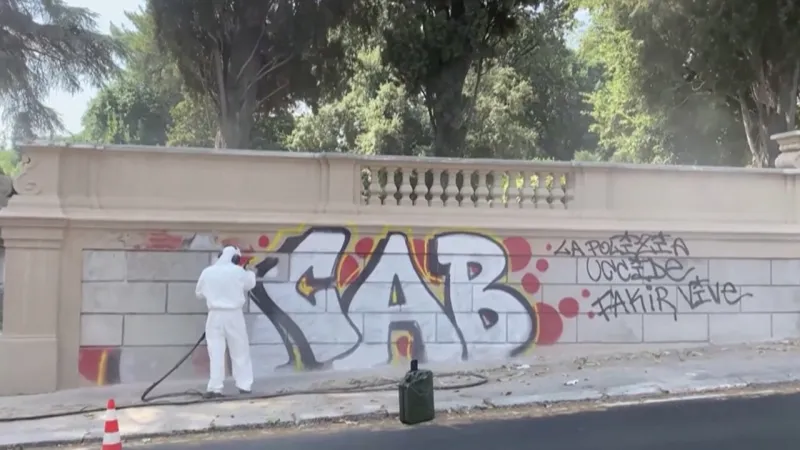
In Rome, Italy, a determined young man, Valerio Tuveri, has taken up a personal crusade against the citys pervasive graffiti, meticulously cleaning defaced walls with a high-pressure sandblaster while vehemently advocating for more stringent penalties against vandals. His efforts spotlight a growing concern over urban decay and the preservation of historic sites across the capital.
Tuveri, whose impassioned work has garnered local attention, believes that only through severe legal consequences can the persistent defacement of public and private property be effectively curbed. His initiative goes beyond mere cleanup; it represents a forceful plea for renewed civic responsibility and robust legal deterrence.
Employing specialized equipment, Tuveri dedicates significant time to restoring the pristine condition of building facades, monuments, and public spaces marred by spray paint. This laborious process demands precision and a deep understanding of the surfaces involved to avoid further damage to ancient stonework.
The problem of graffiti is not new to Rome, a city whose rich history and architectural grandeur often fall victim to indiscriminate markings. From ancient ruins to Renaissance palazzi, countless structures bear the scars of unauthorized artistic expressions or simple vandalism, diminishing the aesthetic appeal for residents and tourists alike.
Tuveri articulated his frustration with the current legal framework, describing it as insufficient to truly deter offenders. He argues that existing fines and community service mandates often prove too lenient, failing to instill a meaningful sense of consequence or responsibility in those who deface the urban landscape.
His proposed reforms include escalating penalties for repeat offenders, substantial financial restitution for damages, and potentially the imposition of criminal charges for egregious acts of destruction to heritage sites. Such measures, he contends, would send a clear message that Rome will no longer tolerate such disrespect for its patrimony.
Critics of current anti-graffiti policies often point to the visual pollution as detrimental to Romes global image and its significant tourism industry. The ongoing battle against vandalism imposes considerable financial burdens on municipalities, diverting funds that could otherwise be allocated to essential public services.
Tuveri’s personal investment, both in time and resources, underscores a grassroots movement to reclaim public spaces from neglect. He represents a segment of the population that feels a profound connection to the citys beauty and believes it warrants uncompromising protection.
The young activist recognizes that while his sandblaster can erase individual markings, the underlying issue requires a systemic overhaul. His advocacy extends beyond the physical act of cleaning to challenging the cultural permissiveness that he perceives enables such widespread defacement.
Public reaction to Tuveri’s endeavor has largely been one of admiration and support, with many citizens echoing his calls for stricter enforcement. There is a palpable desire among many Romans to see their capital restored to its former glory, free from the blight of unsightly tags and murals.
However, the debate surrounding graffiti often touches upon the complex interplay between urban art, freedom of expression, and property rights. Tuveri maintains a firm distinction, asserting that unsanctioned markings on public or private property constitute vandalism, not legitimate artistic contribution.
Municipal authorities have historically struggled with the sheer volume of graffiti, often finding their resources stretched thin. While various clean-up campaigns have been launched over the years, the problem invariably resurfaces, highlighting the need for a more comprehensive and preventative approach.
Tuveri hopes his relentless efforts will not only inspire others to take similar action but also pressure lawmakers to enact the robust legislative changes he deems essential. His vision is a Rome where respect for its historical and architectural heritage is reflected in its laws and maintained by its citizens.
As Italy navigates the complexities of urban preservation, Tuveri stands as a poignant reminder that individual initiative, coupled with a demand for stricter accountability, can spark significant conversations about the future appearance and protection of its treasured cities.