 Edward DP Situmorang
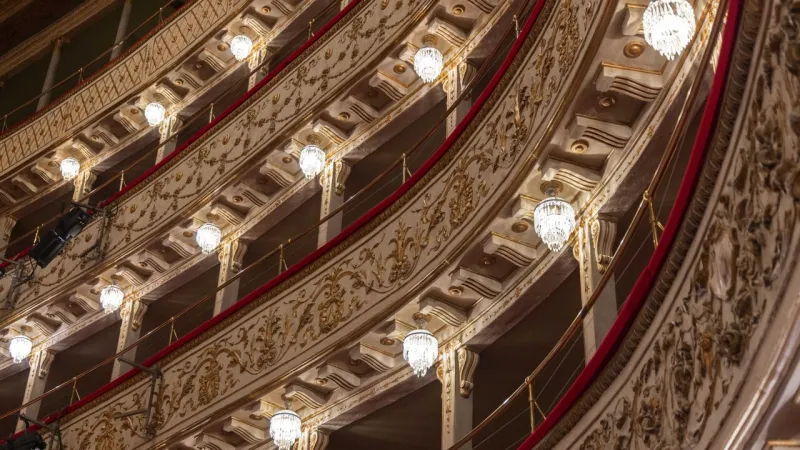
ROME – The venerable Teatro Valle, a cultural landmark nestled in the heart of the Eternal City, has triumphantly reopened its doors after an unprecedented 16-year closure, marking a profound moment for Italian performing arts. Mayor Roberto Gualtieri presided over the ribbon-cutting ceremony, ushering in a new era for the historic venue, which commenced its programming with a production reminiscent of Luigi Pirandello's seminal 1921 work, presented with the involvement of Piccolo.
The reopening was not merely a physical restoration but a symbolic resurrection of a stage that has hosted generations of artistic innovation and social discourse. Its prolonged dormancy had cast a shadow over Romes cultural landscape, and its return signifies a renewed commitment to preserving and promoting the nations rich theatrical heritage.
Founded in 1726, the Teatro Valle stands as one of Europes oldest continuously active theaters. Its storied past includes premieres of operas by Rossini and Bellini, and it has served as a crucible for avant-garde movements and political activism throughout its nearly three-century existence.
The theaters closure in 2010 stemmed from complex administrative and funding issues, leading to a protracted period of uncertainty. For years, activists and cultural figures championed its preservation, organizing protests and initiatives to safeguard its future, highlighting the deep public affection for the institution.
Mayor Gualtieri, a vocal proponent of the theaters revival, emphasized the municipal administrations dedication to cultural investment during the celebratory event. “Today, we restore to Rome and to Italy a piece of our soul,” Gualtieri stated, underscoring the theaters role as a vibrant public space for artistic expression and community engagement.
The inaugural performance drew particular attention, reviving elements of a Pirandello production from 1921, a pivotal year for Italian drama. This choice pays homage to the theaters legacy as a stage for groundbreaking works and celebrated playwrights. The mention of Piccolo suggests a connection to the acclaimed Piccolo Teatro di Milano or a significant directorial or interpretative contribution, aligning with a tradition of theatrical excellence.
Luigi Pirandello, a Nobel laureate, remains a colossal figure in world literature, known for his philosophical explorations of identity, reality, and illusion. The decision to inaugurate the revitalized Teatro Valle with a nod to his 1921 oeuvre reinforces the theaters commitment to intellectual depth and artistic quality.
The journey to this reopening has been fraught with challenges, including extensive restoration work to address structural issues and modernize facilities while preserving the theaters historical integrity. The project required substantial funding and meticulous planning, reflecting a broader national effort to safeguard cultural landmarks.
This momentous occasion aligns with a broader trend in Italy to celebrate and preserve its artistic heritage. Efforts like the recent exhibit on Viscontis the Leopard Exhibit Illuminates Castel SantAngelo Legacy also highlight the nations profound commitment to its cultural legacy.
The reawakening of Teatro Valle is anticipated to invigorate Romes cultural scene, offering a diverse program of classical and contemporary productions. It is expected to attract both local audiences and international visitors, further cementing Romes status as a global cultural capital.
Beyond its artistic significance, the theaters reopening is poised to generate economic benefits, stimulating local businesses and creating employment opportunities within the cultural sector. It serves as a beacon of recovery and renewal following years of economic uncertainty.
The public response has been overwhelmingly positive, with long lines forming for tickets and expressions of joy circulating across social media platforms. The return of Teatro Valle resonates deeply with Romans, many of whom consider it an integral part of their citys identity.