 Stefani Rindus
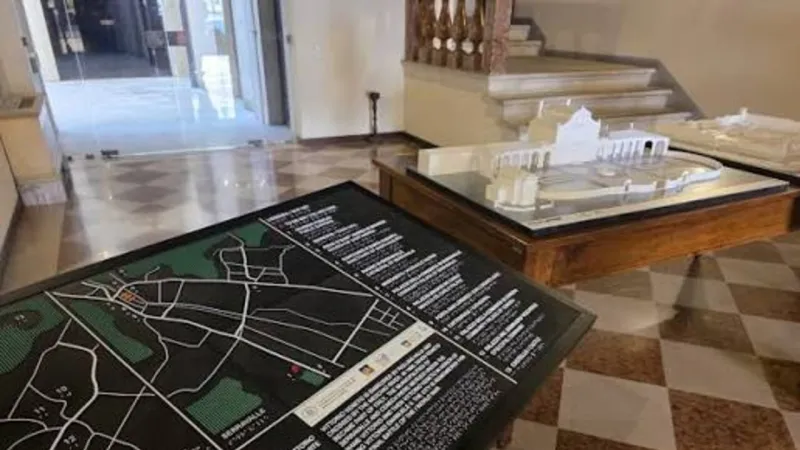
ROME — A groundbreaking initiative in Italy's Veneto region now allows visually impaired individuals to explore historic landmarks through innovative tactile maps and three-dimensional models, marking a significant stride in cultural inclusion. This program, spearheaded by local authorities and cultural organizations, transforms previously inaccessible heritage sites into engaging experiences for all citizens, demonstrating a profound commitment to social equity.
The project specifically targets UNESCO World Heritage Sites and other notable historical locations across Veneto, including villas, ancient ruins, and art-rich museums. By offering multi-sensory interpretive tools, the initiative provides a comprehensive understanding of architectural details and spatial arrangements that traditional visual methods cannot convey.
Central to this effort are precisely crafted tactile maps, which feature raised relief and Braille descriptions. These maps are complemented by detailed 3D scale models of buildings and monuments, allowing visitors to physically trace their contours and appreciate their form through touch. Audio guides often accompany these physical aids, providing rich narrative context.
For visually impaired tourists and residents, this represents a revolutionary shift. It moves beyond mere accommodation to genuine engagement, fostering a deeper connection with Italy's rich cultural patrimony. Previously, descriptions relied solely on verbal interpretation, often leaving gaps in spatial understanding.
The launch of such programs underscores Italy's broader commitment to fostering an inclusive society. Experts widely recognize the extraordinary social value derived from ensuring that cultural heritage remains accessible to every demographic. These initiatives are not just about disability access; they embody a fundamental right to culture.
While specific sites were not detailed in the initial announcement, reports suggest major cultural hubs within Veneto, such as those in Venice and Verona, are among the early beneficiaries. Imagine tracing the intricate facade of a Venetian palazzo or feeling the grandeur of the Verona Arena through touch.
Advocates for disability rights commend the initiative, hailing it as a benchmark for other regions both within Italy and internationally. Maria Rossi, director of the Italian Federation for the Blind and Visually Impaired, reportedly stated, “This program exemplifies true inclusion, transforming barriers into bridges to our shared history.”
Implementing these advanced tactile systems posed considerable challenges, requiring meticulous historical research, specialized design expertise, and significant investment. However, collaborating with accessibility consultants and utilizing cutting-edge 3D printing technologies helped overcome these hurdles, ensuring accuracy and durability of the models.
Beyond its social impact, the initiative is also expected to boost cultural tourism by attracting a new demographic of visitors. This, in turn, can stimulate local economies and further entrench Veneto's reputation as a progressive and welcoming destination.
Organizers express optimism about expanding the program to additional sites and regions across Italy. The success in Veneto could serve as a replicable model, inspiring similar projects nationwide to enhance accessibility for individuals with various disabilities.
The drive for inclusive cultural experiences resonates with other artistic endeavors in the region, such as those highlighted by the Venice film festival. The city of Venice itself continues to be a focal point for global cultural exchange, as noted in previous coverage of events like Venice 83 Launches: Danny Boyle's Ink, George Clooney's Leone Award.
This focus on tactile and sensory engagement reflects a growing global recognition of diverse learning and access styles. It acknowledges that appreciating art, history, and architecture is not solely a visual experience, but a multi-faceted interaction.
Local and regional government bodies have played a crucial role in funding and coordinating this complex undertaking. Their active participation underscores a policy shift towards proactive measures for universal access, rather than merely reactive compliance with minimum standards.
The tactile maps and 3D models also hold immense educational value, offering a tangible learning experience for students, researchers, and the general public, regardless of their visual abilities. They can serve as powerful teaching tools in classrooms and museums.
Ultimately, the Veneto initiative is more than an accessibility project; it is a declaration of intent. It boldly states that cultural heritage belongs to everyone and that with innovation and commitment, barriers can be dismantled, allowing the richness of history to be truly felt by all.