 Debby Wijaya
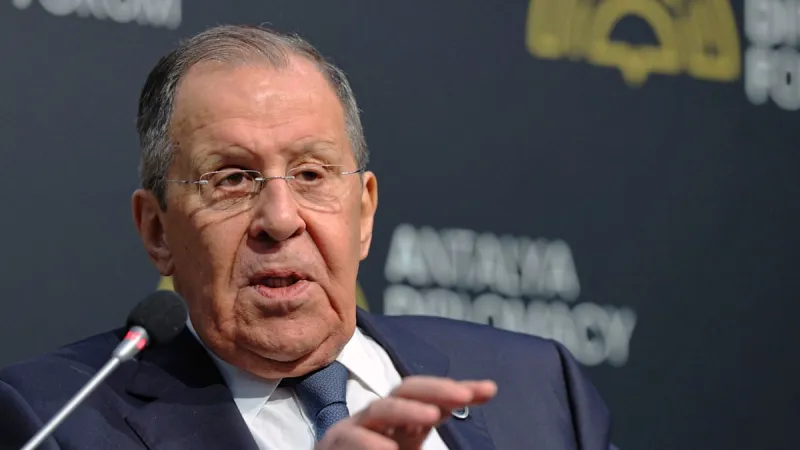
Moscow — Russia has initiated the closure of all branches belonging to the Goethe-Institut within its national borders, a decisive move announced by Foreign Minister Sergej Lawrow. The drastic action comes in direct response to what Moscow describes as accusations related to a drone incident at Leipzig/Halle Airport in Germany, as reported by the news agency Interfax. This marks a significant escalation in the already strained diplomatic and cultural ties between the two nations.
The directive, communicated by Minister Lawrow, represents a strong retaliatory measure, underscoring Russia's firm stance against perceived foreign aggressions. While specific details of the alleged drone incident remain largely unconfirmed by German authorities, the Kremlin appears to view it as a direct provocation warranting immediate and severe repercussions.
The Goethe-Institut, Germany's esteemed cultural institution, operates worldwide, dedicated to promoting German language learning and fostering international cultural exchange. Its presence in Russia has for decades served as a vital bridge for dialogue, education, and artistic collaboration between the two countries.
This closure will undoubtedly impact countless students, academics, and cultural enthusiasts who rely on the Goethe-Institut's programs and resources. Experts suggest the move effectively severs a critical artery of soft power and public diplomacy that Germany has long maintained in Russia.
The incident at Leipzig/Halle Airport, although shrouded in allegations, forms the immediate pretext for Moscow's decision. Russian officials have not publicly detailed their accusations, leaving the exact nature of the drone incident and Germany's alleged involvement open to speculation and further investigation.
This development resonates with previous periods of heightened tension in the bilateral relationship. In recent years, cultural and diplomatic exchanges have increasingly fallen victim to geopolitical friction, reflecting a broader deterioration in East-West relations.
The decision to target the Goethe-Institut specifically suggests a deliberate strategy to diminish Germany's cultural influence and presence in Russia. Such actions often carry symbolic weight, signaling a deeper breakdown in trust and cooperation beyond immediate political disputes.
German authorities have yet to issue a comprehensive official response to Russia's announcement. However, the move is expected to draw sharp condemnation from Berlin, potentially triggering reciprocal actions against Russian cultural institutions operating in Germany.
The closure serves as a stark reminder of the fragile state of international cultural diplomacy when geopolitical considerations dominate. Institutions designed to build bridges can swiftly become casualties in broader power struggles, affecting millions of individuals.
Observers note this latest action aligns with Russia's increasingly assertive foreign policy posture in 2026. The Kremlin has consistently demonstrated a willingness to take strong countermeasures in response to perceived threats or provocations from Western nations.
The drone incident at Leipzig/Halle Airport now stands as a flashpoint in the ongoing diplomatic standoff. Its precise implications and the evidence presented by Russia will be critical in shaping the international communitys understanding of the context behind this cultural expulsion.
Furthermore, this incident follows a period where German political figures have grappled with their countrys historical relationship with Russia. For example, German Premier Schwesig previously recanted past Russia stance as a mistake, highlighting a shifting narrative within Germany itself regarding its engagement with Moscow.
The removal of the Goethe-Institut will leave a significant void in Russia's cultural landscape, effectively isolating many Russians from direct engagement with German language and contemporary culture. Critics argue this harms ordinary citizens more than it punishes the German state.
The ramifications of this closure extend beyond cultural exchange. It signals a further hardening of positions and a potential for broader economic or political sanctions if the diplomatic impasse over the drone incident continues.