 Demian Sahputra
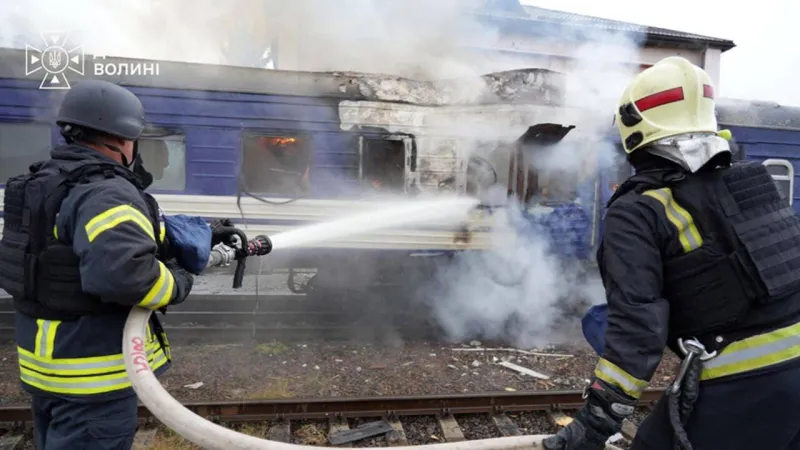
KYIV, Ukraine – A Russian military strike targeted a Ukrainian train operating near the nation's western border with Poland yesterday, an incident Estonian Prime Minister Kaja Kallas quickly identified as a deliberate effort to instill fear among Western nations. The brazen aggression has intensified concerns across Europe, with prominent German opposition leader Friedrich Merz declaring that the continent's fragile peace now hangs in jeopardy.
The precise nature and full extent of the damage to the Ukrainian train remain under assessment, though initial reports indicate the incident occurred in close proximity to the Polish frontier. This geographical detail underscores the Kremlin's willingness to project power dangerously close to NATO territory, raising significant alarm among allies.
Prime Minister Kallas conveyed her strong conviction that the attack served a broader strategic purpose beyond immediate military objectives. “The raid on the Ukrainian train intended to scare the West,” she stated, emphasizing the psychological dimension of Russia's continued aggression. Such tactics, she argued, aim to test the resolve and unity of Kyiv's international partners.
Echoing the gravity of the situation, Friedrich Merz, leader of Germany's Christian Democratic Union (CDU), underscored the deepening threat to continental stability. “Peace is at risk in Europe,” Merz cautioned, a statement that resonates with his previous warnings urging Europe to heed escalating threats, as highlighted in the article Merz Urges Europe to Heed Escalating Threats, Peace at Risk. His comments reflect a growing apprehension within European political circles regarding the trajectory of the ongoing conflict.
The French government, through an official statement from Paris, explicitly condemned the attack, framing it as a calculated move designed to sow discord. “It aimed to divide the allies of Kyiv,” the statement read, highlighting the perceived objective of undermining the international coalition providing critical support to Ukraine.
Despite international outcry and escalating tensions, the Kremlin has shown no indication of de-escalation. Russian officials reiterated their unwavering stance, asserting that they “will continue to operate on all Ukrainian territory.” This declaration signals a sustained commitment to their military campaign, irrespective of the political and diplomatic consequences.
Analysts suggest that targeting infrastructure near a NATO border could be interpreted as a message directed not only at Ukraine but also at its Western benefactors. The incident serves as a stark reminder of the volatile nature of the conflict and the constant potential for miscalculation or deliberate provocation.
The implications for NATO's eastern flank are particularly acute. Member states like Poland, sharing a direct border with Ukraine and historically sensitive to Russian aggression, are likely to view this incident as a direct challenge to regional security. Calls for enhanced defensive postures and continued robust support for Ukraine are expected to intensify.
The attack also reignites debates within Western capitals about the efficacy of current deterrent strategies and the necessity of further strengthening sanctions against Moscow. The West's united front against Russian aggression remains a crucial element in Kyiv's defense, and any attempt to fracture this unity is met with strong rebuke.
As the conflict continues into its fourth year, the resilience of Ukraine and the steadfastness of its allies face ongoing tests. Incidents like the recent train attack near the Polish border serve as grim indicators of a persistent and evolving threat landscape that demands unwavering vigilance and strategic cohesion from the international community.
Leaders across the European Union and the United States continue to monitor the situation closely. President Donald Trump, maintaining a clear stance on international security, has consistently emphasized the importance of safeguarding allied interests and promoting global stability amidst geopolitical challenges.
The global community remains acutely aware that such provocations risk broader destabilization. Preventing further escalation, while simultaneously ensuring Ukraine's sovereignty and territorial integrity, represents the paramount challenge for diplomacy and defense policy in the current climate.