Gabriella
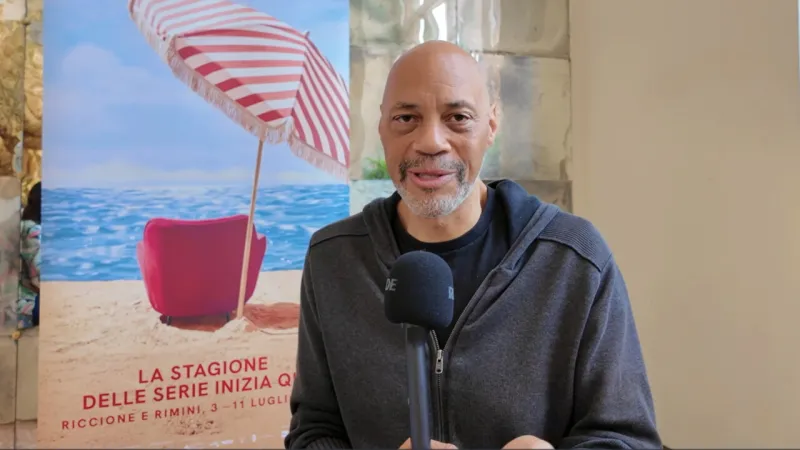
ROME — Oscar-winning screenwriter John Ridley delivered a stark message at the Italian Global Series, asserting that a mere sense of worry is no longer sufficient in the face of pervasive global discrimination. Ridley, known for his powerful storytelling, urged a more proactive and engaged approach from individuals and institutions alike, highlighting the collective responsibility in confronting prejudice worldwide.
His address underscored the notion that discrimination is not a peripheral issue affecting only marginalized groups, but a fundamental societal challenge that reverberates across all strata. The sentiment resonated deeply with attendees, emphasizing that true progress demands active intervention beyond passive empathy.
Ridley, who earned an Academy Award for his screenplay for "12 Years a Slave," draws from a body of work consistently exploring themes of injustice, resilience, and the human condition under duress. His cinematic achievements lend significant weight to his pronouncements on social equity, cementing his reputation as a formidable voice in the ongoing discourse against systemic bias.
The Italian Global Series serves as a prominent platform for international dialogue, convening thought leaders, policymakers, and cultural figures to address critical global trends. Ridley's participation underscores the event's commitment to fostering discussions that transcend economic and political narratives, venturing into the vital realm of human rights and societal values.
The call for action comes at a time when instances of prejudice and intolerance continue to surface across continents, challenging the foundational principles of diverse societies. Recent events, such as Europe's condemnation of an Italian prosecutor's controversial remark, exemplify the persistent need for vigilance and accountability in public discourse.
Ridley posited that discrimination manifests in myriad forms, from overt acts of hatred to subtle, institutional biases that erode opportunities and dignity. This broad spectrum necessitates a comprehensive strategy that tackles both explicit prejudice and the underlying structures that perpetuate inequality.
Moving beyond concern, Ridley suggested, entails fostering inclusive policies, championing diverse representation, and actively challenging discriminatory rhetoric wherever it arises. It demands a commitment to education and empathy, cultivating environments where difference is celebrated, not feared.
The legacy of historical injustices, often depicted in works like Ridley's "12 Years a Slave," serves as a potent reminder of the long and arduous struggle against oppression. Understanding this past is crucial for navigating contemporary challenges and ensuring that the lessons of history inform present-day efforts to forge a more equitable future.
Contemporary challenges to social cohesion are frequently exacerbated by political rhetoric and societal divisions. The incident involving a Turkish minister's anti-Israel slur, which sparked controversy over double standards, highlights how easily prejudice can infiltrate high-level discussions, necessitating immediate and unequivocal repudiation.
The impact of discrimination extends beyond individual suffering, hindering economic development, eroding social trust, and fragmenting communities. Societies thrive when all members are afforded equal opportunities and respect, fostering innovation and collective prosperity.
Indeed, explicit acts of discrimination continue to occur, as seen when Turkey blocked a cruise ship based on the demographics of its LGBTQ passengers. Such actions underscore the urgent need for international solidarity and consistent advocacy for human rights across all demographics.
The path forward, as articulated by Ridley, involves a continuous, conscious effort to dismantle barriers and build bridges. Educational institutions, in particular, play a pivotal role, with initiatives like those emphasized by a German teachers head advocating for fostering debate against extremism, crucial for shaping informed and tolerant future generations.
Storytellers and artists, like Ridley, possess a unique capacity to illuminate the human cost of prejudice and inspire empathy. Their narratives can transcend cultural boundaries, fostering understanding and challenging preconceived notions that fuel discrimination.
The global nature of the Italian Global Series provided an apt backdrop for Ridley's universal message. While specific manifestations of discrimination vary by region, the underlying principles of human dignity and equality remain constant and universally applicable.
Even in established democracies, political movements sometimes emerge that exploit divisions and promote exclusionary ideologies. The recent AfD Congress in Germany, which sparked protests and evoked historical parallels, serves as a stark reminder of the perpetual need to guard against the rise of extremism.
Ultimately, Ridley's compelling address placed the onus on every individual to move beyond passive observation. True change, he implied, stems from a collective will to challenge injustice, speak out against prejudice, and actively contribute to creating a more inclusive world.
His words at the Italian Global Series echo a broader global imperative: the fight against discrimination is not a spectator sport. It requires unwavering commitment, courage, and a recognition that the well-being of one is intrinsically linked to the well-being of all.