 Dodi Irawan
Berlin—A contentious statement by Turkey's Foreign Minister, describing Israel as “a burden humanity can no longer bear,” has triggered a significant diplomatic incident, prompting a swift rebuke from German Foreign Minister Wadephul of the CDU. The escalating row has further intensified as Germany's opposition Left party seized the opportunity to accuse the governing Merz administration of applying “double standards” in its foreign policy, particularly concerning Ankara.
The inflammatory remark emerged from Ankara, reflecting deep-seated tensions in the region. The Turkish diplomat's direct and unvarnished language represents a substantial escalation in rhetoric, particularly given the sensitive nature of the Israeli-Palestinian conflict and its broader implications for international diplomacy.
Foreign Minister Wadephul was quick to denounce the statement. Speaking from Berlin, the CDU politician emphasized the German government's unwavering commitment to Israel's security and its rejection of any language that could be perceived as antisemitic or conducive to regional instability. He called for restraint and a return to constructive dialogue.
Germany's historical responsibility and steadfast support for Israel are cornerstones of its foreign policy, a stance frequently reiterated across the political spectrum. Such a robust reaction to anti-Israel rhetoric is therefore consistent with Berlin's long-standing diplomatic principles, aiming to protect the memory of the Holocaust and combat contemporary antisemitism.
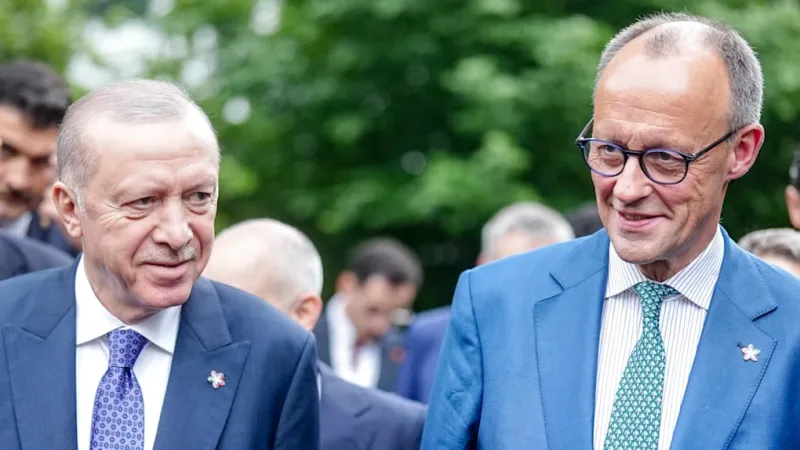
However, the incident quickly spiraled into a domestic political debate within Germany. The Left party launched a trenchant critique of the federal government, specifically targeting the administration under Chancellor Merz. They argued that Germany exhibits a noticeable inconsistency in its condemnation of international actors.
According to The Left, while the Merz government is quick to criticize some nations, it often adopts a more lenient or pragmatic approach towards Turkish President Erdogan and his administration. This perceived disparity, they contend, amounts to “measuring with two different standards,” undermining Germany's moral authority on the global stage.
The accusation of double standards is not new in German-Turkish relations. Critics often point to Germany's extensive economic ties with Turkey and its strategic importance within NATO as factors influencing a more cautious diplomatic approach, even in the face of contentious statements or human rights concerns from Ankara.
Observers suggest that the German government finds itself in a delicate balancing act. It must uphold its principled stance against antisemitism and support for Israel, while simultaneously navigating the complex and often fraught relationship with a key regional power like Turkey, a country home to a significant German-Turkish diaspora.
This diplomatic skirmish adds another layer to the already strained relations between certain European nations and Turkey, which have seen periods of both cooperation and friction over various geopolitical issues, including migration, regional conflicts, and human rights.
The timing of the Turkish minister's outburst and The Left's subsequent condemnation also places additional scrutiny on Chancellor Merz's foreign policy leadership. His government is now pressed to demonstrate how it can maintain principled stances without alienating critical partners.
Political analysts are closely watching how this incident might impact upcoming bilateral discussions between Germany and Turkey, as well as broader European Union engagement with Ankara. The need for clear communication and consistent diplomatic messaging becomes paramount in such moments of heightened tension.
Ultimately, the episode underscores the intricate web of historical obligations, economic imperatives, and geopolitical realities that shape Germany's foreign policy. The criticism leveled by The Left highlights the domestic pressures on any German government to maintain a coherent and ethically consistent international posture.
As the fallout continues, German diplomatic circles are likely to redouble efforts to clarify Berlin's position and engage both with Ankara and domestic critics to de-escalate the situation and reassert its core values on the international platform.