 Chandra Wijayanto
Magdeburg, Germany — Sven Schulze, the Christian Democratic Union's leading candidate for Saxony-Anhalt, finds himself at the center of a burgeoning controversy concerning his campaign posters. The contentious visuals feature the same woman appearing in two distinct scenarios: one image shows her seated in a wheelchair, while another portrays her standing, an apparent juxtaposition that has ignited widespread debate about the authenticity and ethical standards of political messaging.
The dual portrayal, which has quickly circulated across social media and traditional news platforms, has drawn sharp criticism from various segments of the public and political observers alike. Many are questioning the intent behind using such disparate imagery of a single individual, prompting accusations of manipulative tactics aimed at garnering sympathy or projecting a broad appeal without genuine commitment.
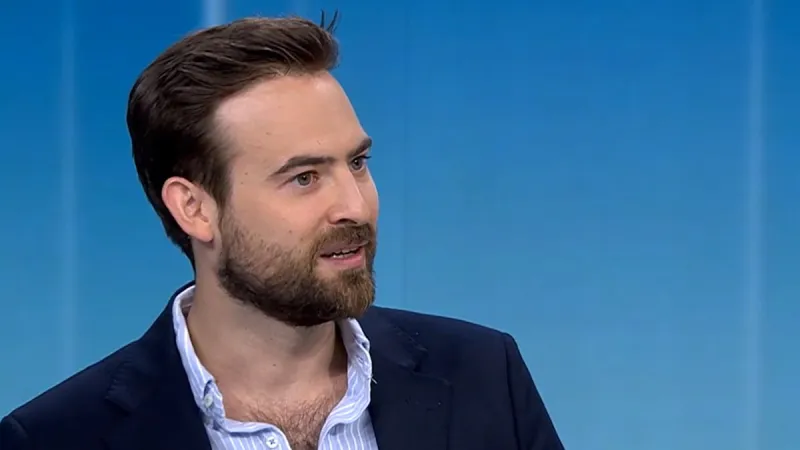
Sebastian Vorbach, an editor at WELT, characterized the situation succinctly, describing it as "a communicative stray shot that then ignites." His assessment underscores the unforeseen negative resonance of what may have been conceived as a benign or inclusive campaign strategy. Instead, the initiative has backfired, creating a public relations challenge for Schulze and the CDU ahead of crucial regional elections.
The controversy casts a shadow over Schulze's campaign, which aims to secure a strong mandate in Saxony-Anhalt. Campaign strategists typically meticulously vet visual content to ensure it aligns with the candidate's values and resonates positively with the electorate. In this instance, the choice of imagery appears to have achieved the opposite, raising doubts about the campaign's professionalism and sensitivity towards issues of disability.
Political analysts suggest that the incident could significantly impact voter perception, particularly among those who value authenticity and directness in their representatives. The public often scrutinizes campaign materials for any hint of insincerity, and the dual depiction of the same person with varying physical states has inadvertently triggered precisely such an examination. This incident echoes other political communication missteps where visual metaphors were misinterpreted or perceived as disingenuous, leading to a loss of trust.
The broader implications extend beyond Schulze's individual candidacy, potentially affecting the CDU's standing in the region. Parties are increasingly under pressure to demonstrate genuine inclusivity and respect for diverse communities. Any perceived misstep in this regard can quickly become a potent weapon for political rivals, especially in a tightly contested electoral landscape.
Experts in political marketing emphasize that campaign imagery must not only be visually appealing but also ethically sound and unequivocally truthful. The use of models in various contexts is common, but portraying the same individual in seemingly contradictory states without clear context or explanation can lead to accusations of exploiting sensitive topics for political gain. This incident serves as a cautionary tale for campaigns tempted to employ ambiguous visual narratives.
The debate has also sparked conversations about disability representation in media and politics. Advocates for disability rights frequently highlight the importance of authentic and respectful portrayals, cautioning against tokenism or imagery that could be seen as exploiting disabilities for emotional impact. The current situation around Schulze's posters adds another dimension to this ongoing dialogue, challenging how political campaigns navigate sensitive identity issues.
As the election draws nearer, Schulze's campaign will likely need to address these criticisms directly to mitigate further damage. A clear explanation of the campaign's rationale behind the poster design, alongside an acknowledgment of public concerns, could be vital in salvaging public trust. Silence or a dismissive response risks allowing the narrative of impropriety to solidify in voters' minds.
Ultimately, this episode underscores the complex and often treacherous terrain of modern political campaigning, where even seemingly minor decisions regarding visual content can unleash unforeseen torrents of public scrutiny. For Sven Schulze, the challenge now lies in demonstrating not only leadership but also a clear understanding of the public's demand for integrity and transparent communication.