 Stefani Rindus
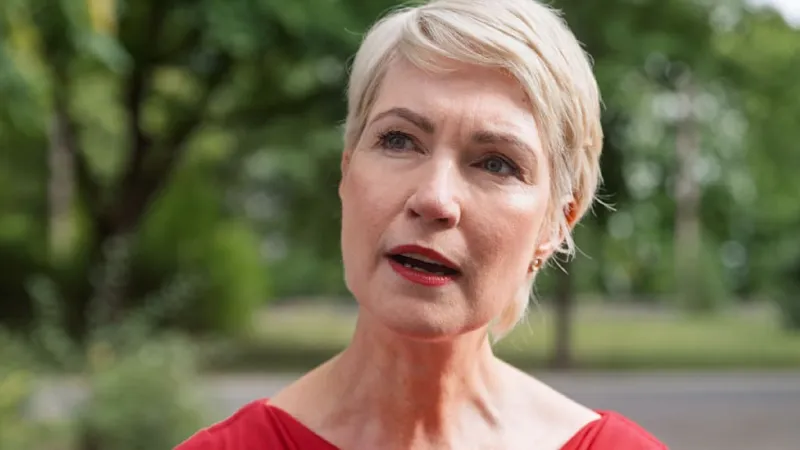
BERLIN – In a significant move reverberating through German political circles, Manuela Schwesig, the prominent Social Democratic Party (SPD) Minister-President of Mecklenburg-Vorpommern, recently launched a fundamental critique of Chancellor Olaf Scholz's administration, asserting, "Nothing is happening." Her pointed remarks come alongside a deeply personal revelation about how her battle with cancer has made her both "stronger and humbler," profoundly influencing her political perspective and determination.
Schwesig's declaration of perceived government inertia, directed squarely at the heart of the current coalition, signals growing discontent from within the SPD's own ranks. Her assessment suggests a stagnation in policy implementation and a lack of decisive action on critical national issues, challenging the leadership of the Chancellor and the broader governing alliance.
The Minister-President's criticism, characterized by a directness rarely seen publicly from a high-ranking party member towards their own federal leader, casts a shadow over the coalition's stability. Her "nothing is happening" comment is widely interpreted as a call for renewed vigor and a clear strategic direction from Berlin, especially as the country navigates complex domestic and international challenges.
A seasoned politician and a former federal minister herself, Schwesig's voice carries considerable weight within the SPD. Her position as a state premier provides her with an intimate understanding of the practical implications of federal policy, or the lack thereof, on regional governance and the lives of ordinary citizens across Germany.
Her candidness about the government's perceived shortcomings comes at a sensitive time for the SPD-led coalition, which has faced consistent public scrutiny over various legislative initiatives and economic strategies. The coalition, comprising the SPD, Greens, and Free Democratic Party (FDP), often grapples with internal disagreements, contributing to an image of indecision.
Beyond her political observations, Schwesig shared a profound personal reflection on her journey through cancer. She spoke openly about the illness and recovery process, emphasizing how this life-altering experience instilled in her a renewed sense of purpose and resilience.
"It has made me stronger and humbler," Schwesig stated, linking her personal health battle directly to her approach to public service. This insight into her personal fortitude suggests that her critique is not merely political maneuvering but stems from a deeply considered perspective on leadership and responsibility.
This dual message—a firm political challenge paired with an intimate personal revelation—underscores Schwesig's conviction and strengthens the impact of her words. Her experience with adversity appears to have emboldened her to speak out with greater candor regarding the nation's governance.
Observers suggest that Schwesig's intervention could galvanize internal debate within the SPD, potentially pushing for a reevaluation of the Chancellor's political agenda and the pace of reforms. Such high-profile criticism from within could also embolden opposition parties, including the Christian Democratic Union (CDU) led by figures like Friedrich Merz, to intensify their own critiques.
Germany faces significant economic headwinds and structural challenges, contributing to the perception of stagnation that Schwesig articulated. Concerns persist about the country's manufacturing future, as highlighted by leaders like the Miele CEO who warned Germany's future manufacturing may shift to the US. This resonates with the sentiment that decisive action is needed to secure Germany's industrial base.
Furthermore, the financial burden from past commitments, such as the staggering EU COVID fund repayment, looms large, demanding strategic fiscal management. German businesses also contend with record sick leave costs, underscoring the broader economic pressures that require robust governmental responses. These issues contribute to a political climate where calls for clear leadership become more pronounced.
The Social Democratic Party itself has faced existential questions regarding its future, with some former comrades warning that "SPD Faces Collapse: Ex-Comrade Warns of Outdated Structures." Schwesig's comments could be interpreted as an attempt to inject new dynamism into the party and challenge its current trajectory, aiming to prevent further erosion of its electoral base.
Her appeal for more decisive action comes as the German economy navigates the complexities of energy transition, digitalization, and international competition. The lack of perceived progress on these fronts could be the underlying frustration fueling her strong pronouncements.
The Minister-President's stance serves as a potent reminder that effective governance requires not only robust policies but also the clear communication of progress and a visible sense of momentum. Her voice adds to a chorus demanding greater transparency and accelerated execution from the federal government.
As the political year unfolds, Schwesig's public challenge to the Chancellor, interwoven with her deeply personal insights, is poised to remain a significant topic. Her statements underscore the intricate interplay between individual resilience and national leadership, potentially shaping future political discourse within the SPD and across Germany.