 Stefani Rindus
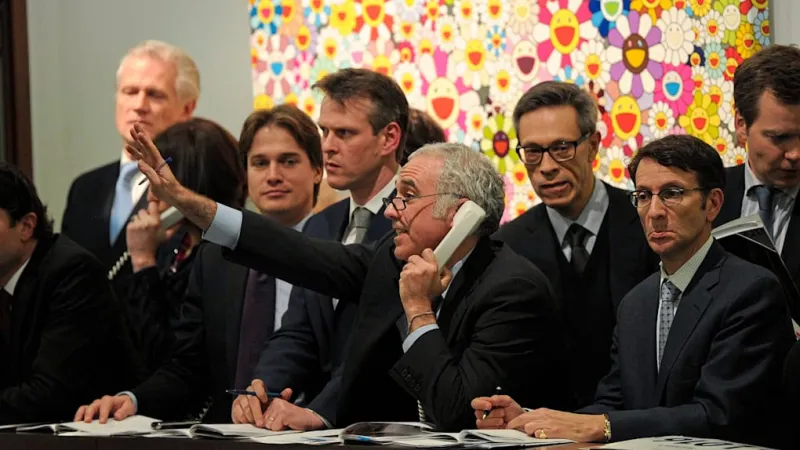
The global art market faces growing scrutiny as a new generation of financial guarantees increasingly underpins high-stakes sales, transforming the traditional auction system from a transparent public forum into a more opaque, pre-arranged transaction. This evolving practice, primarily driven by major auction houses and influential consignors, secures minimum prices for artworks but raises significant questions about market integrity and who truly benefits.
These guarantees, often undisclosed or ambiguously termed, function as a safety net for sellers. An auction house, or a third-party guarantor, promises a minimum sale price for an artwork regardless of the final bid. If the bidding surpasses the guarantee, the guarantor may receive a portion of the upside; if it falls short, the guarantor covers the difference.
Traditionally, the risk of an unsold or underpriced lot rested squarely with the consignor. The advent of guarantees shifts a significant portion of this risk onto the auction house or external investors, fundamentally altering the dynamics of consignment agreements. This shift is particularly pronounced in a volatile global economy, where market stability is often unpredictable.
Auction houses champion guarantees as a necessary tool to attract marquee pieces. High-value consignments, such as a rare painting or an important sculpture, often come with expectations of a substantial payout. Guarantees provide the assurance sellers need to entrust their most prized possessions to a specific auction house.
Critics argue that this system inherently compromises the transparency that historically defined art auctions. Buyers, unaware of an underlying guarantee, may perceive intense bidding as genuine market interest when, in reality, it could be propped up by a pre-agreed floor price. This obscures the true demand for an artwork.
Moreover, the involvement of third-party guarantors, whose identities are frequently anonymous, adds another layer of complexity. These guarantors are often influential collectors or dealers who stand to gain financially if an artwork performs well, creating potential conflicts of interest within the bidding process.
The primary beneficiaries of this evolving auction system are typically sellers with highly sought-after, blue-chip artworks. These individuals or estates possess the leverage to negotiate favorable guarantee terms, ensuring a significant return on their investment, sometimes at the expense of market clarity.
Conversely, smaller consignors, without the same market power or prestige, rarely access such lucrative arrangements. This creates a two-tiered system where the most privileged sellers operate under a distinct set of rules, further entrenching inequalities within the art world. Likewise, unsuspecting buyers might pay inflated prices.
For centuries, the auction system stood as a perceived bastion of pure price discovery, where an artworks value was determined solely by open competition among bidders. This new financial architecture represents a significant departure from that ethos, favoring commercial certainty over unvarnished market discovery.
Industry analysts indicate that while guarantees offer undeniable benefits in securing high-profile lots, their unchecked proliferation risks eroding public trust. "The long-term health of the art market relies on perceived fairness and transparency," stated one prominent market observer, "and these hidden arrangements chip away at that foundation."
The continued evolution of these financial instruments suggests a future where the art auction system may increasingly resemble private sales with a public veneer. As such practices become more common, stakeholders across the art world must consider the ramifications for market integrity and accessibility.
The handling of exceptionally valuable items, such as the priceless Antonello Da Messina masterpieces recently in the news, underscores the immense financial stakes involved in the art world and the lengths to which some will go to secure or protect such assets. This context highlights why sellers might demand guarantees for their valuable pieces.
While the art market adapts to new economic realities, the debate surrounding these opaque guarantees will continue to define the balance between commercial viability and the enduring quest for a truly transparent valuation process.